

“Adam, upon leaving Paradise, carried with him a handful of wheat and thirty branches from the trees of Paradise, ten of which bore shelled fruits: almonds, hazelnuts, and pistachios.”
Mas’udi, the historian and traveler of the 4th century AH
Book of Muruj al-Dhahab and Ma’adin al-Jawahir
There are various quotes regarding the origin of different plants and fruits around the world, but there is no doubt that when it comes to the pistachio plant and its origins, the name of the Iranian plateau must be mentioned more than anywhere else. Muhammad ibn Jarir al-Tabari believed that the pistachio plant appeared simultaneously with the descent of Adam to Earth and wrote that one of the thirty fruits (ten types of shelled fruits, ten types of stone fruits, and ten types of skinless and seedless fruits) that God gave to Adam at the time of his expulsion from Paradise to bring with him to Earth was the pistachio, which falls into the category of shelled fruits.
The famous Greek historian Herodotus (420-480 BC) also wrote about the pistachio plant and its status in Iran in his travel accounts. In this article, join Porfiro to explore the story of pistachios and related studies.
The Origin of the Word “Pistachio”
The name “pistachio” in Persian (scientific name: Pistacia) is a word from an ancient Iranian language, created by people who lived in vast areas of forests and natural habitats of pistachio trees in very distant times. Mohammad Hassan Abrishami, the author of the valuable book “Understanding Pistachios of Iran,” considers the Iranian word for pistachio to be an onomatopoeic term derived from the sound of breaking the pistachio nut, which is a product of wild trees.
This word has been associated with and entered the dialect of the people residing in the regions where these trees grow. According to researchers such as Abrishami and Natel Khanlari, there is substantial historical and geographical evidence indicating that the name “pistachio” and its tree originated from the Khorasan region (in the very broad geographical sense of ancient times, encompassing areas Transoxiana and south of the Jihun). The people of these regions were the first to use this word.
The Origin of the Pistachio Plant
There are various opinions regarding the origin of the pistachio plant in different sources: one French writer considers it native to Iran, Arabia, and Syria. The Encyclopaedia Britannica also identifies the pistachio as a plant native to Iran. According to the Americana Encyclopedia, the origin of the pistachio plant is in Western Asia. Larousse attributes it to Asia Minor. Additionally, the Persian Encyclopedia of the Middle East and the Al-Munjid mention Turkestan as the birthplace of the pistachio plant.
Archaeological evidence shows that many remnants of forests and clusters of wild pistachio plants are located in northeastern Iran in the following areas:
the pistachio forests of the Zorabad Jam, Sarakhs, Kalat, Dargaz, Semnan, Qazanquyeh, and Maraveh Tappeh in Gonbad Kavous, as well as forests in Afghanistan, Uzbekistan, Tajikistan, and Kyrgyzstan up to the borders of China. The pistachio forests and their clusters were scattered across many parts of the ancient metropolis of Nishapur (which roughly included the land of Parthia, meaning present-day Khorasan, and the regions of Ashkabad (the current capital of Turkmenistan) to Khwarezm, and from the west to the regions of Damghan).
Historical documents indicate that the pistachio plant has existed in Iran for over 3,000 years; for example, in the historiography of the Medes and Achaemenids, the pistachio is mentioned multiple times. It is said that the Iranians presented fruits such as pistachios and dates as gifts for the marriage of one of the Chinese emperors’ children. Additionally, Sultan Mahmud of Ghazni included pistachios, dates, and walnut kernels in the food rations of his soldiers to enhance their physical strength. The path of pistachio plant cultivation in Iran began in an area between Herat in Afghanistan, Pashtunistan in Pakistan, and southern Khorasan in Iran, then moved to Semnan and Damghan, and from there to Yazd and eventually to Kerman Province.
Pistachio in Iranian Literature
In all societies, phenomena and important elements manifest in every aspect of the lives of their people. For the Iranian society, which has always had a strong literary and cultural heritage, specific instances can be found throughout its civilization. The pistachio plant holds such a place. Abrishami, a capable researcher, confirmed in a note he wrote for his work “Pistachio Name” that “from about 800 diwan (collections of poetry), approximately 2,000 verses from nearly 400 poets mention themes related to pistachios, and certainly, the number of poets and the verses related to pistachios are much greater than this.”
Despite this, upon reviewing the verses, he concluded that he does not believe there are as many themes involving the word “pistachio” in the poetry of other commonly spoken languages around the world as there are in Persian poetry over the past 12 centuries.
Also, the majority of themes related to the poets come from the vast area of the natural habitats of pistachio trees, namely Khorasan and ancient Transoxiana. On the other hand, when examining the verses of each poet, in terms of numerical statistics, Attar of Nishapur stands out and holds the first rank in terms of the number of themes related to pistachios. In just six of his works, namely Divan-e Attar, Khosrownameh, Mokhtaranameh, Moseebatnameh, Elahi Nameh, and Mantique al-Tayr, the author believes that Attar has included the most themes related to pistachios in his delightful poetry compared to other poets across all times and places. Below are some various verses from different poets mentioning the name of pistachio.
"The pistachio has much salt,
For this reason, it is said to have come to devour the liver.
I did not err in saying it is sweet,
The pistachio has come as a sugar-laden delight."
Attar
"I have become accustomed to kissing her, just as a falcon does to its prey.
I shall make such a sound from kissing her, just as one breaks a pistachio."
Rudaki
"The same millet, pistachio, and pomegranate,
Will bring forth a knowledgeable priest."
Ferdowsi
"What has made the world narrower for you,
Except for your own evil nature, like a pistachio?"
Nasir Khusraw

"With a cup in hand and my soul in my palm,
In the battle and feast, the beauties of Kandahar and Tatar.
All have lips like sugar, eyes like almonds, and mouths like pistachios,
With violets for curls, jasmine for cheeks, and roses for faces."
Amir Khusrau

“Look like crazy smart
The sign of truth from the false scripture.
Do not put the hyacinth on the tulip
Do not put hazelnuts on pistachios”
Sana'i

"At that time, like water and fire from Hosam,
You become humble like dust, envious soul.
Sometimes you shine like a pistachio,
Sometimes you strike like a mace upon their brains."
Vatawat
With a look at the habitats of the mentioned poets, it can be seen that all of them were from the pistachio-growing regions of Iran.
The Connection Between the Pistachio-Growing Regions of Iran and the Abundance of the Pistachio Plant
Mohammad Hassan Abrishami, a researcher in the field of agricultural history, stated in one of his articles: In the vast expanse of the forests and wild pistachio groves of the ancient cities and settlements of Old Khorasan (such as Herat, Balkh, Gozangan, Badghis, Merv, Nisa, Abivard, Gonabad, Tarthish in Torghoz, Zawzan, Zaveh, Sarakhs, Tus, Bayhaq, and the ancient metropolis of Nishapur) and in Transoxiana (such as Samarkand, Bukhara, Khujand, Yarkand, Termez, and dozens of other cities), the pistachio plant has thrived.
From this vast area, before the Mongol invasion (in the years 617 and 618), thousands of scholars in various fields of science, technology, jurisprudence, culture, literature, and mysticism emerged, some of whom became famous in the world and others in the Islamic world (such as Avicenna, Al-Biruni, Al-Farabi, Buzurg, Imam Muhammad Ghazali, Khwaja Abdullah Ansari, Abu Said Abul Khayr, Rudaki, Ferdowsi, Omar Khayyam, Attar, etc.).
The number of great figures and scholars from the extensive geographical area of the natural habitats of pistachio trees is beyond counting; for example, in the four-volume magazine written in Arabic by Abu Abdullah Hakim Nishaburi, which was briefly translated into Persian by Muhammad ibn Hussain Khalifa Nishaburi, a list of the lives of about 2,680 prominent figures from Nishapur is provided.
The abundance of scholars from the Nishapur region did not stop at the end of the fourth century and undoubtedly increased until the Mongol invasion, adding to the number of scholars and their works. In other cities of the pistachio-growing regions of Khorasan and Transoxiana, thousands of scholars and prominent figures have been nurtured in proportion to the population, importance, and the attention of rulers to science and knowledge, such that their total number is much greater compared to other regions of Iran and the Islamic world that do not have pistachio forests.
Based on this information, Abrishami has concluded that this phenomenon should not be coincidental, and the pistachio plant in the diet of the people in the regions of Khorasan and Transoxiana has certainly contributed to enhancing their physical and mental capabilities, resulting in an increase in their intelligence quotient. The late Dr. Abdolhossein Zarrinkoub also referred to this important point in a note he wrote for the book Pistachios of Iran (authored by Mohammad Hassan Abrishami), stating that “it is noteworthy that what is obtained as food products in any region significantly influences the creation and cultivation of the vital, behavioral, and character forces of the people.”
Even now, we see that the people of the pistachio-growing areas possess high intelligence and cleverness; for instance, in Kerman province, where pistachio trees were planted by people from Khorasan about two centuries ago, the emergence of great figures and elites has increased, whereas their number was limited until the Mongol invasion and the spread of pistachio cultivation.
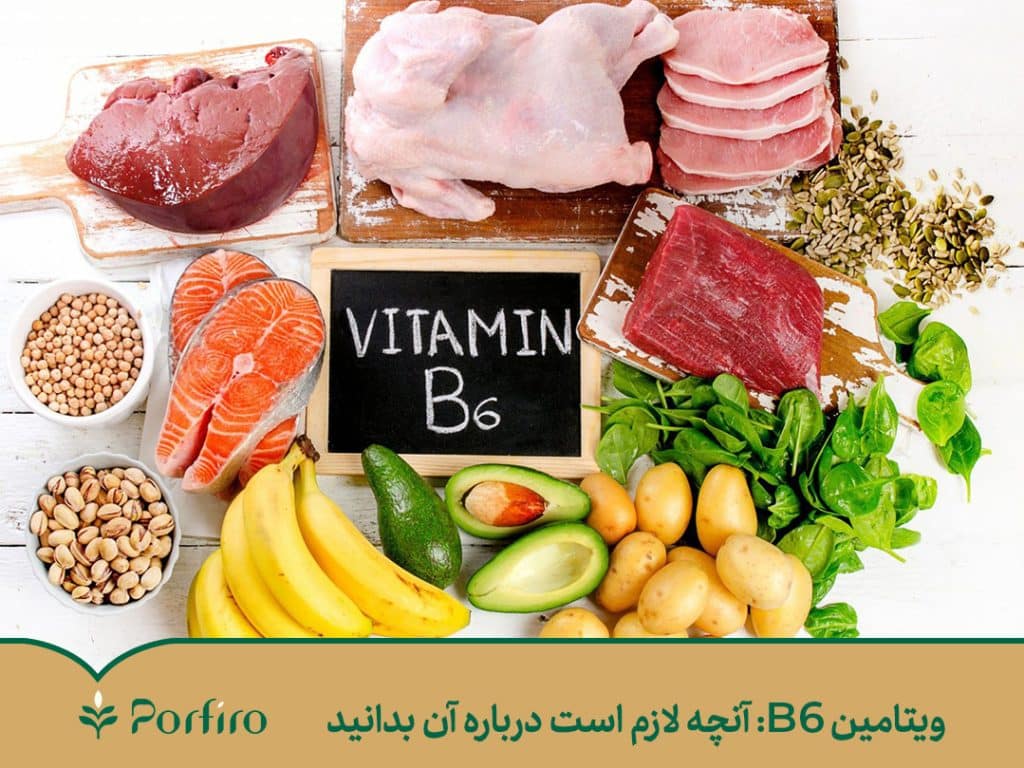
Modern laboratory studies have also confirmed this matter. Numerous scientific articles have stated that the type of nutrition for children influences their intelligence. The pistachio plant, due to its richness in vitamin B6, improves the functioning of the body’s nervous system; therefore, its consumption enhances brain performance in children, making them smarter. Experts in medicinal plants have also considered the daily consumption of pistachios to be very beneficial for memory enhancement. In fact, pistachios help maintain neurological health and control neurotic diseases.
Pistachio plant botany
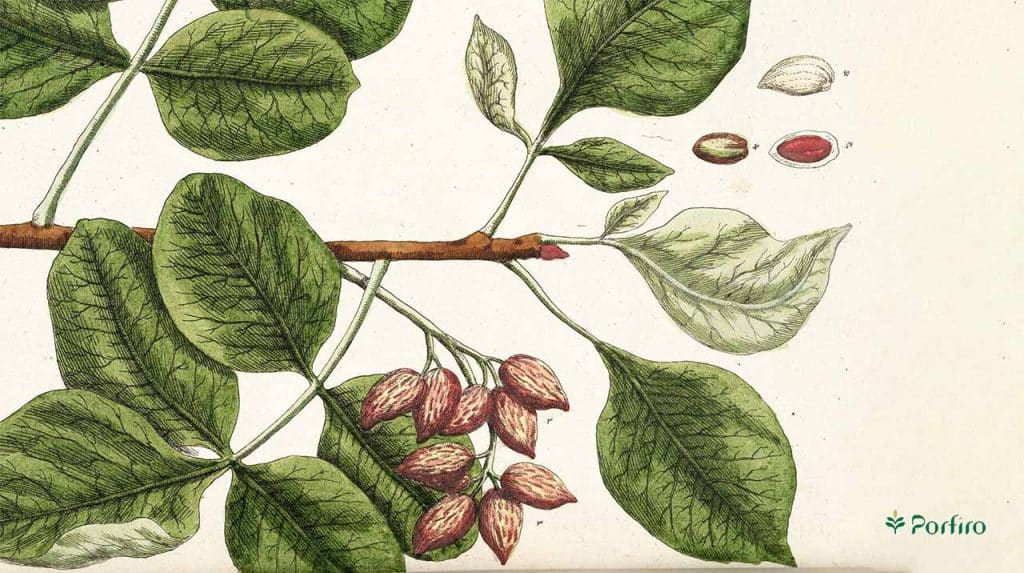
The pistachio plant falls under the category of flowering dicotyledons and is placed under the order Sapindales, which includes the family Anacardiaceae. Plants from this family usually take the form of trees or shrubs. The pistachio tree is dioecious, meaning that if available, cross-fertilization between male and female plants will result in flowers and fruit. Flowers of these trees are without petals and nectar-secreting glands, and that is the reason their pollination is taken by the wind. The male plants start releasing their pollen about a week sooner, so when the female flowers open, already the pollen is in the air and the fertilization may take place quite easily.
Ecology of Pistachio Plant
Soil
The pistachio plant can tolerate a wide range of soils. The shallow sandy soils and heavy clay soils result in reducing the size of trees and production. The deep loamy-sandy soils are of neutral pH, allowing the extension of the root system down to 60 centimeters. This may result in suitable production for pistachio trees. However, it is more tolerant about soil salinity and alkalinity compared to the other nut trees.
Humidity
Higher humidity, more so during the pistachio trees’ growth period, contributes to fungal and bacterial diseases. Infections also tend to grow during winter and into recurrence in the next season; hence, coastal areas and areas with over 20 mm of rainfall a month during summer are not suitable for pistachio growing.
Temperature
The pistachio plant requires cold air to successfully produce fruits. As for example, pistachio seedlings in Kerman require 1,000 hours below 7°C to elicit uniform bud break and good fruit set, whereas 600 hours below 7°C is already needed. These figures vary to some degree between the cultivars. On the other side, pistachio fruit requires a long and hot summer to mature. More than 200 days should be frost-free for flower growth and fruit ripening.
Wind
Though the pistachio plant is tolerant to wind, it is hard to shape young trees when the wind conditions are not favorable; this, therefore, results in reduced yield and branch breakage during flowering and heavy cropping.
Water
Even though the pistachio plant can put up with drought for some time, there is a need for adequate soil moisture during the growing season for the commercial nut production. This ensures good growth of the young trees, yield at appropriate time, and the quality and health of the nuts. At present, the water consumption for irrigation is in the range from 9 million liters per hectare in some regions to 2 million liters per hectare in other regions. Frequency and duration of the irrigation schedule should be gauged using soil moisture monitoring devices.
However, compared to the rest of nut trees, pistachio trees have a relatively higher degree of saline conditions tolerance. Under optimum conditions concerning the production of high-quality nuts, yield, and health of trees, during the vegetative period, the trees should never suffer from moisture stress; this is particularly critical late in the summer during seed filling. Lack of appropriate soil moisture at this stage may lead to a high percentage of fruit not setting.
Major Pistachio Producing Countries
The top ten pistachio-producing countries in the world are Iran, the United States, Turkey, China, Syria, Greece, Italy, Afghanistan, Tunisia, and Spain. Among these countries, Iran is highly recognized as the greatest exporter of pistachios. Other pistachio-producing countries are Madagascar, Australia, Kyrgyzstan, Jordan, Uzbekistan, Pakistan, Côte d’Ivoire, Morocco, and Mexico. FAO reports indicated that Iran produced 135000 tons of pistachios in 2021 and was the second producer after the United States.
Pistachio plant Species in Iran
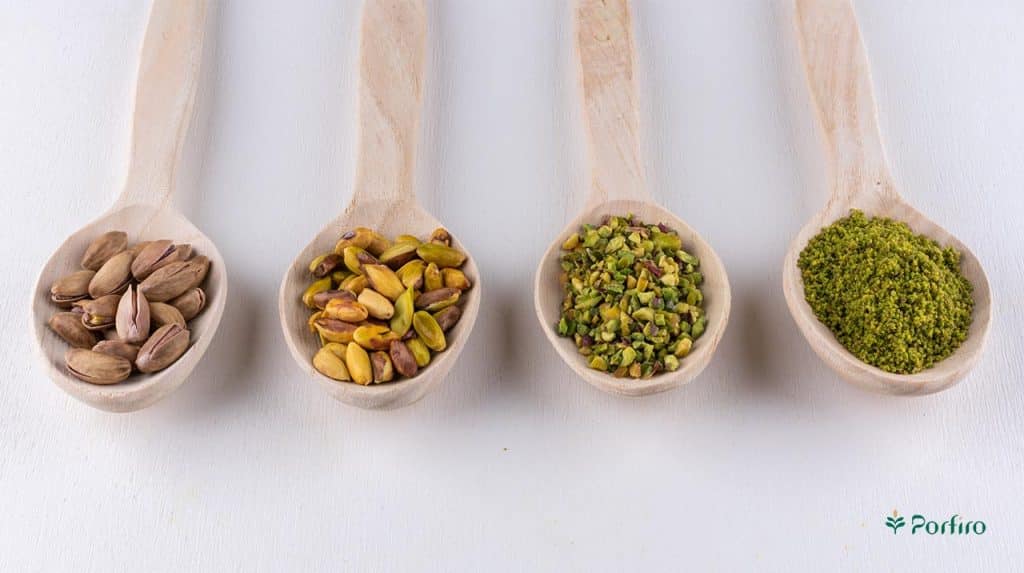
There are over 19 species of plants under the name Pistacia, among which the following species are commonly found in Iran:
Pistacia vera: Commonly known as the ordinary pistachio, this species is one of the most important in the genus. Agricultural lands are primarily cultivated with this species from the family Pistacia, as it exhibits high resistance to adverse environmental conditions such as high temperatures, cold weather, drought, and high soil salinity. The significance of this species lies in its famous and flavorful nuts. Iran is recognized as one of the main regions for the domestication of the pistachio plant globally and has over 70 cultivars and female genotypes, along with numerous male genotypes.
Various classifications of pistachio species have been made, each based on specific characteristics: classification based on the appearance of the fruit (almond-shaped or round), based on flowering time (early, medium, and late flowering), and based on fruit ripening time (early, medium, late, and very late).
The most famous varieties of pistachio plant in Iran include:
- Kalleh Ghoochi (round fruit shape, medium splitting percentage, reddish-gray kernel color, and white shell color with moderate darkness)
- Akbari (almond-shaped fruit, high splitting percentage, purple-brown kernel color, and dark cream shell color)
- Ahmad Aghaei (rectangular almond-shaped fruit, high splitting percentage, purple kernel color, and very light shell color)
- Ouhadi (round fruit shape, very high splitting percentage, purple kernel color, and cream shell color)
- Mumtaz
- Badami Zarand
- Sefid Pistachio Noq
- Khanjari Damghan
- Shahpasand Damghan
- and Qazvini Pistachio
Pistacia atlantica, or the wild pistachio, is a tree that reaches heights of 2 to 7 meters, and its various subspecies exhibit different forms. The flowering season of P. atlantica is early spring. Various parts of the subspecies P. atlantica have multiple uses, and its fruit can be utilized in oil extraction, for producing cake, and for traditional uses. Its gum is also used in the production of chewing gum and in the chemical industries.
Pistacia khinjuk: Pistacia khinjuk, or wild pistachio, is a tree that reaches heights of 3 to 7 meters and is deciduous. The following are some of its subspecies and their applications:
- P. terebinus: A species similar to P. atlantica, known for its pungent-smelling resin.
- P. lentiscus: The sap of this subspecies is used in the production of chewing gum and is highly aromatic.
- P. integerrima: This species has fragrant leaves, and its wood is utilized in various industries.
- P. oleosa: Oil is extracted from this subspecies, which is used as a fragrance in some medicines.
Pistachio Plant and the Aflatoxin Problem
Awareness of the adverse levels of aflatoxins in food and feed is increasing, as they can have serious consequences for human and animal health. Aflatoxins are the most well-known group of mycotoxins and were first recognized in the early 1960s.
They are considered among the strongest mutagens known. There is extensive empirical and epidemiological evidence indicating that these substances lead to liver cancer (WHO, 1998). The term aflatoxin refers to a group of chemically related compounds. Aflatoxin B1 is recognized as the most potent carcinogenic type of aflatoxin.
The main fungi producing aflatoxins are Aspergillus flavus and Aspergillus parasiticus. Under optimal temperature and humidity conditions, these fungi grow on various food items, such as peanuts, dried fruits, tree nuts (including almonds, walnuts, pistachios, and Brazil nuts), spices, and a wide range of grains (especially corn).
These fungi thrive at high temperatures; therefore, contamination is widespread in warm and humid climates. Aflatoxin contamination is a problem in tropical and subtropical regions of Africa, Asia, and Latin America, but it has also been found in temperate countries in Europe and North America (FAO, 1979, 1982).
Aflatoxin in Pistachios
The question now arises: what conditions lead to mold growth and aflatoxin production in pistachio kernels, and how can this be prevented?
Many species of Aspergillus contaminate fruits and rot them before harvesting their kernels; for example, up to 13 species of these fungi have been identified from pistachio kernels in Iranian orchards and 14 species from orchards in the United States (California). Most pistachio kernels naturally split their shells before harvest.
Fortunately, the shell that covers the kernel usually remains intact and protects the kernel from mold and insect invasions. Nuts with early-splitting shells are more susceptible to contamination in the orchard. Sometimes, the leathery hull is attached to the thick shell, and both split together, exposing the kernel to molds and insects.
Approximately 30% of the crop is contaminated in infected farms. Early-maturing fruit, which is less likely to be threatened by contamination in the orchards, may become infected with fungi during transportation and handling. High humidity and temperature inside transport containers create favorable conditions for early-maturing fruits to become contaminated, significantly increasing the levels of aflatoxin contamination.
Guidelines for Preventing Mold Contamination and Aflatoxin Production
Prevention programs should include various stages, including: planting to harvesting, post-harvest handling, drying, post-drying storage, processing, post-processing storage, transportation, and marketing.
Harvesting the Pistachio Plant
- The pistachio plant should be harvested as soon as it is ripe to prevent quality decline and minimize problems caused by fungal attacks and insect contamination, especially from the orange worm.
- Signs of optimal harvesting time include: the separation or ease of separating the outer shell from the hard shell, reduced force required to pick the fruit, and drying of the husk.
- Pistachios should not be dropped on the ground during harvesting, as this prevents contamination of the split and open nuts in the environment and soil.
- When hand-picking young trees, clean tarps should be used to prevent contact between the fruit and the soil and ground cover.
Post-Harvest Transportation of Pistachios
- Pistachios should be shelled and dried immediately after harvesting to minimize shell staining and decay, ensuring their safety. If temporary storage of fresh pistachios at the processing plant is necessary, they should be cooled to zero degrees Celsius and kept at a relative humidity of less than 70% before shelling.
- Pistachios should be sorted before cold storage to separate defective kernels, leaves, branches, and other foreign materials from the main product.
- Fumigation with methyl bromide or phosphine can be used to control insects in stored nuts. Depending on the conditions and duration of storage, periodic fumigation may be required.
(As you know, at Porfiro, we adopt a completely organic method without using chemicals to protect our Porfiro pistachios from pests and contamination while maintaining the complete health of the product.)
Drying Pistachios
- In the two-step drying process, the shelled nuts are initially dried for about three hours in a column dryer or rotary drum dryer (at an air temperature of approximately 82 degrees Celsius) until they reach a moisture content of 12 to 13 percent. They are then transferred to another device (the second stage), where their drying continues with warm air (at a temperature of less than 49 degrees Celsius) for one to two days until they reach a moisture content of 5 to 6 percent.
- In the single-step process, a bucket dryer is used with an air temperature of 60 to 66 degrees Celsius. The drying time in this method is eight hours.
Post-Drying Storage
- Dried nuts are typically stored in bins, silos, or other bulk storage containers for several weeks or months before final processing and preparation for market shipment.
- Optimal storage conditions should be maintained at a temperature of 10 degrees Celsius or lower and a relative humidity of 65 to 70 percent to minimize the deterioration of pistachios due to the growth of Aspergillus flavus.
- Protection against insects is also essential during the storage period.
Processing of Pistachio
- Defective pistachios (stained and moldy) are separated using electronic sorting techniques based on visual reflection or light.
- Empty or half-empty pistachios are separated by air flow, and unshelled pistachios are separated by floating them in water.
- The shells are broken to extract the kernel (pistachio meat) if desired.
- The pistachios are evaluated to eliminate those that may be contaminated with aflatoxin.
- The pistachio kernels are salted, flavored, and roasted.
- Pistachios, both with and without shells, are packaged in various types and sizes.
Post-Processing Storage
- Relative humidity should be kept below 70 percent to prevent significant mold growth.
- Depending on the expected storage duration before entering the market, the temperature should be maintained between 0 and 10 degrees Celsius. The lower the temperature, the longer the shelf life.
- Low oxygen levels (less than 0.5 percent) help maintain flavor quality and impact insect control. Oxygen removal is usually achieved through vacuum packaging or nitrogen packaging.
The final word
The pistachio plant of Iran requires more technical support and attention in order to achieve its real and appropriate position for presence in global markets; it is a pity that we do not turn this world-renowned product, which has its roots in this land, into the identity card and introduction of Iran’s agricultural products.
10110