

Regarding the story of dates in Iran, planting, and using the date palm tree, there are numerous and sometimes contradictory accounts. If you are interested in knowing where the date palm tree and its fruit were first discovered, when dates existed in Iran, and would like more information about dates beyond what you have heard so far, Porfiro will recount this story for you.
It has been said that dates were among the fruits that God gave to Adam during his descent (1). According to one narration, Anous ibn Shith ibn Adam (peace be upon him) was the first person to plant a date palm tree (2), and perhaps dates were the first tree ever planted.
According to Muhammad ibn Jarir al-Tabari, the date palm originated at the same time as the installation of Adam on Earth. He added: “It is said that the fruits given by God Almighty to Adam during his descent were of thirty types: ten fleshy fruits, ten stone fruits, and ten without skin and stone. The fleshy fruits included walnuts, almonds, pistachios, hazelnuts, poppies, oaks, chestnuts, pomegranates, and bananas; the stone fruits included peaches, apricots, cherries, dates, coconuts, olives, jujubes, hawthorn, and frankincense. Fruits without stones include apples, pears, grapes, mulberries, figs, citrons, black mulberries, bitter oranges, cucumbers, and melons.”
According to legend, in ancient history, the phoenix resides at the top of the date palm. The bird undergoes ignition from flames of the sun after 500 years and undergoes rebirth out of its ashes. Some legends even state that the date palm itself dies and is reborn along with the bird.
The origin of the date palm tree
Fossils of 7,000-year-old date seeds and a history of cultivation dating back 6,500 years indicate the ancient origins of this tree. The date palm (Phoenix dactylifera), also known locally in the southern dialects as “mox” and “mo,” is undoubtedly one of the oldest trees that has long served as a source of sustenance for ancient humans. Its exact origin is not clearly known; however, scientists have proposed various theories regarding its origin, and there is disagreement about the date palm’s homeland. Some consider the primary region of the date palm to be Asia, specifically the shores of the Persian Gulf.
Sometimes it is attributed to the areas around the Persian Gulf, and at other times to Babylon (located in Iraq), Arabia, North Africa, or Balochistan, suggesting that it entered Iran from Mesopotamia. Some researchers identify its main origin as North Africa and the Arabian Peninsula, while others claim it to be the Indian subcontinent or Balochistan. Dr. Seyed Jafar Hamidi writes in his article on date palms:
“The history of the date palm for humanity predates recorded history. Some researchers believe its origin to be from Arabia, North Africa, and tropical and subtropical regions, but its initial growth points, in addition to the aforementioned locations, have also been in other parts of the world. The date palm existed in Mesopotamia, between the two great rivers of Tigris and Euphrates, around 6,000 years before Christ. Therefore, this area is likely the initial origin of this tree. The early inhabitants of Mesopotamia, namely the Sumerians, Babylonians, Assyrians, and Chaldeans, as well as the Kassites, Hurrians, and Elamites, were familiar with this tree”.
In the 1950 international publication on dates released in Tunisia, the origin of the date palm was identified as a desert plant, with its first place of emergence considered to be Mesopotamia and Khuzestan. It was stated that from there, it spread to North Africa and India. Given that the Khuzestan plain up to the Dashtestan region consists of areas that emerged from underwater after the Pliocene epoch and both are warm regions of Iran, it is likely that date palm cultivation began simultaneously in both areas.
The date palm has never grown wild anywhere. This suggests that its origin may be from other species, aided by human intervention and the passage of time in its development and selection. Some others attribute its origin to the wild date palm, scientifically known as Ph. sylvestris, which grows in India, while some believe it to be a hybrid between this species and others, including Ph. canariensis or Ph. reclinata.
During the time of the Elamites, farmers in the great city of Liyan (meaning “brilliant sun”; located around present-day Bushehr) cultivated dates. According to a Greek merchant in the 1st century AD, large quantities of dates were exported from Ubulla (an ancient city near the Tigris River and north of the great river Ubulla) and Oman to Barygaza (in western India) and the Arabian Peninsula. Shapur, son of Hormizd, forced the defeated Caesar to plant an olive tree for every date palm that had been cut down.
Dates in Iran
Sometimes it is believed that the Iranians were the first to discover dates on one of the islands of the Persian Gulf and that they transported and propagated them. In the Chaldean, Assyrian, and Babylonian inscriptions found in Mesopotamia, the image of the date palm is frequently depicted. The Assyrians or Chaldeans are the remnants of the ancient Kaldeh nation, which has been present in Iran for over 2,500 years.
The ancient Chaldeans regarded the date palm as the tree of life and utilized various parts of this tree. They wove mats from its leaves and used them to furnish their homes, and they made ropes from its fibers. Chinese sources refer to the land of Bosi (Persia or Iran) as the land of date palms, which they recognized as “Persian jujube” and “thousand-year jujube.” By the end of the 9th century AD, the date palm had also been brought from Iran to China.
The date palm has been extensively mentioned in Iranian history as well. For example, in the Avesta, the date is considered the most edible fruit on earth. The Bundahishn also refers to the date palm. Date palm is mentioned among the two-legged plants that are worth as much as all the plants between heaven and earth, and Mashya and Mashyana used its firewood for roasting sheep (Bundahishn). When Keykhosrow asked Ridak about the best fruits, he mentioned the date of Herat among the nicest fruits. The date was a common food among the Sumerians.
Historical evidence of dates in Iran
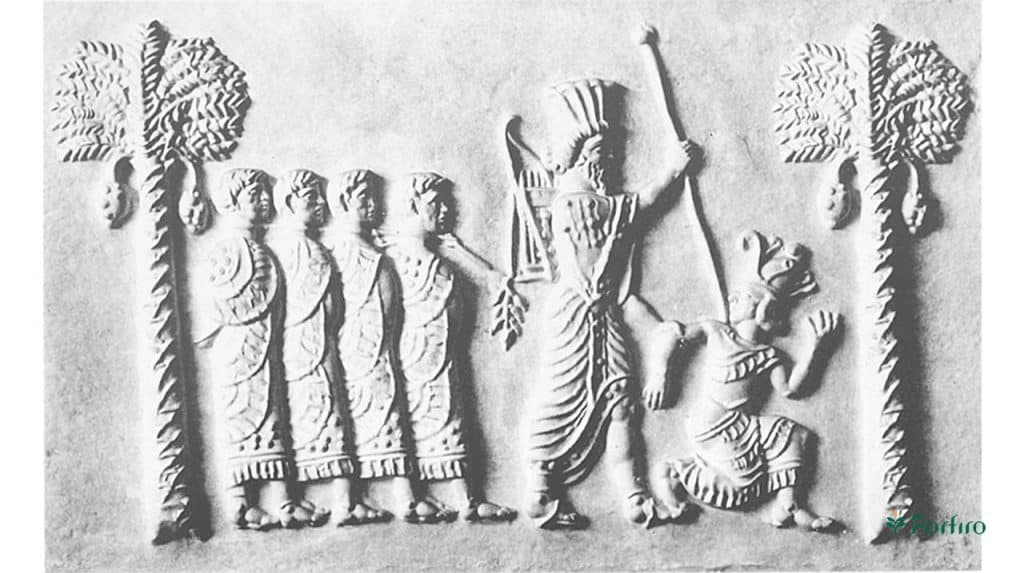
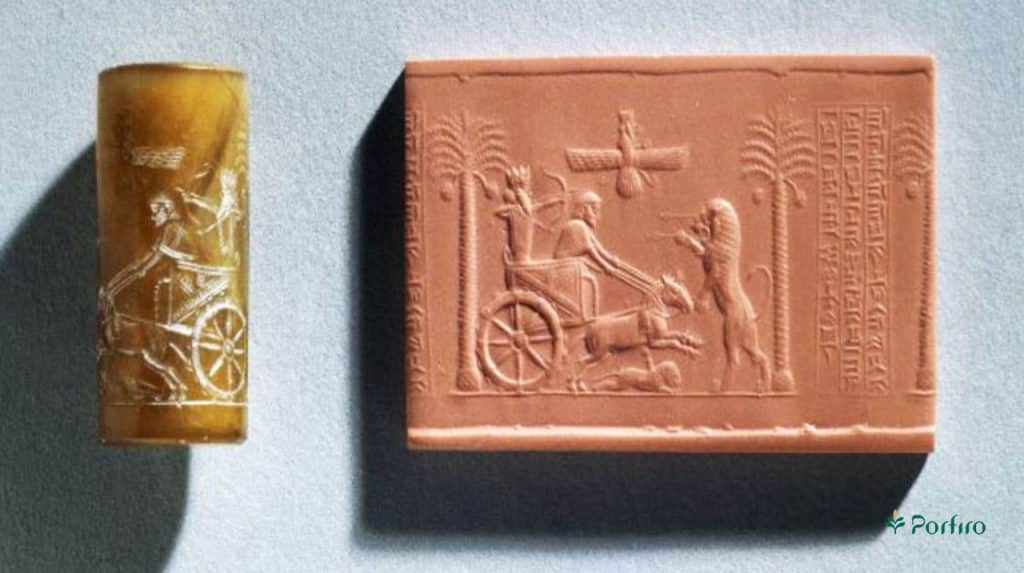
The Seal of the Conquest of Egypt is a cylindrical seal made of Yamanite stone, which records the conquest of Egypt by the Achaemenids. The seal was acquired from a private collection and has been kept in the Hermitage Museum in Saint Petersburg, Russia since 1930.
Inarus and possible Greek generals as prisoners, seized by Artaxerxes I
Various parts of the date palm, including the tree, fruit, leaves, and others, have been used extensively throughout history, to the extent that remnants of this plant have been found in ancient inscriptions and buildings. Some of these findings are mentioned below:
In the temple of the moon god near Ur in Iraq, the date palm was used, the history of which is estimated to be about seven thousand years old. Remnants of date palms from the Assyrian period have also been found in the reliefs of Nineveh.
In the Code of Hammurabi (1810–1750 BC), dating back about 4,000 years, the sixth king of Babylon mentioned several articles about the date palm, indicating that the date palm was known at the time and had significant impacts on people’s lives. Some of these laws include:
- Law 65 – If a gardener does not prune and pollinate the date palm orchard, causing a reduction in fruit yield, he must give the neighbor’s orchard yield (fruit or money) to the orchard owner.
- Law 66 – If someone borrowed money from a lender and gave him his date palm orchard, saying “Whatever dates you harvest, it will be in place of the money you gave me,” if the lender does not accept, the orchard owner himself picks the dates (and sells them) and gives the lender the money and interest according to the contract, and whatever more money he makes from selling the dates will belong to the orchard owner.
- Law 111 – If a woman merchant gave 24 liters of date wine in the middle of the year to someone (to get grain from him at harvest), at harvest time she receives 20 kilograms of wheat (or barley or corn) from him.
- Law 237 – If someone hired a captain and rented a boat, and loaded it with sesame, wool, oil, dates, and any other goods the boat can carry (to transport to another place), if the captain did not properly guide the boat and caused it to sink and destroy the goods, he must replace the boat and all the destroyed goods.
The importance of dates in Iran
For thousands of years, due to the impact of the date palm on human life, this plant has held special significance and sanctity. People from various periods of Mesopotamian civilization have each, in their own way, demonstrated the importance of the date palm through rituals, ceremonies, and beliefs.
The influence of the date palm among the people of the ancient world was so profound that palaces, temples, and even royal thrones were adorned with its leaves during the Sumerian and Babylonian eras. The capitals of large halls in the magnificent Karnak complex in Egypt were carved in the shape of date palm leaves.
The Sumerians regarded the date palm as sacred and a source of blessings; among the Chaldeans, the date palm had a specific goddess; the Babylonians had a special god for the date palm; the Assyrians used dates as sweets in celebrations; Hindus considered the presence of dates as a condition for blessings in the families of brides and grooms; Arabs regarded dates as the primary food source and called it “the tree of life,” believing its origin to be linked to humanity. Iranians, especially those from the south, view the date palm as their only legacy and refer to it as “the tree of loyalty.”
Based on archaeological evidence, the cultivation of dates in Iran has existed for nearly six thousand years. It can be said that planting dates in Iran began in ancient times, predating the Achaemenid dynasty. In the reliefs of Persepolis, images of date palms and other trees are abundantly depicted. Above these trees, the image of Ahura Mazda is seen in flight.
Additionally, many deities and fravashis (angels) fly above these trees, touching the branches with their feet. The tall columns of the Persepolis structures symbolize towering and majestic trees. These columns, which supported the high ceilings of the buildings, conjured the image of a dense date palm grove, symbolizing a sacred orchard. Some of the seals discovered at Persepolis depict fruitful and bountiful date palms. Xenophon, quoting Socrates, states that during the Achaemenid era, there were gardens in Iran referred to as “paradise gardens,” whose products included dates, grapes, and figs.
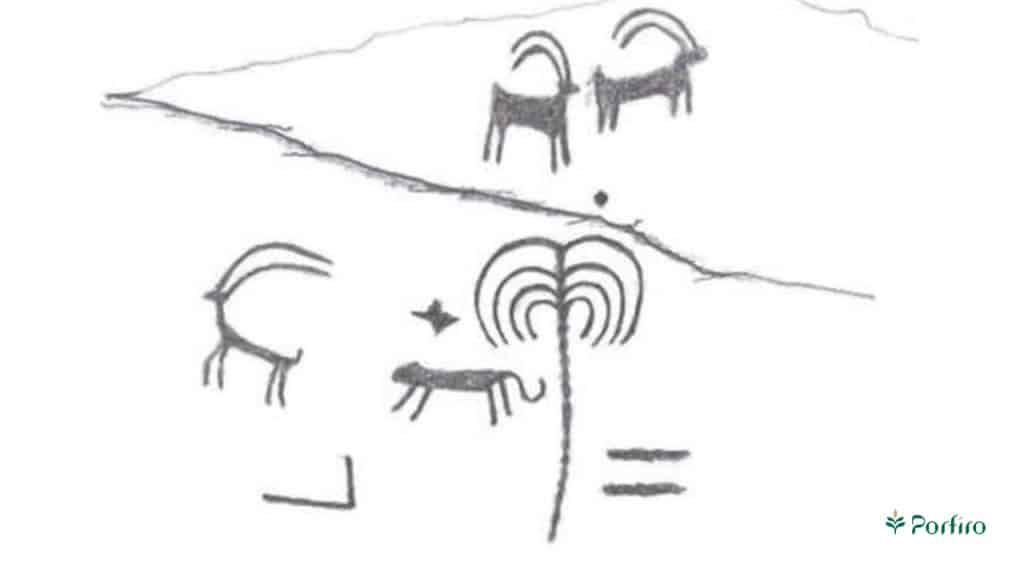
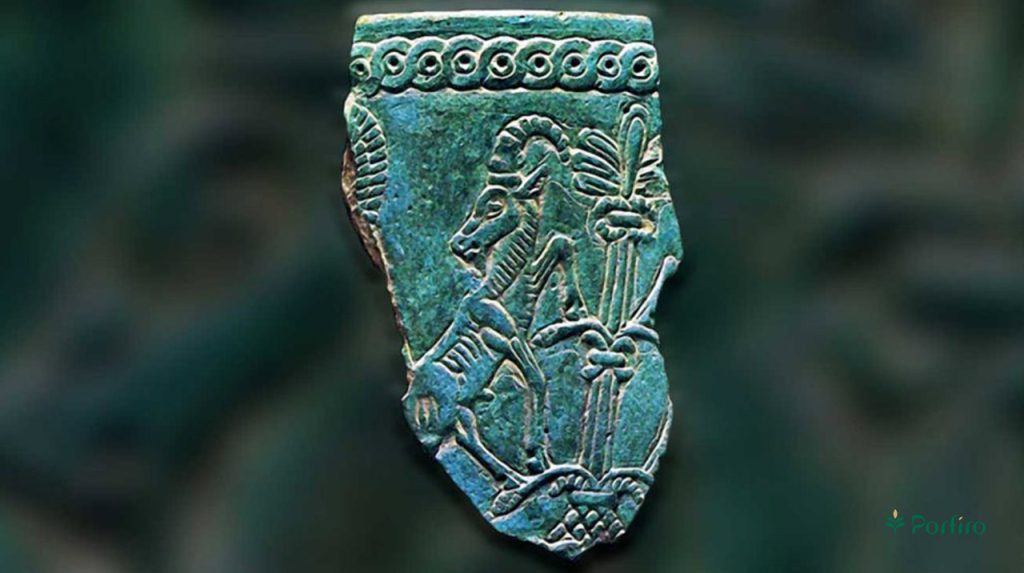
Historically, the date palm and its fruit have had a significant impact on the lives of the people in southern Iran. Among the valuable findings of archaeologists in the Burnt City, there is a pottery piece depicting a goat leaping in five movements towards a tree to eat its leaves. This pottery, which is now considered the world’s first animation, is actually an animated story of the ancient date palm (Asuric) and the goat.
The most important civilization that existed in Iran before the arrival of the Aryans was the Elamite civilization. The land of Elam, which the Babylonians referred to as Elamtu or Elam, meaning “mountainous land” and “country of the rising sun,” is considered one of the four parts of the ancient world, and its government was administered in a federal manner.
“During this period, the entire southern and western regions of Iran were under the influence of the Elamites, and the state’s policies were directed towards these areas. The discovery of numerous archaeological remains from the Elamites in the Dashtestan region and Bushehr province further supports this notion. The regions of Liyan and the eastern and northeastern plains were significant areas within the geographical boundaries of the country during the height of Elamite glory, with evidence found in the Rishahr fortress and around Borazjan, especially in the southeastern areas of the date palm groves, indicating the presence of civilization and the cultural influences of Elam at that historical moment, affirming the historical identity of the region.”
During the Elamite period (3200–539 BC), based on the discovered inscriptions, seals, and artifacts near the city of Shush, it can be inferred that there were many date palm groves in this area. In the article “Bushehr from the Beginning to the Elamite Rule,” it is mentioned that the farmers of Liyan cultivated not only dates but also figs and grapes.
Khuzestan and the surrounding mountains were important centers of Elamite civilization. The Khuzestan plain is distinguished from other parts of the Iranian plateau due to its vastness and the presence of a large, flowing river like the Karun. The fertile soil, abundant water, and warm climate have made this region suitable for agriculture. The Khuzestan plain and the banks of the Karun and Arvand rivers are among the most important areas for date production.
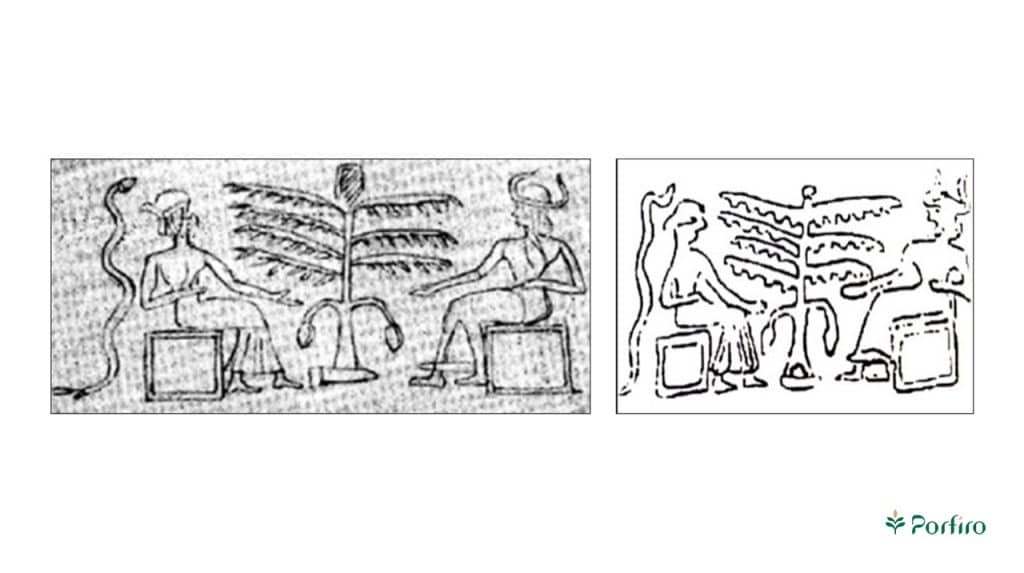
The date-growing regions of Khuzestan include Khorramshahr, Abadan, Ahvaz, Shadgan, Dasht-e Azadegan, Ramhormoz, Shushtar, and others. The depiction of date palms on Elamite seals, Achaemenid artifacts, and ancient Hebrew coins indicates the presence, importance, and sanctity of this plant among the people of that era. Additionally, in the epic of the Asuric tree, which has survived in Pahlavi from the Sasanian period, the date palm enumerates its benefits in a debate with a goat. Iranians have utilized the date palm and its fruit in special ceremonies and celebrations of Nowruz.
The flourishing and brilliance of cultivation of dates in Iran coincided with the establishment of the Achaemenid dynasty under the leadership of Cyrus the Great (560-529 BC). In the monuments and artifacts of the Achaemenid period, numerous animal and plant motifs, including the date palm, were used, reflecting the environment, plant economy, agriculture of the inhabitants of Persia, and the interests of the rulers of Iran.
In the Persepolis complex, on the eastern staircase, there is a large rectangular stone with two triangular sections created alongside it, and eight officers (four Persians and four Medes) are in a guarding position over an inscription. In the triangular section behind the officers, a relief of a lion attacking a bull is carved with a background of date palms.
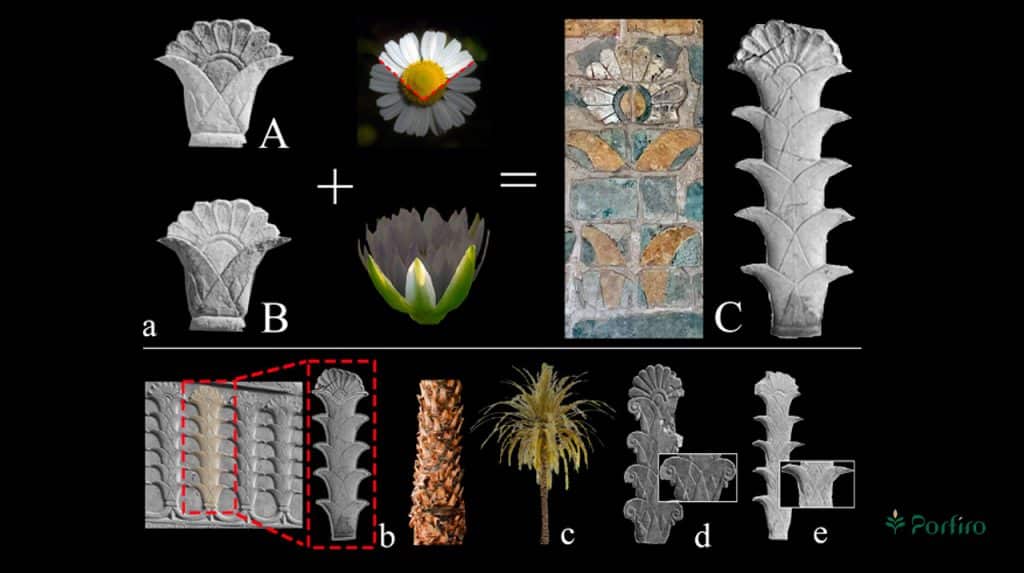
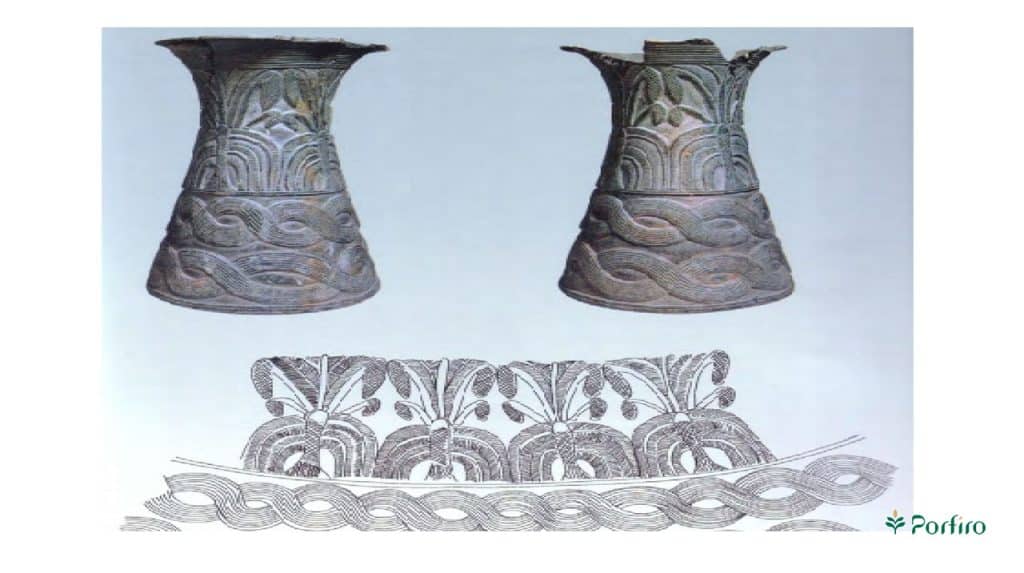
The capitals of the Apadana Hall depict flourishing date palms and flowing pendant leaves, while the vertical spirals above are another interpretation of their walls. Numerous plant motifs are also seen in the corners of various Achaemenid buildings in Susa, among which the lotus flower, date palm, and multi-petaled flowers are beautifully carved on the shapeless stones of the walls and column bases.
In the Persepolis tablets, the rations prepared and delivered by the administrative organization consist of the following materials: flour, beer, wine, grains, dates, and figs. Pierre Briant in his book “The Achaemenid Empire” states: “It should be noted that among the various types of dates, Theophrastus (History of Plants, Book 2, Chapter 6, Section 7) distinguishes one and calls it ‘royal’ and specifies its rarity: ‘They can only be found in the garden of Bagoas near Babylon.'” Pliny expressed this information in these words (Book 6, Chapter 143):
The most famous variety of dates was named “royal” because it was reserved for the kings of Persia. This date came from Babylon and was found only in the garden of Bagoas. In the storage of fruits at the Persepolis court, it primarily included dried fruits such as dates, figs, raisins, pistachios, mulberries, pears, walnuts, olives, and others.
In the palaces of Darius and the structures and statues in the ancient city of Susa, images of the date palm were also used. Darius magnificently rebuilt the palace of the Elamite kings in Susa, which had once been the capital of the Elamites and was destroyed by Ashurbanipal, with even greater grandeur. The architecture of these palaces features designs of the rose and the date palm, which Mary Bois writes about:
“It is likely that the Iranians inherited these designs from Elamite architectural traditions”.
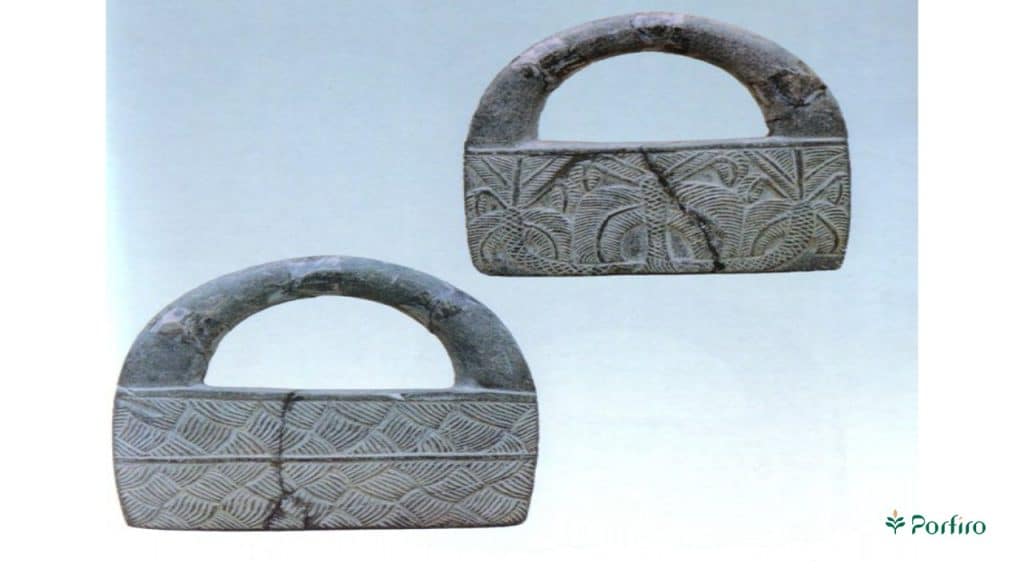
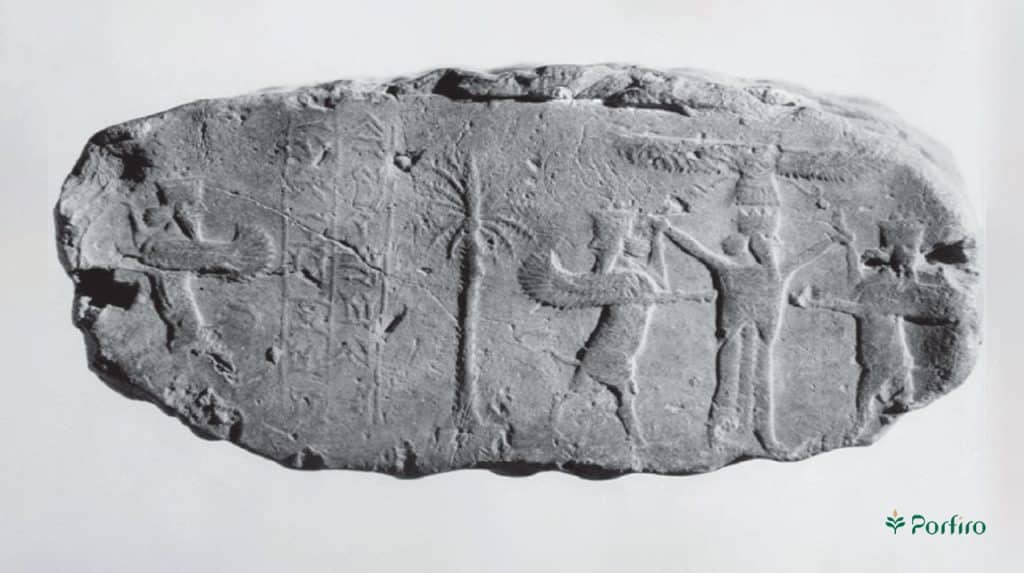
Below, some of the motifs discovered from the civilization of dates in Iran regarding the presence of dates in historical periods, can be noted.
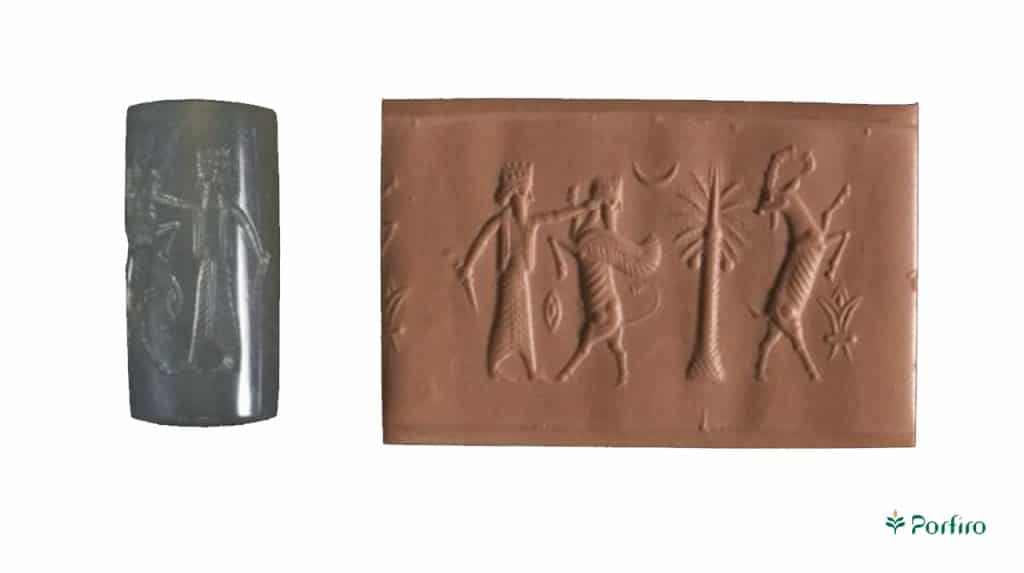
Achaemenid (Persepolitan, EarlyMature and Mixed I, ArchaicCourt)
According to Merrillees catalogue a Proto-Achaemenid personage, in combat with a ‘lamassu’ and seemingly protecting a goat or ibex, appears on a seal impression from Nippur. There are similar ‘lamussu’-creatures and palm-trees on seal impressions from Persepolis, two of them bearing the name of Xerxes (486-465 BC). Similar scenes appear on unprovenanced seals of possibly earlier date (a close parallel without the palm-tree or filing motifs).
10119