


Adoption of a healthy, diverse, and balanced diet is fundamental to a healthy lifestyle. Including nuts in the daily diet is a way to improve dietary quality in all age groups. Nuts, due to many reasons such as good taste, unique nutritional value, and containing nutrients including high-quality proteins, fibers, minerals including magnesium, copper, potassium, and selenium, saturated and unsaturated fatty acids, vitamin E, dietary fibers, carotenoids and phytosterols with potential antioxidant activity are of particular interest to nutritionists.
In addition, the small size of nuts makes them easy to transport and can be used in all conditions. For the reasons mentioned above, regular consumption of them reduces the risk factors for many chronic diseases.
They are known as dry fruits with edible kernels and hard shells used in cooking or eaten alone as a snack. These tasty fruits have many varieties worldwide, and the most common ones include almonds, walnuts, hazelnuts, pistachios, cashews, Brazil nuts, and peanuts. It should be noted here that although peanuts technically belong to the group of legumes (such as peas and beans), they are usually classified in this group due to their nutritional characteristics similar to nuts. these kernels have a high nutritional and health value in several aspects that will be discussed in the rest of this article.
Nuts are extraordinary food items.
They can be enjoyed in many forms.
They can be consumed whole. For instance, in Iran, whole walnut is eaten with cheese sandwiches. These kernels also can be consumed as spreads (e.g., peanut or pistachio butter). They are widely used in cooking in chopped or minced form. They are sprinkled on foods to improve their taste. Depending on the liking of different societies they can be found in different forms including raw, toasted, salted, sweetened, seasoned, and so on.
In general, it is recommended by nutritionists to eat them raw and without adding salt or sugar. Nuts can be kept temporarily at room temperature but for long-term storage, they should be kept refrigerated or frozen.
Nuts are wholesome:
Each ounce of mixed nuts provides 12% of vitamin E, 16% of magnesium, 13% of phosphorus, 23% of copper, 26% of manganese, and 56% of selenium needed by the body.
The nutritional value of some of these kernels is higher than others. For example, just one Brazil nut provides the body’s entire daily requirement of selenium. Nuts contain carbohydrates, however, the content in various types of nuts is very different. Per serving, hazelnuts and Brazil nuts have less than 2 grams of digestible carbohydrates, while for cashews it is almost 8 grams. In general, they can be considered as good options for a low-carb diet.
Rich in antioxidants:
Nuts contain polyphenols. Since the polyphenols act as antioxidants, these kernels can protect the body against damage caused by free radicals. Antioxidants in nuts can protect cellular fats from oxidative damage. According to studies walnuts have more power to fight free radicals than fish and 2 to 8 hours after consuming nuts, levels of oxidized LDL, or “bad cholesterol,” are reduced by 26 to 33 percent. Oxidized LDL is a risk factor for heart disease.
Good sources of fiber:
Fiber is the part of food that the body cannot digest. It has many benefits for the body. Although the body cannot digest fiber, the bacteria that live in the colon can. Many types of fiber act as prebiotics which gut bacteria feed on them. Gut bacteria then convert the fiber into short-chain fatty acids, which leads to gut health and a reduced risk of diabetes and obesity. In addition, fiber helps us feel full and cause us to lose our appetite. As a result, consumption of fiber may decrease calories absorbed by meals. Studies have shown increasing daily consumption of fiber may lead to a reduction of energy absorption.
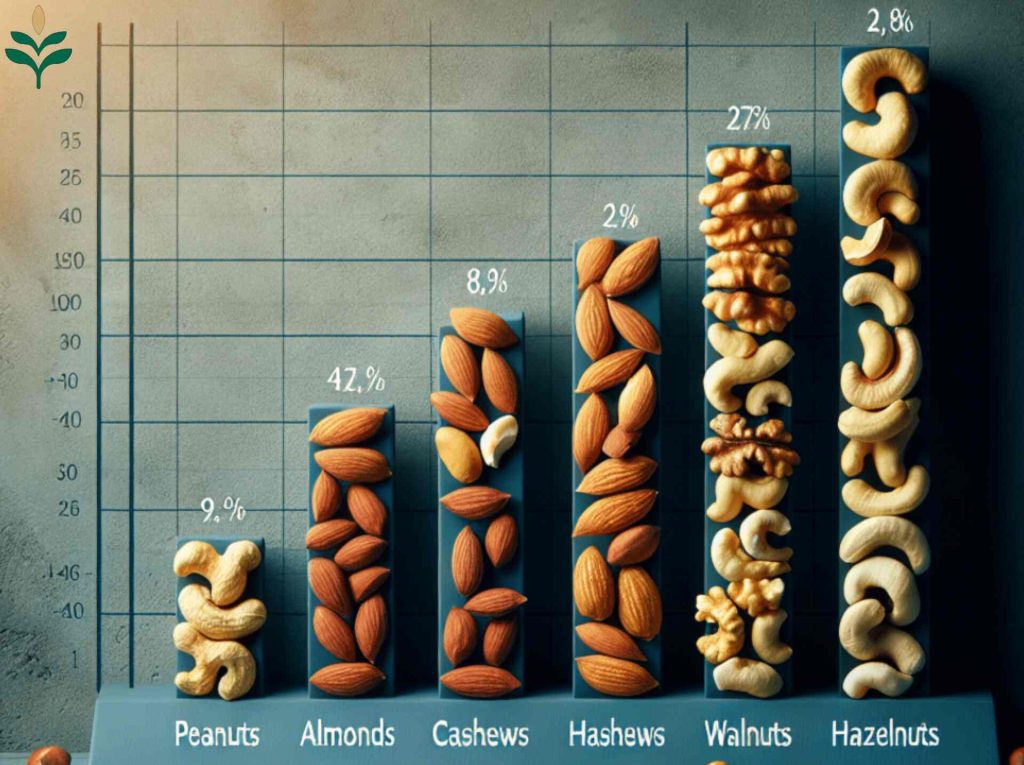
For more information, see the amount of fiber in several nuts per ounce (28 grams): almonds: 3.5 grams, pistachios: 2.9 grams, hazelnuts: 2.9 grams, walnuts: 2.9 grams, peanuts: 2.6 grams, and Brazil nuts: 2.1 grams. As you can see, compared to others, almonds are a richer source of fiber.
Nuts may be beneficial for ailments.
They may control Metabolic syndrome and type 2 diabetes.
Metabolic syndrome is a group of factors that can increase the risk of heart disease, stroke, and type 2 diabetes. Therefore, metabolic syndrome and type 2 diabetes are strongly correlated.
Since nuts are low in carbohydrates, they can be recommended as good options for people with metabolic syndrome and type 2 diabetes. They do not raise blood sugar levels much. Therefore, replacing these kernels with high-carbohydrate foods (e.g. cakes, cookies, and white breads) can lower blood sugar levels. Generally, it should be said that when people with metabolic syndrome and type 2 diabetes consume nuts regularly, their blood sugar levels, blood pressure, and other health indicators improve.
Nuts have anti-inflammatory properties.
These kernels may act as antioxidants. Inflammation occurs when the body defends against the damage of injuries, bacteria, or other pathogens. An increase in the risk of diseases and organ damage can be caused by long-term inflammation. Research shows that eating them may reduce inflammation by up to 90% and promote health.
In a study on patients with diabetes and kidney diseases, intake of pistachios, Brazil nuts, walnuts, and almonds, reduced inflammation. Therefore, they may reduce inflammation and can be prescribed especially in people with diabetes and kidney diseases.
These kernels help reduce the risk of heart disease and stroke.
Apart from the fact that these kernels are good sources of protein, most of them contain the following substances that are good for the heart:
- Nuts contain good fats: These kernels contain monounsaturated and polyunsaturated fats which are thought to lower bad cholesterol levels.
- Nuts contain omega-3 fatty acids: Many nuts are rich in omega-3 fatty acids, which may reduce the risk of heart attacks and strokes.
- Nuts contain fiber: As discussed above, all nuts contain fiber which helps lower cholesterol. Fiber also causes us to feel full and eat less and prevent obesity. Obesity is a risk factor for heart disease and stroke.
- Nuts contain plant sterols: Some nuts contain a substance called sterol that helps lower cholesterol. Plant sterols are often added to food products to make them healthier. Plant sterols occur naturally in nuts.
- Nuts contain L-arginine: Nuts are high in a compound called L-arginine. Since L-arginine lowers blood pressure, improves cholesterol status, and improves the overall health of blood vessels, regular consumption of nuts promotes healthy arteries, reduces inflammation, reduces the risk of blood clots, and thus reduces the risk of heart attack and stroke.
- Nuts may reduce small-sized LDL particles: Small and dense LDL particles may increase the risk of heart disease more than larger LDL particles. Nuts may significantly reduce small-sized LDL particles and increase large-sized LDL particles, and “good cholesterol” (HDL).
- Nuts may help to lose weight: Despite the high-calorie content of nuts, they may help with weight loss.
According to studies, waist circumference in people who consumed them compared to those who received olive oil had a reduction of 5 cm and regular consumption of almonds and pistachios also helped in weight loss.
It is known that the body cannot absorb all the energy content of nuts, and part of their fat gets untouched during digestion. Interestingly, recent studies have shown that the body absorbs up to 21% fewer calories from these kernels. In other words, if the nutrition facts on a package of almonds for example indicate that one ounce has nearly 160-170 calories, almost about 129 calories can be absorbed.
How much nuts are we allowed to eat?
One disadvantage of these kernels is their high calories. Therefore, it is important not to eat them excessively. However, choosing nuts over a less healthy snack still contributes to a healthy diet. It is recommended that adults consume 4 to 6 servings of nuts without salt and sugar per week. Adding salt or sugar to nuts may negate their heart-healthy properties. Each serving contains a small handful of nuts or 2 tablespoons of their butter.
Is the type of nuts important?
All of them are nutritious. However, some have more nutrients than others. For example, walnuts contain large amounts of omega-3 fatty acids. Almonds, peanuts, and hazelnuts are also very beneficial for the heart.
Conclusion
Regular consumption of nuts can improve our health in many ways, such as reducing the risk of diabetes as well as reducing blood cholesterol and triglyceride levels. Despite the high-calorie content, due to the significant amount of fiber, these food items may even help you lose weight if consumed in moderation. In other words, if nuts are consumed in moderation, in addition to making food delicious, they will help create a healthy and balanced diet.
10023














One thought on “Nuts and Their Valuable Nutritional Properties”
“¡Excelente artículo sobre las propiedades nutricionales de los frutos secos! Me encanta cómo destacan sus beneficios para la salud. Incorporar nueces en nuestra dieta diaria puede ser una gran manera de mejorar nuestra alimentación y bienestar. Definitivamente seguiré explorando más sobre este tema. Para más información interesante, pueden visitar este enlace: Telkom University Jakarta.”