


It helps control blood sugar levels, enhances athletic performance, and even keeps your brain and body functioning correctly. The adult body has around 25 grams of magnesium in it, of which 50 to 60 percent is deposited in the skeletal system. The rest of it is located in muscles, soft tissues, and bodily fluids. Few are consuming adequate quantities of magnesium through their diet, yet healthy people seldom show signs of deficiency. A deficiency in this mineral element is associated with a wide range of health complications; hence, doctors argue that people should always ensure they meet their daily threshold of magnesium intake.
Some of the magnesium-containing foods include almonds, spinach, and cashews. In case one finds it hard to acquire enough magnesium through diet, the doctor may prescribe supplements to meet the body requirements. In this paper, Porfiro discusses “This element functions, benefits, what it does in the body, dietary sources, and possible health risks due to excessive intake”. The information here, as in articles of this nature, is only provided for information and not diagnosis, advice on the use of supplements and medications that one may go through, which should be under medical supervision.
Properties of magnesium consumed by the human body:
This element is part of the seven major nutrients. These kinds of macrominerals are minerals that a human needs to have in fairly large quantities-at least 100 milligrams per day. Micronutrients, on the other hand, are also similarly vital; however, a person only needs them in small amounts, including iron and zinc.
This mineral element is a crucial mineral for many body functions. Sufficient intake of this mineral can help the body prevent or treat various chronic illnesses, including Alzheimer’s disease, type 2 diabetes-everything about diabetes and easiest way of management of this disease, cardiovascular diseases-heart health and foods suitable for them, and migraine-everything you need to know about migraine. Magnesium is an essential mineral and electrolyte, which plays a key role in:
- Production of Energy
- Bone and tooth structure
- Muscle functions
- Nerve functions
- DNA replication
- RNA and Protein synthesis
For this reason, it is crucial that one has enough magnesium from the daily diet to keep oneself healthy. This mineral is further necessary with regard to the body in the following ways:
- It participates in hundreds of processes within the body: It is found throughout the body. Each of your body cells contains this mineral and further requires it for appropriate performance. About 60 percent is located in bones, and the rest is distributed among muscles, soft tissues, and fluids, including blood. One of its major functions is to serve as a cofactor-a helper molecule-for biochemical reactions that enzymes constantly carry out. Magnesium participates in over 600 reactions in the human body. These include:
- Energy production: food to energy
- Protein synthesis: Making new proteins from amino acids
- Gene expression maintenance: Assisting in the replication and repair of DNA and RNA
- Muscle contraction: Working in muscle contraction and relaxation
- Nervous system regulation: Regulating neurotransmitters that send messages throughout the brain and nervous system.
- Bone health: While much research has been performed, focusing on the role of calcium in bone health, magnesium also tends to become highly important in forming healthy bones. A 2013 study found that adequate intakes of this mineral element were associated with higher bone density, greater bone crystal formation, and lower osteoporosis risk in postmenopausal women. Magnesium likely has both a direct impact on bone and an indirect effect on calcium homeostasis and vitamin D metabolism.
- Diabetes: The risk of developing type 2 diabetes is lowered with the intake of a high-magnesium diet. This mineral element intake improves insulin sensitivity, hence regulating blood glucose and insulin metabolism. As stated in a review from the 2015 issue of World Journal of Diabetes, most, but not all, diabetic patients have low levels of magnesium. Addition of magnesium may help in the management of diabetes. Magnesium deficiency might worsen insulin resistance, a common forerunner of type 2 diabetes. However, insulin resistance might, in turn, reduce magnesium levels. Scientists in a number of studies have linked high-magnesium diets to diabetes. Aside from that, a 2017 systematic review suggests that magnesium supplementation improves insulin sensitivity among those who have a low magnesium level. However, scientists still have to keep providing evidence to show or prove that magnesium will soon be used routinely by doctors to control blood sugar in people with diabetes.
- Cardiovascular health: It is an important element for the body’s various needs, one of which involves the muscles, including the heart. In 2018, a review showed there is evidence that magnesium may be an imperative mineral when dealing with the heart. It showed that a deficiency in this mineral element could result in cardiovascular problems in a person. This is in part because of its role in the cellular level. The authors J TERMS Indicate that magnesium deficiency consistently represents a common feature among patients with congestive heart failure, often worsening their clinical condition. Patients who are administered magnesium shortly following a heart attack show lower mortality rates. For this reason, physicians sometimes use magnesium during CHF treatment in an attempt to prevent arrhythmia, or irregular heartbeats. One 2019 meta-analysis found that for every additional 100 mg per day of magnesium, stroke risk decreased by 2 percent. Some research also suggests that magnesium has a blood pressure-lowering effect. However, ODS research shows that supplementation with magnesium, according to the current studies, only “slightly” lowers blood pressure-high blood pressure and its proper nutrition.
- Migraine headaches: Magnesium therapy may contribute to preventing or alleviating headaches since its deficiency can affect neurotransmitters and limit blood vessel contraction, which doctors associate with migraine. People prone to migraine tend to have low levels of magnesium in blood and tissues compared to others. During a migraine, the brain may also show low levels of this mineral element. According to a 2017 systematic review, one might say that magnesium treatment could help prevent migraines. As per this view, the authors note that 600 mg of magnesium citrate appears to be effective and safe as a preventive strategy. According to the American Migraine Foundation, for migraine prevention, a lot of individuals take 400 to 500 milligrams a day. Indeed, not all the adequate numbers work similarly for everyone; therefore, one should not take treatment without the advice of a doctor.
- Premenstrual syndrome (PMS): It may also play a role in premenstrual syndrome (PMS). Small studies, one in 2012, for example, suggest that adding magnesium supplements, along with vitamin B-6 may improve PMS symptoms. A 2019 review says mixed results are leading to more studies being conducted. The American College of Obstetricians and Gynecologists recommends that supplementation with magnesium reduces bloating, mood symptoms, and breast tenderness commonly associated with PMS.
- Anxiety and depression: The levels of magnesium may play a role in mood conditions like depression and anxiety. According to one 2017 systematic review, low levels of it appear related to higher levels of anxiety. The explanation partly lies within the activity of the hypothalamic-pituitary-adrenal axis, a set of three glands regulating any person’s response to stress. However, the review has mentioned that the evidence is low in quality, and some high-quality research from the researchers is needed to find out how well supplements may have their place in the reduction of anxiety pertaining to mental health, and the importance of pistachios.
- Better exercise performance: Your body loses magnesium during exercise, especially if you’re doing something that involves a lot of sweat. This mineral element helps your body move glucose into your muscles and gets rid of lactate, a substance that may contribute to fatigue during intense exercise. According to studies, this mineral enhances physical performance in older people and those experiencing a deficiency in this mineral. One older study, from 2013, followed 2,570 women and found that greater magnesium intake was associated with higher muscle mass and strength. A study in 2019 found that male professional cyclists who took 400 milligrams of magnesium a day for three weeks had better muscle recovery and less muscle damage after an intense race than cyclists who took a placebo. However, supplementation is not necessary according to several studies who also claim that this supplement does not help athletes or people with active lifestyles with sufficient levels of magnesium.
- Anti-inflammatory effects: Poor intake of this mineral element increases the levels of inflammation, which has long been known to be a participant in aging and chronic diseases. Several reviews have concluded that magnesium supplements lower CRP-a marker of inflammation-in people who have chronic inflammation. Some studies have found similar results by suggesting that supplementation with magnesium might lower CRP, along with other markers of inflammation, such as interleukin-6. Additionally, low levels of magnesium have been implicated in a number of studies to increase oxidative stress associated with inflammation.
- Magnesium does have the added potential benefit of promoting sleep health: It is a widely used natural sleep aid for people with insomnia because it normalizes a number of neurotransmitters that are involved in sleep, one of which is gamma-aminobutyric acid. A review of the literature that provided its supplementation to older adults diagnosed with insomnia determined that patients in the intervention group fell asleep on average 17 minutes sooner. One recent study followed nearly 4,000 adults, discovering that the higher the intake of this mineral, the better quality and longer duration of sleep. Another study took it one step further by demonstrating that greater magnesium intake among females was associated with a lower risk of daytime sleepiness.
Different types of magnesium
Different types of this mineral element supplements have different reported effects and, therefore, benefits. For example, there is some evidence that supplementation with magnesium taurate may help to lower blood pressure, while supplementation with magnesium citrate may be helpful in cases of constipation. This section considers the different types of magnesium, their relative advantages and disadvantages, and how to choose between them.
There are several types of this element available in dietary supplements and food products; the most common include the following:
- Magnesium citrate
- Magnesium glycinate
- Magnesium chloride
- Magnesium lactate
- Magnesium malate
- Magnesium taurate
- Magnesium sulfate
- Magnesium oxide
Each type of this element has different properties; for that matter, they may vary from one another in various aspects like:
- Medical uses
- Bioavailability-how well it gets absorbed in the body
- Possible side effects
One should consult a doctor or dietician before taking up any supplement that contains this element in it.
For better nutrition

Following are some of the common forms of magnesium as dietary supplements:
- Magnesium glycinate: Magnesium glycinate is a complex of this mineral element and the amino acid, glycine. The earlier studies conducted on magnesium glycinate concluded that among all, it is well-tolerated and has the least number of side effects. It means that this is a pretty good choice for those whose requirement of this nutrient is high or who develop certain side effects after using its other forms.
- Magnesium lactate: A combination between lactic acid and magnesium produces this variety of magnesium citrate. A review in 2017 reveals that in the intestine, magnesium lactate is very well absorbed.
- Magnesium malate: Malic acid and magnesium combine to result in this form of magnesium. Some reports indicate that it is highly bioavailable and easily tolerated by individuals. One animal study from 2019 concluded that, out of the different types of this mineral element, magnesium malate was absorbed the fastest after one dose. This could also be the case in humans, although human trials would need to be done. One human study from 2018 concluded that a supplement with a combination of magnesium malate and a number of vitamins had very minimal gastrointestinal side effects.
- Magnesium Citrate: It is a well-known form of magnesium. It is widely used in supplements and appears to be more bioavailable than its other forms. In a 2003 study, it was observed that, out of 46 adults, magnesium citrate was more well absorbed than magnesium oxide and chelate. Magnesium citrate is also a laxative medication prescribed for constipation; hence, one can imagine that it may have some gastrointestinal side effects like diarrhea in people.
For topical use
Some take magnesium for the skin, for topical use. Types of this mineral element that can be used in this manner include the following:
- Magnesium chloride: is a type of salt that features in some topical magnesium products, such as magnesium oil, and in certain bath salts. It is utilized as a complementary method of getting more magnesium. It is unknown whether skin in this matter has the capability to absorb such an amount of magnesium. A review in 2017 showed that though available literature indicated minor fractions of magnesium may be absorbed through skin absorption, full-scale studies would be required to establish efficacy. It is also ingestible with internal routes since its intestines have very good capability for the absorption of magnesium chloride. Nonetheless, it can also generate gastrointestinal adverse effects just like any other types of magnesium.
- Magnesium sulfate: is the type present in Epsom salt. Most people take an Epsom salt bath or soak their feet in it for the treatment of muscle ache. However, high-quality evidence reports a large quantity of it can be absorbed by the body from a magnesium sulfate bath.
For some specific conditions
Different forms of magnesium treat constipation, including magnesium citrate. Other forms may be helpful medicinally in the treatment of illness.
- Magnesium oxide: Doctors sometimes recommend type for its laxative properties to improve symptoms of constipation or as an antacid for heartburn and indigestion. It is also appears in many mineral supplements. However, the body poorly absorbs this type.
- Magnesium taurate: This form is bound to taurine. There is some very limited evidence that it may reduce blood pressure and protect the cardiovascular system. In 2018, the authors of an animal study reported that dietary magnesium taurate lowered blood pressure and prevented heart damage in mice that had ingested a toxin. The researchers said that it could indicate a potential role of magnesium taurate as a nutritional supplement for heart protection. People should not use the supplements of this mineral as therapy for these heart diseases until more research is complete.
Recommended daily intake
The table below shows the Recommended Daily Allowance (RDA) for magnesium intake by age and sex, according to the ODS.
| Age | Men (mg) | Women (mg) |
| 1 to 3 years | 80 | 80 |
| 4 to 8 years | 130 | 130 |
| 9 to 13 years | 130 | 130 |
| 14 to 18 years | 410 | 360 |
| 19 to 30 years | 400 | 310 |
| 31 to 50 years | 420 | 320 |
| 51 years and above | 420 | 320 |
People during pregnancy should increase their magnesium consumption by about 40 mg per day with the doctor’s opinion. Experts know the amount of sufficient consumption for babies under one year based on the amounts in breast milk.
Sources of magnesium and the location of almonds
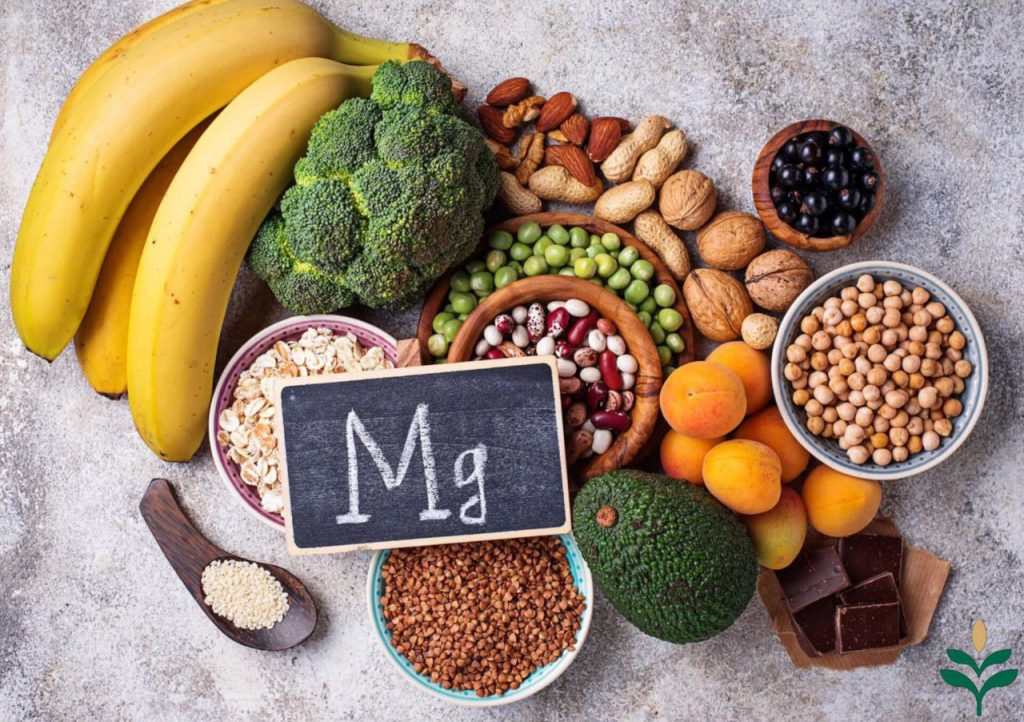
Many foods contain high levels of magnesium, including nuts and seeds, dark green vegetables, whole grains, and legumes. Manufacturers also add this mineral element to some breakfast cereals and other fortified foods.
| Source | Per serving (mg) | Percent Daily Value |
| Almonds (1 ounce or about 28 grams) | 82 | 20 |
| Roasted cashews (1 ounce) | 74 | 19 |
| Peanuts roasted in oil (a quarter cup) | 63 | 16 |
| Soy milk (1 cup) | 61 | 15 |
| Baked black beans (half cup) | 60 | 15 |
| Baked edamame beans (half cup) | 50 | 13 |
| Peanut butter (2 tablespoons) | 49 | 12 |
| whole grain bread (2 slices) | 46 | 12 |
| Avocado (1 cup) | 44 | 11 |
| Potatoes with skin (3.5 oz.) | 43 | 11 |
| Cooked brown rice (half cup) | 42 | 11 |
| Low-fat yogurt (8 oz.) | 42 | 11 |
| Enriched breakfast cereals | 40 | 10 |
| Instant oatmeal, 1 package | 36 | 9 |
| Canned beans (half cup) | 35 | 9 |
| Banana (1 medium) | 32 | 8 |
In this process, the products made from wheat lose their magnesium, so always go for whole grain cereals and bread products. Most fruits, meats, and common fish also include only small quantities of magnesium. Following are some of the best 10 natural sources of magnesium. Try to include more of these in your diet in order to increase your intake of this mineral element:
- Whole wheat: Most whole grains are good sources of magnesium, but whole wheat flour edges out the competition with 160 mg per cup. Replace white flour with whole wheat in baking and store-bought bread with whole grain bread.
- Spinach: Dark leafy greens are good sources of many nutrients, and spinach is no exception. One cup of cooked spinach contains 157 mg of it.
- Quinoa: Quinoa is cooked and eaten like rice. Quinoa is a good source of several elements, including proteins and minerals. One cup of cooked quinoa bears 118 milligrams of it.
- Almonds, cashews, peanuts, and Brazil nuts: Almonds-health benefits of almonds, cashews, and peanuts make for a healthy snack. In addition, they are a good source of magnesium. One serving size of almonds, which is 1 ounce, provides 80 milligrams, or about 20 percent of your dietary intake. Cashews contain 74 milligrams per ounce and 2 tablespoons of peanut butter have 49 milligrams of magnesium. These nuts can be roasted and added to a number of dishes for added texture and flavor. Most nuts also contain fiber and monounsaturated fats, which have been associated with improved blood sugar and cholesterol levels in diabetic patients. Moreover, Brazil nuts have a very high selenium content. Indeed, a single Brazil nut provides almost 175 percent of the RDI for this mineral. The nut is anti-inflammatory, helps with heart health, and it really can help a lot in snacking to reduce appetite.
- Dark Chocolate: Dark chocolate contains 64 mg of magnesium in a 1-ounce serving and is full of heart-friendly antioxidants. Besides magnesium, it also contains iron, copper, and manganese, with prebiotic fiber to help feed good bacteria living in the gut. When buying dark chocolate, select those that contain at least 70 percent cocoa solids.
- Black beans are the healthiest amongst all types of beans in regard to magnesium. All beans are healthy, but when it comes to magnesium, black beans take over the lead amongst other varieties of beans. One cup contains 120 milligrams of magnesium.
- Avocado: Other than giving healthy fats that help in maintaining heart and brain health, one avocado contributes to about 16 percent of your daily magnesium requirement with 58 milligrams of magnesium. Avocado is rich in the B vitamins and vitamin K and contains more potassium than bananas. Unlike most fruits, avocado is also very high in fat, particularly health-promoting monounsaturated fats of the heart. It is also a very good source of dietary fiber. As a matter of fact, most of the carbohydrates in avocado are fibers; its digestible carbohydrate content is, therefore, very low. Avocado reduces inflammation, increases cholesterol, and prolongs satiety after eating for a longer time period.
- Tofu: Tofu is an excellent alternative to meat, either for vegetarians or people who would want to spice up their health. One half serving of tofu contains 37 milligrams of magnesium.
- Yogurt: Yogurt is a form of curd that contains the active living cultures of bacteria that include but are not limited to Lactobacillus bulgaricus and Streptococcus thermophilus. These bacteria are useful in the process of fermentation, giving yogurt its characteristic flavor and texture, along with carrying specific health benefits. Yogurt is a nutrient-dense food that contains 30 milligrams of magnesium in one cup and is a very good source of protein. And not to mention that it contains omega-3 fatty acids, a host of different vitamins and minerals, and probiotics that are healthy for the gut.
- Seeds: Most varieties of seeds such as sesame seeds, pumpkin seeds, and ground flax contain magnesium. One ounce of pumpkin seeds contains 168 milligrams of magnesium, or 40 percent of the daily value. Seeds are also a tasty and healthy snack; they contain iron, heart-healthy monounsaturated fats, and omega-3 fatty acids. Moreover, they are also very high in fiber; in fact, nearly half of the carbohydrates in most seeds come from fiber. Flaxseeds have been shown to reduce total cholesterol and triglycerides levels and may reduce the risk of breast cancer.
- Some Fatty fish include: Fatty fish, such as salmon, mackerel, and halibut, are concentrated sources of magnesium. Actually, 100 grams of cooked salmon provides 30 milligrams of magnesium or around 7 percent of the daily requirement while providing 22 grams of high-quality protein. Additionally, fish are rich in potassium, selenium, B vitamins, and various nutrients. Actually, high intake of the said fish is related to the reduction in the risk factors for several chronic diseases such as that of heart disease.
- Bananas: Stress potassium-rich pulp that may help lower blood pressure, and it’s even a fruit associated with a reduced risk of heart disease. They also contain appropriate amounts of magnesium: in fact, one extra-large banana contains 37 milligrams, or 9 percent, of the daily value. Other nutrients contained in bananas include vitamin C, vitamin B6, manganese, and fiber.
Other rich foods include this mineral element:
- Oatmeal
- apple
- Fish like salmon and halibut
- milk
- raisins
- chicken breast
- beef
- Broccoli and carrots
When magnesium levels are low, the body absorbs excess of this mineral elemnt from the small intestine, while reducing the amount excreted by the kidneys.
Tip: Watch Out for Phytic Acids
The storage form of phosphorus in seeds, nuts, beans, legumes and grains is phytic acid. In the digestive tract it can also bind to magnesium making it less bioavailable to our body. To reduce food phytic acids anti-nutritional effects, try the following:
- Soak, sprout, ferment and cook plant foods
- Consume foods rich in vitamin C with the consumption of meal that contains phytic acid.
- For increasing mineral intake and offsetting phytic acid, use vinegar in salad dressings and in cooking.
Magnesium Deficiency
Although many people do not meet the RDA for magnesium, signs of deficiency are rare in healthy individuals. Magnesium deficiency is known as hypomagnesemia. Hypomagnesemia often is caused by excessive alcohol consumption, medication side effects, and some diseases, including gastrointestinal disorders, kidney disease and type 2 diabetes. The elderly is at an increased risk. Symptoms of its deficiency include:
- Anorexia
- Nausea or vomiting
- Fatigue or weakness
Advanced signs and symptoms of magnesium deficiency include the following:
- Muscle cramps
- Numbness
- Tingling
- Seizures
- Personality changes
- Heart rhythm changes or spasms
Magnesium deficiency has been potentially linked through research in conditions such as Alzheimer’s disease, type 2 diabetes, cardiovascular diseases, and migraines. Other factors predispose a patient to symptoms of magnesium deficiency. These are:
- Low diet in magnesium on a regular basis
- In cases of chronic gastrointestinal disorders such as Crohn’s disease, celiac disease, or regional enteritis
- Genetic disorders and excessive use of alcohol leading to conditions whereby the body loses an excessively high amount of this element through urine and sweat
- Pregnancy and lactation
- During hospitalization
- Parathyroid disorders and hyperaldosteronism
- Type 2 diabetes
- Advanced age
- Certain medications include proton pump inhibitors, diuretics, bisphosphonates, antibiotics
Magnesium deficiency, if it is prolonged, results in detrimental effects to:
- Bone density
- Brain function
- Nerve and muscle function
- Digestive system
Bone mineral loss may be linked to an area of concern. In young individuals, this nutrient deficiency can disrupt bone growth. The years of one’s life where bones are growing are a prime time for adequate consumption of this element. Furthermore, this may lead to a heightened chance of developing osteoporosis and breaking bones in aging individuals.
What are the Signs of Low Magnesium?
Symptoms and signs of low levels of this element are not often observed but might include the following:
- Loss of appetite
- Nausea and vomiting
- Fatigue
- Cramps
- Personality changes
- Irregular heart rhythm
- Hypocalcemia- low serum calcium
- Hypokalemia- low potassium levels
Risks of Excess Intake
It is not likely that people will intake too much magnesium from food because the human body excretes extra magnesium from food through urine. However, high doses of magnesium supplements can cause gastrointestinal side effects such as diarrhea, nausea or muscle cramps. Extremely high intake levels may lead to kidney problems, low blood pressure, urine retention, nausea and vomiting, depression, lethargy, loss of CNS control, cardiac arrest, and even death.
Magnesium supplements are also not recommended for individuals with kidney disorders unless prescribed by their doctor. Extremely high levels of that, usually from the intake of antacids in high dosage, may cause magnesium toxicity. It is mainly common for people who take up to 5,000 milligrams of magnesium combined with antacids.
Who Should Not Take Magnesium?
Magnesium interacts with some medicines. If you are taking any of the following medicines, you should speak with your health care provider before taking its supplements:
1. Antibiotics including:
2. Demeclocycline (Declomycin)
3. Doxycycline (Vibramycin)
4. Ciprofloxacin (Cipro)
5. Levofloxacin (Levaquin)
6. Bisphosphonates, to treat osteoporosis
7. Diuretics, which remove excess water and salt for treatment of conditions such as high blood pressure, congestive heart failure, and other disorders
8. Proton pump inhibitors, to decrease stomach acid
How is Magnesium Good for Women?
Some research suggests that this element helps alleviate symptoms of premenstrual syndrome, polycystic ovary syndrome, and menopausal symptoms in women.
How do I build up my magnesium levels as quickly as possible?
If you eat good and integrate foods that have this element into your diet every day, then you should be able to achieve healthy amounts of magnesium. You may also want to ask your doctor if you need to take any type of magnesium supplement.
What are some common side effects of this element?
Side effects from magnesium that individuals get from food are not common; however, high doses derived from supplements and medicines may cause diarrhea, nausea, and stomach cramping. Magnesium carbonate, chloride, gluconate, and oxide cause more diarrhea. It may also interact with some medicines, including antibiotics. People with certain underlying conditions, such as kidney disease, should avoid taking that.
Can magnesium help sleep?
Research studies about the effects of this element on sleep are rare; however, one research has uncovered that even just 500 milligrams of magnesium supplements can improve insomnia, and the source may perhaps be one of the recommended remedies by doctors for persons who experience insomnia.
10115

















One thought on “Vital Importance of Magnesium for the Body and the Role of Almonds You Didn’t Know About”
First of all I would like to say terrific blog!
I had a quick question which I’d like to ask if you don’t mind.
I was interested to know how you center yourself and clear your thoughts prior to writing.
I have had trouble clearing my thoughts in getting my
thoughts out there. I do take pleasure in writing
but it just seems like the first 10 to 15 minutes are lost just trying to
figure out how to begin. Any ideas or tips?
Thank you!