


Almond Benefits and it’s 7 Roles in Health
Products- 1Almond Benefits
- 2Almonds Nutrients
- 3The dangers of eating almonds
- Allergies
- Choking and Aspiration
- 4Almond milk
- What is Almond Milk?
- 5Benefits of almond milk
- Nutrient-Dense
- Low in Calories
- Unsweetened Almond Milk Won't Raise Blood Sugar
- Dairy-Free
- Fortified Almond Milk May Strengthen Your Bones
- May Reduce Heart Disease Risk
- Almond milk is rich in vitamin D
- 6How to make almond milk
- Almond Milk Basics
- Vanilla-Strawberry Almond Milk:
- 7Almond Milk Uses
- 8Almond butter
- Risks
- 9How to use almond butter
- As a spread
- For cooking
- Smoothies
Almonds are full of nutrients that can be helpful and beneficial in cancer prevention, strengthening bones, improving heart health, etc. One handful of almonds—1 ounce (i.e., 28 g)—have one-eighth of a human’s daily protein requirement.
Almonds may be consumed raw or roasted as a snack, and may be used in sweet or savory dishes. They may also be used crushed, blanched, sliced, flour, oil, butter, or almond milk.
Even though almonds are commonly called a nut, they are seeds and technically not a nut. The almond tree is possibly one of the oldest trees to have been domesticated by humans. Archaeologists have discovered evidence in Jordan of domesticated almond trees 5,000 years old.
In this article, Porfiro speaks of almonds’ benefits as one of its most important products that hold high significance for human health.
Almond Benefits
Scientists have conducted many studies on almonds, and using their results, the following benefits of almonds can be listed:
1. Almonds and cholesterol: Almonds have a high fat content, yet they have unsaturated fats. This type of fat does not increase low-density lipoprotein (LDL) or “bad” cholesterol levels. According to the American Heart Association (AHA), small amounts of unsaturated fats can improve an individual’s blood cholesterol level. Almonds also do not contain any cholesterol. Studies show that consuming almonds can lead to:
- Increased plasma and red blood cell vitamin E concentrations
- Lower total cholesterol concentrations
Vitamin E, as described by scientists, is an antioxidant which can prevent the oxidation process leading to cholesterol blockage in blood vessels. The scientists also elaborated that nutrients in almonds can help increase or maintain high-density lipoprotein (HDL) or “good” cholesterol levels. The scientists recommend individuals consume about 45 grams of almonds daily for maintaining their heart health. If you have high cholesterol, you are advised to take special caution in what foods you consume.
2. Almonds and cancer risk: In studies conducted by researchers among cancer risk and consumption of nuts, the authors stated that breast cancer risk among people who consumed more peanuts, walnuts, and almonds was two to three-fold lower compared to people who did not consume these foods. They further stated that “peanuts, walnuts, and almonds seem to be a protective factor against breast cancer.” Researchers believe that there are associations between cancer and diet.
3. Almonds and heart disease: Almonds and other nuts, as well as seeds, are capable of possibly correcting lipid or fat profile in the blood. The food therefore can enhance cardiovascular health. Almonds have been found by scientists to be able to raise blood levels of antioxidants by a tremendous amount, decrease blood pressure, and improve circulation. To reach this conclusion, trial participants were all recruited from healthy men aged 20 to 70 years who consumed 50 grams of almonds daily for four weeks. Scientists believe this conclusion is possible due to:
- Vitamin E, healthy fats, and dietary fiber content which make a person satisfied.
- The flavonoids’ anti-oxidation effect.
They suggest having a handful of almonds every day to enjoy these benefits. High blood pressure poses the threat of heart disease, and eating foods such as almonds that reduce blood pressure may contribute to the prevention of this condition.
4. Almonds and Vitamin E: Almonds are quite nutritious in vitamin E. Vitamin E has antioxidants such as tocopherols. Almonds plain have 27.7 milligrams of vitamin E per ounce (28.4 grams), which is nearly half the daily need of a person.
Vitamin E and other antioxidants also stop oxidative damage in the body. This occurs when free radicals are in excess in the body. Free radicals are produced through natural processes in the body and environmental stress. The body can eliminate many of them, but food antioxidants also eliminate them. Excess free radicals can lead to oxidative stress and thus damage cells. This will lead to various diseases and disorders.
Vitamin E intake has also been observed by others to lower the risk of Alzheimer’s disease. One of the antioxidants present in vitamin E, alpha-tocopherol, has been observed to lower cancer risk but requires supplementation with additional research. In general, individuals should incorporate vitamin E into diets in an effort to benefit. Intake of foods such as almonds is highly helpful in this regard.
5. Almonds and blood sugar: There is some evidence that almonds may help control blood sugar. The majority of type 2 diabetic patients are magnesium deficient. This state is more common in individuals with poor blood sugar control. Researchers have shown that there may be a link between magnesium deficiency and insulin resistance. In a study on 20 individuals with type 2 diabetes who consumed 60 grams of almonds daily, overall improvements were noted in:
- Blood sugar levels
- Blood lipid or fat levels
Almonds also have 76.5 milligrams of magnesium per ounce, representing about 18 to 24 percent of the daily adult requirement. Supplements of magnesium have been advised by some experts to improve blood sugar levels, but almonds may be an excellent food item to meet the body’s need for this mineral.
6. Almonds help with weight control: Almonds contain very little carbohydrate but are rich in protein, healthy fat, and fiber. A 2015 published study suggests that almonds consumed at mid-morning make individuals feel full for a longer time. This satisfaction may prove beneficial during weight loss since individuals are less likely to crave extra snacks. Nuts are likely to be easily consumed at breakfast with cereals.
7. Almonds promote bone health: Almonds are bone-strengthening. Almonds contain calcium, magnesium, manganese, copper, vitamin K, protein, and zinc, which are all bone-strengthening. Experts recommend consuming almonds as a way of obtaining some of these nutrients.
Almonds Nutrients

The below table gives the amount of each of the nutrients in one ounce (28.4 grams) of almonds. This is roughly a handful of almonds or 23 almond kernels. The table also gives the amount of each nutrient an adult should eat according to the Dietary Guidelines for Americans 2015–2020. These differ based on the gender and age of people.
| Nutrient | Amount in 1 oz | Adult Daily Need |
| Energy (calories) | 164 | 1800–3000 |
| Carbohydrates (g) | 6.1 including 2.1 grams of sugar | 130 |
| Fat (g) | 14.2 of which 12.4 grams are unsaturated | 20–35% of daily calories |
| Fiber (g) | 3.5 | 2.8-25.30 |
| Protein (g) | 6 | 46-56 |
| Calcium (mg) | 76.3 | 1000-1200 |
| Iron (mg) | 1 | 8-18 |
| Magnesium (mg) | 76.5 | 310-420 |
| Phosphorus (mg) | 136 | 700 |
| Potassium (mg) | 208 | 4700 |
| Zinc (mg) | 0.9 | 8-11 |
| Copper (mcg) | 300 | 900 |
| Manganese (mg) | 0.6 | 1.2-8.3 |
| Selenium (mcg) | 1.2 | 55 |
| Folate (mcg, DFE) | 12.5 | 300-400 |
| Vitamin E (mg) | 7.27 | 15 |
| Cholesterol | 0 | No data |
B vitamins, choline, and protein may be lacking in a plant-based diet. People who follow a vegetarian diet can supplement their needs by eating almonds.
The dangers of eating almonds

There are potential dangers health experts associate with the use of almonds. These are:
Allergies
Individuals with a nut allergy must also avoid consuming almonds. If hives, swelling, or difficulty breathing occurs after eating almonds, a person should seek medical help immediately. Anaphylaxis is a condition that develops rapidly and may be life-threatening. Individuals with a known allergy must read labels on prepared foods and watch restaurant foods so that they are free from nuts. Cakes, candies, rice, and many other foods may contain nuts.
Choking and Aspiration
Young children, the elderly, and those with swallowing difficulties should not consume whole nuts due to the choking risk. Patients with dementia, Parkinson’s disease, and mobility issues may be at greater risk of aspirating, and ingestion of food into the lungs may cause such complications as pneumonia.
Because almonds are eaten in various forms daily, it may be wondered if almond milk is beneficial in the same way as almonds. Throughout the remainder of this article, Porfiro will raise this question and provide extensive details on almond milk.
Almond milk
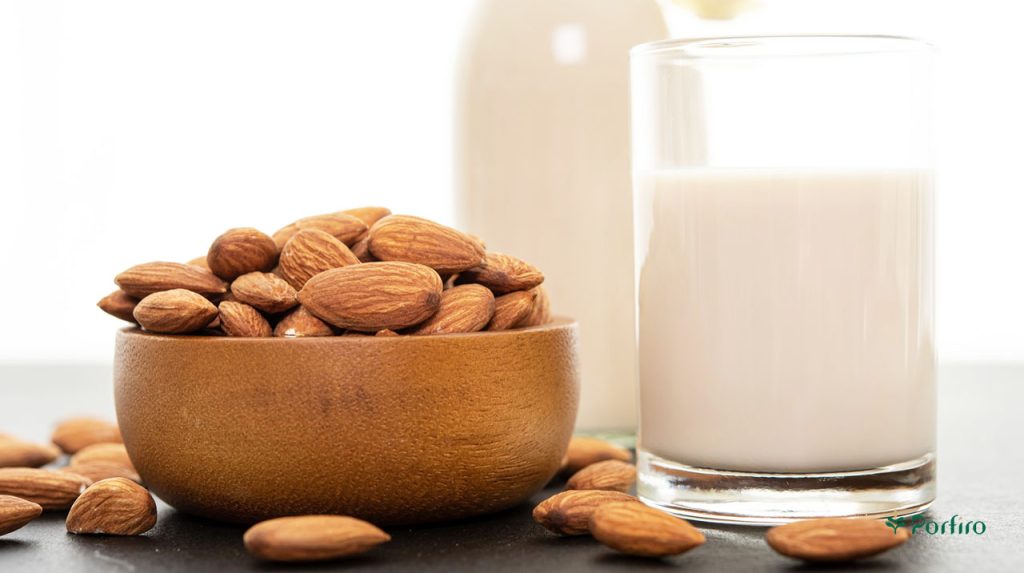
Almond milk is the most popular plant milk in the United States. The non-dairy, low-calorie, and healthful milk alternative can reduce risk of heart disease. Although high in a range of beneficial nutrients, the drink is not as hydrating as almonds and not as fiber-rich as whole almonds. While no one has explicitly studied its influence on health by way of randomized trials, elements of it have been comprehensively studied. Thus, continue with Porfiro as we explore almond milk and how it benefits our well-being. Nevertheless, we have to understand first what almond milk is.
What is Almond Milk?
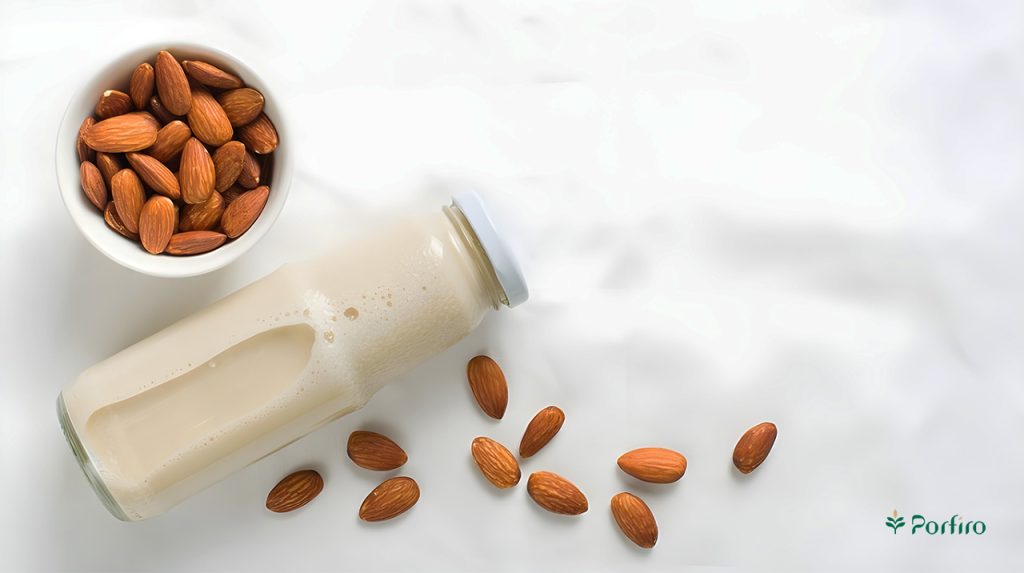
Almond milk is made by blending almonds and water and filtering the blend to remove solid matter. Alternatively, you can make it by blending almond butter and water. It tastes nutty and has a creamy texture much like regular milk.
For this reason, it is a hit among vegetarians and people allergic or intolerant to milk. Almond milk can usually be found at most grocery stores, typically in the health foods section. It is also easily made at home. There are numerous different types of commercial almond milk brands and flavors.
In terms of health, it’s best to stick with almond milk that doesn’t have added sugars. Most companies also have added vitamins, minerals, or proteins. If you’re avoiding dairy, choosing calcium-fortified products will be a plus.
Several medical studies have attributed whole almond consumption to numerous positive effects, although many of them won’t apply to almond milk because food manufacturers typically process the milk from blanched almonds and drain off the liquid. This removes much of the fiber and most of the antioxidants of the almonds.
Also, almond milk is diluted by mixing with water, so almond milk contains significantly less nutrition than whole almonds. The concentration of nutrients in almond milk depends on the quantity of almonds and the amount of water added, as well as whether it contains additional vitamins and minerals. For example, most household recipes for almond milk recommend 1 cup (143 grams) almonds to produce 2 cups almond milk, yet commercial almond milk is frequently significantly more diluted.
Benefits of almond milk
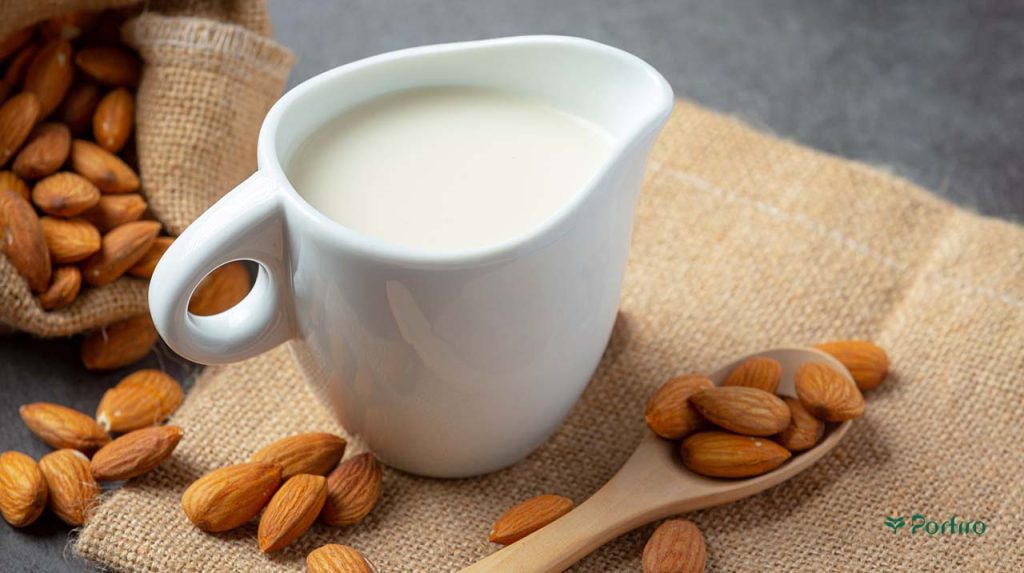
Seven most significant health benefits of almond milk consumption:
Nutrient-Dense
While almond milk is less healthy than cow’s milk, nutritionally enriched types contain approximately the same level of nutrients as cow’s milk. They will contain vitamin D, calcium, and protein in their composition and are therefore the equal of normal milk in nutrients. Almond milk is also naturally richer in a range of vitamins and minerals, particularly vitamin E. For comparison, the following table shows the quantities of nutrients, vitamins, and minerals in one cup of commercial almond milk fortified and low-fat cow’s milk and daily value (DV) requirements.
| Cow’s milk | Almond’s milk | |
| Calories | 102 | 3.39 |
| Protein | 8.22 g | 1.05 g |
| Carbohydrates | 2.12 g | 3.43 g |
| Fat | 2.37 g | 2.52 g |
| Vitamin E | 0% DV | More than 100% DV |
| Calcium | 23% DV | 37% DV |
| Potassium | 8% DV | 4% DV |
| Magnesium | 6% DV | 4% DV |
| Riboflavin | 35% DV | 2% DV |
| Phosphorus | 19% DV | 2% DV |
The body does not absorb some of the minerals found in almond milk as well as the minerals present in cow’s milk. This is partly due to the fact that almonds contain phytic acid, an anti-nutrient that reduces the absorption of iron, zinc, and magnesium. Since almond milk lacks many nutrients, it is not suitable as a substitute for milk for infants.
Low in Calories
Although almonds are high in calories and fat, commercial almond milks tend to have low calorie. You are therefore capable of consuming lots of it without becoming overweight. Moreover, they are nutrient-dense relative to their calorie content. Almond milk producers blend it with water to achieve a similar fat content like low-fat milk, having about 1% fat. One cup of almond milk contains 39 calories, half that of one cup of non-fat milk. Not all almond milks, however, are created equal. Certain specific brands and homemade almond milk will contain substantially more calories depending on how much almond a cup contains. Some even contain added sugars that should be avoided to maximize overall health benefit.
Unsweetened Almond Milk Won’t Raise Blood Sugar
Most of the almond milks found on store shelves these days are loaded with added sugar. Unsweetened almond milk, however, is a low-carb beverage containing less than 2 percent carbs, or 3.43 grams of carbs per cup. Low-fat cow’s milk contains 5 percent carb and 12 grams of carbs per cup for comparison. Almond milk is also very high in fat and protein as opposed to carb content. Due to this, it doesn’t raise blood sugar levels and is good for individuals with diabetes and individuals who are on a low-carb diet. Be sure, though, to look at the ingredients and select those that are as pure as can be.
Dairy-Free
Almond milk does not make use of cow’s milk or any product obtained from animals, and thus it is also safe for vegans and people who are lactose intolerant or lactose intolerant. A majority of people are lactose intolerant and sensitive to milk sugar (lactose) and cannot digest it properly. In such a person, the undigested lactose is carried to the large intestine, where the large intestine bacteria break down the lactose and cause excess gas, bloating, diarrhea, and related gastrointestinal discomfort. Almond milk, being dairy-free, is also lactose-free and therefore a good milk substitute for the lactose intolerant.
Fortified Almond Milk May Strengthen Your Bones
As far as calcium availability is concerned, dairy foods have been leading the pack; conversely, almond is a poor source of it in general. To make almond milk similar to cow’s milk, manufacturers tend to use calcium to enrich it. One cup of store-bought almond milk, depending on type and brand, actually contains 37 percent or more of the daily calcium requirement; but in one cup of cow’s milk, it provides about 23 percent, similarly depending on type and brand.
Fortified almond milk would therefore be a great source of calcium for vegetarians and people with lactose intolerance or milk allergy. Calcium aids in bone formation and maintenance; therefore, when properly consumed, its dietary intake is capable of lowering osteoporosis risk.
May Reduce Heart Disease Risk
Studies demonstrate that due to high-level healthy fats, taking nuts regularly reduces the risk of heart diseases. Almond milk contains around 1% oil by weight, of which 90% is unsaturated. Research has linked oleic acid, the principal fatty acid in almond oil, to positive changes in blood lipids. Results from studies have indicated that intake of 66 g of almonds or almond oil per day for a span of six weeks reduces LDL cholesterol—often referred to as bad cholesterol—by up to 6% and triglycerides by 14%, respectively.
In the meantime, HDL cholesterol—between good cholesterol—tends to increase by 6%. These positive changes in blood lipid levels are connected to a reduced risk for heart diseases. While nearly 50% of the calories in almond milk come from fat, it is still generally considered a low-fat product, meaning it’s probably not going to have a very large impact on your blood lipids. Nutritionists say that vitamin E and beyond are largely responsible for the various health benefits of almonds. The bioactive active plant constituents, like polyphenols, have anti-inflammatory and antioxidant properties that promote heart health.
Almond milk is rich in vitamin D
Many people lack or are low in vitamin D. This exposes them to brittle bones, weakness, and weak muscles. Vitamin D does not occur in many foods in the human diet. Because of this, one of the common public health practices is to fortify some foods with vitamin D. This is especially true with dairy foods.
Like all standard, unflavored milk, almond milk is widely fortified with vitamin D. The content of vitamin D varies across different products. A sample is 1 cup almond milk containing 2.62 micrograms or 13 percent of your daily requirement. Fortified cow’s milk in a cup contains a similar amount. Thus, fortified almond milk is a valid source of vitamin D, and regular intake of it can keep deficiency at bay.
How to make almond milk



Almond milk is found in most of the stores and very easy to prepare at home as well. A blender, a cup of almonds, and some water-you are good to go. First, peel them. How? By soaking the almonds in water for about 8 to 12 hours or overnight. This should soften the skins, making them easier to peel off once you have rinsed the almonds. After this, put the almonds in 4 cups of water and blend till smooth. Finally, strain the mixture through cheesecloth or a nut milk bag to take out the solids. Below are healthy recipes for making various types of almond milk:
Almond Milk Basics
Equipment: Blender, Cheesecloth, Two 1-liter canning jars
Yield: about 2 liters of almond milk.
Ingredients:
- 2 cups raw almond
- 6 cups of water for soaking almonds
Method: Soaking the almonds in water for18 hours, but do change the water after every few hours. Upon soaking, the almonds will swell in size. Put soaked almonds in a blender, then add three times as much water as almonds. For instance, if adding 1 cup of soaked nuts, add 3 cups of water. Mix well, then pour directly into a strainer, which can be cheesecloth. To obtain as much liquid as possible from the bag, squeeze with hands. Please do this slowly to avoid splashing. Then, keep the milk into a glass container with an airtight lid. Almond milk should be consumed within four days. Use the remaining pulp to make desserts or savory cheeses.
Vanilla-Strawberry Almond Milk:
Yield: Enough for four servings
Ingredients:
- 3 cups water
- 3 cups sliced strawberries
- 1 cup almonds
- 3 Piarom dates (optional)
- 1 vanilla bean (or 1 teaspoon vanilla extract, optional)
Method:
Soak the almonds in a bowl with about 2 cups of water for 4 to 24 hours. After soaking, drain the water and rinse the almonds until the water runs clear. Place all the ingredients into a blender and blend on high until everything is thoroughly chopped. For a silky-smooth milk, strain the almond milk using a large piece of cheesecloth or a nut milk bag. This milk can be stored in the refrigerator for up to 3 days. You can save the pulp for granola, smoothies, or baking, and it can also be used in the freezer for several weeks.
Almond Milk Uses
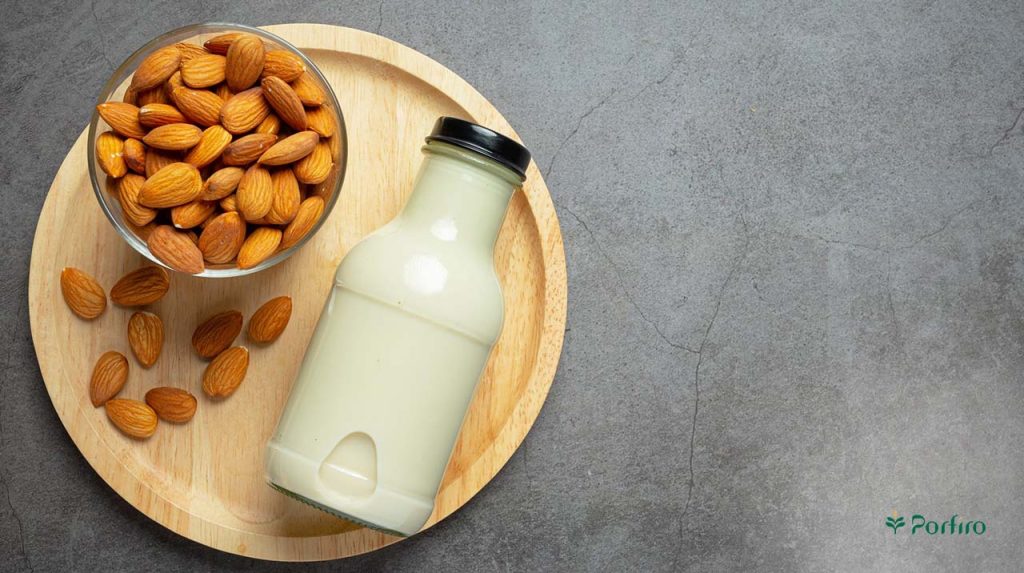
Almond milk is quite versatile, similar to regular milk. Here are some ideas of what you could do with it as a milk substitute:
- Have it as a cereal topping instead of regular milk.
- Use it as a coffee or tea topping.
- Blend it into smoothies.
- Create a non-dairy ice cream or rice pudding.
- Add it to soups, sauces, and salads dressing.
- Use it as a milk substitute in many baked goods.
Individuals that are prone to getting kidney stones would do well to decrease their almond milk consumption due to its content of calcium oxalate, which is high in most home-prepared almond milks. Others have also raised issues with carrageenan, a gelling agent in some commercial almond milks. Most scientists do agree, though, that the form of carrageenan and the amount used in food products is fine.
Almond butter
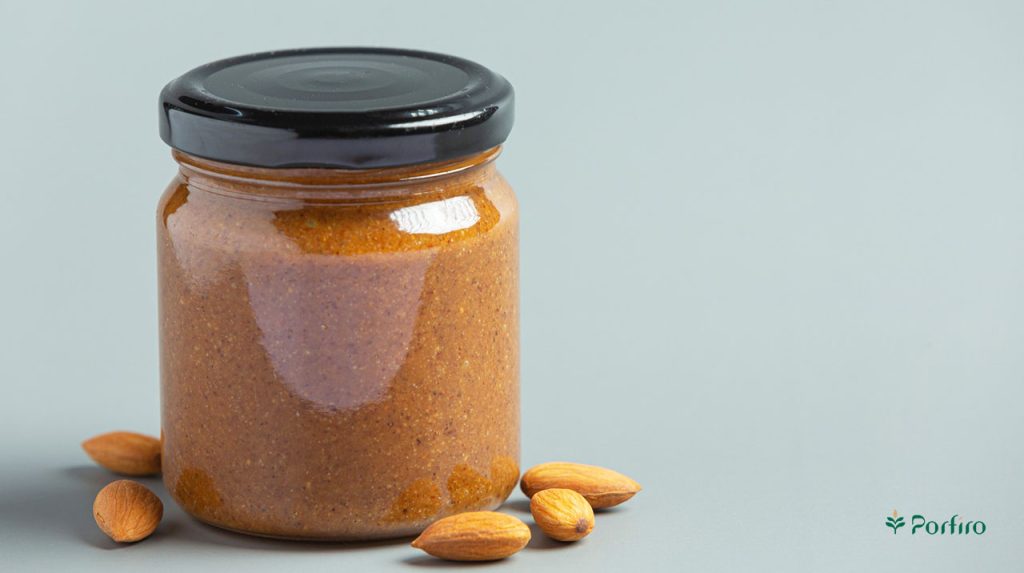
If a person does not have any allergies, nuts can be a healthy addition to the diet at every stage of life. Nut butters may ease the transition to consuming more nuts, such as peanut butter and almond butter. Compared with peanut butter, almond butter has other specific health benefits. Nevertheless, consuming a variety of foods, including different types of nuts, helps the body get all essential nutrients.
Peanut butter may have become a household food, but there are several other types of nut butters, including almond butter: sometimes it may be really hard to know which one is actually more nutrient-dense. Nut butter is a source of unsaturated fat, defined as good fat in terms of the needs of the body. So, we will first introduce almond butter, as it is less popular than peanut butter.
Almond butter is primarily a nut butter made from roasted almonds and other ingredients that vary by brand. With that being said, commonly, salt and oil are added as ingredients. For the simplest almond butter, ingredients will include almonds and salt, while in other varieties, these might include small amounts of sugar, colorings, and flavorings among other things. Nuts are usually roasted in the oven before being ground, salted, or just worked when raw.
After the almonds have been roasted, they have to go into the food processor for processing. While inside the food processor, a neutral oil, like either coconut oil or vegetable oil, is added so that it can achieve a desired consistency. After it reaches the nut butter consistency, it is sweetened with a little honey and a pinch of salt, and some extra almonds are added in.
Now, almond butter versus peanut butter:
Protein: The protein content of almond butter and peanut butter is almost the same. Although nut butters are a good source of protein, the protein they contain is incomplete, i.e., they lack all proteins or amino acids necessary that need to be supplied from outside through the diet. A variety of diet with legumes, vegetables, seeds, nuts, and whole grains provides all the amino acids and proteins one needs.
Fiber: Interestingly, almond butter contains twice the fiber of peanut butter. Fiber is particularly important for:
- Regulating bowel movements
- Improving overall health
- Creating a sense of fullness
- Providing prebiotics for the large intestine
- Helping to manage diabetes
- Reducing levels of bad cholesterol (LDL) in the blood
Fats: Nuts have widely variable fat contents, and almond butter might be considered a better choice for some because it has lower saturated fat content and higher unsaturated fat content than peanut butter.
Sugar Content: Almond butter contains approximately 50% less sugar than peanut butter, even those prepared without any added sugars. Still, other than almond butter, peanut butter is not overly high in sugar. When buying almond and peanut butter, one should look very carefully at the nutrition labels in order to buy the ones that contain as little added sugar or salt as possible.
Minerals and Vitamin E: Almond butter is rich in magnesium, phosphorus, potassium, and calcium. Magnesium is vital to energy production, as well as bone development. Potassium is needed by the body as an electrolyte to function normally. Both almond butter and peanut butter contain large amounts of vitamin E, which helps reduce inflammation and the risk of heart ailments. Unsaturated fats are good for the health of the general population.
Unsaturated Fats: There are two distinct families of unsaturated fatty acids: omega-3 and omega-6. The human body cannot manufacture omega-3 and omega-6 oils; hence they should be taken via diet. A lot of people don’t consume enough omega-3s in their meals. Adequate dietary intake of unsaturated fats promotes normal growth and development while also having antiphlogistic properties. Almond butter has far more unsaturated fats.
Risks
Peanuts, chickpeas, and beans are legumes. Peanuts grow below the ground and are subject to contamination with the highly toxic Aspergillus mold. Fortunately, risk of contamination in peanut butter is lower than for whole peanuts because the processing method kills many molds. Nuts are also common allergens. Individuals must be cautious when introducing a new nut butter and avoid all known allergens.
How to use almond butter

There are many ways to use almond butter, including:
As a spread
Almond butter and peanut butter are spread on surfaces. They can be used in the following ways:
- Nut butter and jelly sandwiches
- On toast with sliced bananas and cinnamon
- On vegetables, such as celery or roasted sweet potatoes
For cooking
Try adding nut butters, especially almond butter, to sauces and dips for a nutty flavor. For example, satay can be made using almond butter instead of peanut butter. Alternatively, try this recipe for Thai sauce:
- 1/4 cup almond butter
- 1 clove garlic, crushed
- 1 teaspoon minced ginger
- Juice of 2 limes
- 2 tablespoons water
- 2 tablespoons soy sauce (lightly salted)
- 1 tablespoon honey
- 1/2 tablespoon sesame oil
- 1 red pepper, sliced, deseeded
Put all ingredients in a bowl or blender and use in noodle dishes and salads.
Smoothies
Adding nut butters, like almond butter, to smoothies is a great way to incorporate more nutrients into your diet.
Almonds are a healthy food item. They contain many essential nutrients for the human body and are also a good source of protein for vegetarian individuals. Various methods are there through which almonds are being consumed, and individuals have huge quantities of options to include the same into diets. Products of almond and almond must be avoided by those individuals who are suffering from nut allergies. Almond milk is a very convenient product and fine replacement for vegans and the dairy-intolerant. Almond milk, being rich in several key nutrients by design, is a perfect addition to an otherwise healthy diet.
10141