



Infertility is a common health problem globally. Nutrition has become important for its impact on fertility. A balanced diet can help control hormones, lessen inflammation, manage oxidative stress, and improve fertility. Porfiro in this article, we discuss the impact of micronutrients and conditionally essential nutrients on fertility.
The B vitamins, particularly folate (vitamin B9), vitamin B6, and vitamin B12, hold key roles in gametogenesis and embryogenesis. Gametogenesis means the production of gametes, and gametes are the sexual reproductive cells of an animal or plant. In animals, female gametes are called eggs and male gametes are called sperm.
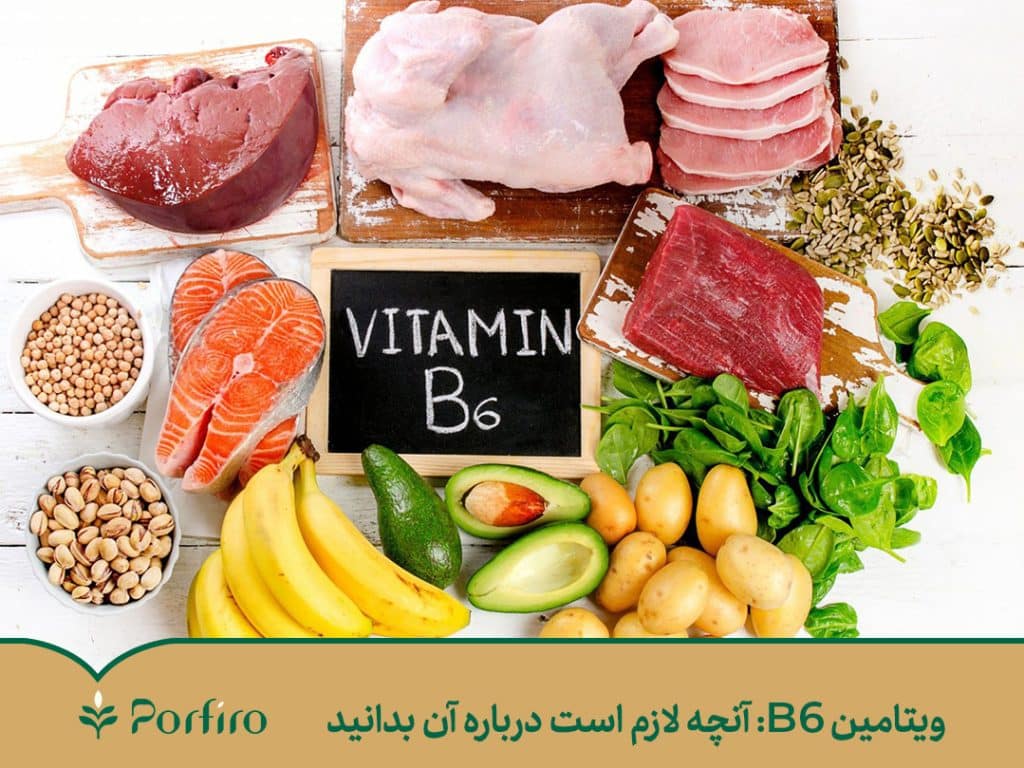
The richest natural sources of folate include green leafy vegetables (e.g., spinach, asparagus, lettuce), legumes (e.g., beans, lentils, chickpeas), whole grains, egg yolk, animal liver, and citrus fruits. The richest sources of vitamin B6 include fish and seafood, liver, eggs, potatoes and other starchy vegetables, and non-citrus fruits such as bananas and white cabbage. In addition, plant foods such as barley, soybeans, brown rice, wheat bran, beer yeast, and rye provide significant amounts of vitamin B6, albeit with slightly lower bioavailability. Instead, the most bioavailable sources of vitamin B12 are dairy products and seafood, particularly shellfish such as clams and oysters, as well as fatty fish.
The impact of folic acid, vitamin B12, and vitamin B6 on fertility largely hinges on their involvement in the metabolism of an amino acid called homocysteine.
Managing homocysteine levels influences oocyte quality and embryo development. Research has demonstrated that taking folate, B12, and B6 together enhances homocysteine metabolism, leading to better oocyte maturation, embryo quality, and higher implantation rates. High homocysteine levels can lead to inflammation, oxidative stress, and trophoblast cell death.
Trophoblast cells help a developing embryo attach to the wall of the uterus, protect the embryo, and form a part of the placenta. Therefore, a two-pronged intervention is needed for successful pregnancy: providing folate at the time of conception and managing homocysteine levels with vitamins B6 and B12.
Clinical evidence supports the effectiveness of this combined approach. For instance, a study in Italy found that taking folate with vitamin B12 nearly doubled the chances of pregnancy. Similarly, in a group of 364 Chinese women, higher pre-conception levels of vitamin B6 were linked to a twofold increase in conception odds and a 50% decrease in early pregnancy loss compared to those with deficiencies.
Moreover, a daily intake of 400 μg of folic acid around conception is known to lower the risk of neural tube defects like spina bifida and anencephaly in the fetus. Spina bifida is a birth defect in which there is incomplete closing of the spine and anencephaly is the absence of major portion of the brain and skull that occurs during embryonic development.
International guidelines recommend that all women of childbearing age consume 400–800 μg of folic acid daily, starting at least two months before conception and continuing until the 12th week of pregnancy.
In a prospective study with 232 women undergoing IVF treatment, it was found that a preconception folate intake of over 800 μg/day resulted in a 20% higher chance of live birth compared to those consuming less than 400 μg/day.
Additionally, a large cohort from Denmark indicated that women taking folic acid supplements had better fecundability than those who did not use it. Thus, both folate (the natural form) and folic acid (the synthetic version) play an essential role in reproduction and should be monitored closely during the conception process.
Vitamin D is a fat-soluble nutrient essential for bone growth and health because it helps absorb calcium, magnesium, and phosphate. Recent research indicates that vitamin D also plays a role in regulating reproductive functions in both men and women. The vitamin D receptor (VDR) and enzymes that metabolize vitamin D are present in the reproductive tissues of both genders, highlighting its significant role in processes spermatogenesis, the menstrual cycle, and embryonic implantation.
The VDR is found in various cell types within the male reproductive system, including sperm, as well as in female reproductive tissues such as the ovaries, endometrium, and placenta. Supporting the importance of vitamin D for fertility, studies on mice lacking VDR revealed infertility, lower sperm counts and motility, and abnormalities in the testes, ovaries, and uterus.
Vitamin D mainly comes in two types: D3 (cholecalciferol) and D2 (ergocalciferol). Very few foods have significant natural amounts of it. The best sources of D3 include fish, egg yolk, and liver, while meat has only a small amount. For vitamin D2, some wild mushrooms can have notable levels. Since there are so few foods rich in vitamin D, the skin’s production of vitamin D becomes the main source.
Both vitamin D2 and D3 are combined with a hydroxyl (OH) group in the liver by an enzyme, called hydroxylation. These forms are then re-hydroxylated by another enzyme in the kidneys to the most active form of vitamin D, 1,25-dihydroxyvitamin D.
Vitamin D deficiency is a worldwide health problem, and adequate intake has been linked to a reduced incidence of various chronic diseases, such as cardiovascular disease, cancer, obesity, diabetes, and infertility.
The suggested daily intake of vitamin D for adults is between 400 to 800 international units (IU), which can be achieved through vitamin D2 or D3 supplements, depending on the deficiency’s severity, along with dietary changes and enough sun exposure. However, more research is needed to specifically examine the relationship between vitamin D and reproductive health to fully understand how this nutrient class affects fertility.
Antioxidants are substances that shield cells from damage caused by oxidants. There are two types of antioxidants: enzymatic (like superoxide dismutase, catalase, and glutathione peroxidase) and non-enzymatic, which consist of vitamins (such as vitamin C and E) and mineral cofactors (like selenium and zinc).
These compounds are plentiful in plant-based foods, including fruits (like citrus fruits and berries), vegetables (such as green leafy vegetables, spinach, and tomatoes), nuts (like almonds), seeds, legumes, and also in herbs and spices (such as turmeric, cinnamon, and garlic).
A diet high in these foods offers external antioxidant compounds that, along with the body’s own antioxidant defense systems, assist in neutralizing excess oxidants and safeguarding tissues from oxidative stress.
Too many oxidizing molecules can be harmful, leading to oocyte damage, disrupting follicular development, and decreasing endometrial receptivity, which negatively affects fertilization and embryo implantation. Furthermore, high levels of oxidative stress have been linked to various female infertility issues: PCOS, endometriosis, premature ovarian failure, unexplained infertility, and recurrent miscarriages.
Oxidizing molecules are often linked to male infertility because sperm cells are especially sensitive to them due to their low cytoplasmic antioxidant levels. Additionally, sperm membranes are high in PUFAs, making them prone to lipid peroxidation by oxidants, which leads to reduced membrane flexibility, structural issues, and decreased mobility. These oxidative damages lower semen quality and hinder fertilization, contributing to reproductive issues.
In this regard, increasing antioxidant intake may help reduce oxidative harm and enhance reproductive health. Both ascorbic acid (vitamin C) and tocopherol (vitamin E) have strong antioxidant properties that are vital for maintaining good health and fertility. In this context, a study by Greco et al. looked at the effects of high doses of vitamins C and E in infertile men with significant sperm DNA fragmentation.
After two months of antioxidant treatment (1 g of Vit C and 1 g of Vit E daily), there were no significant changes in basic sperm parameters between the treated and placebo groups. However, the percentage of DNA-fragmented sperm decreased significantly from 22.1% to 9.1% in the antioxidant group. Furthermore, there was a notable increase in clinical pregnancy rates (48.2% vs. 6.9%) and implantation rates (19.6% vs. 2.2%) after antioxidant treatment compared to the results from pre-treatment.
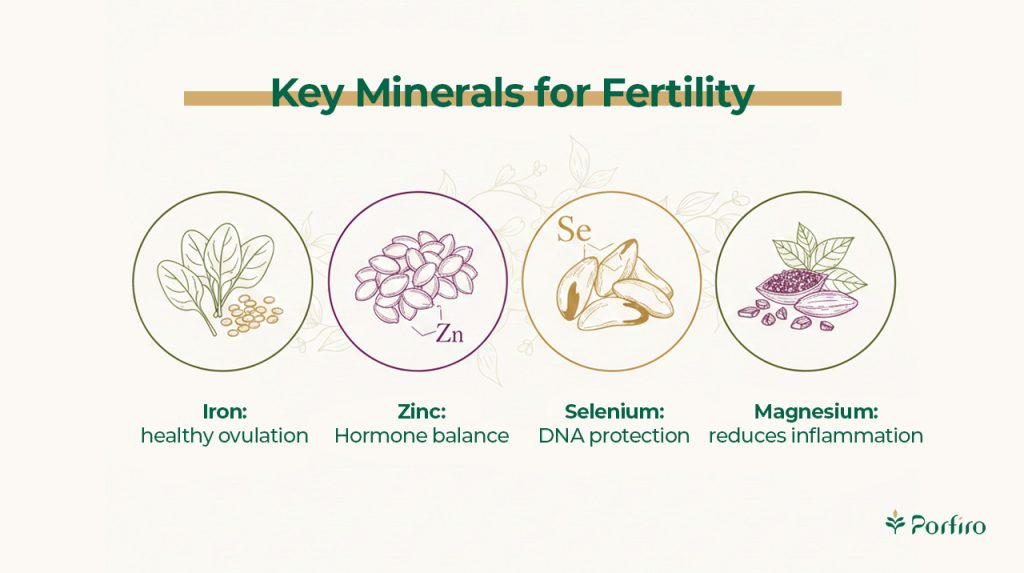
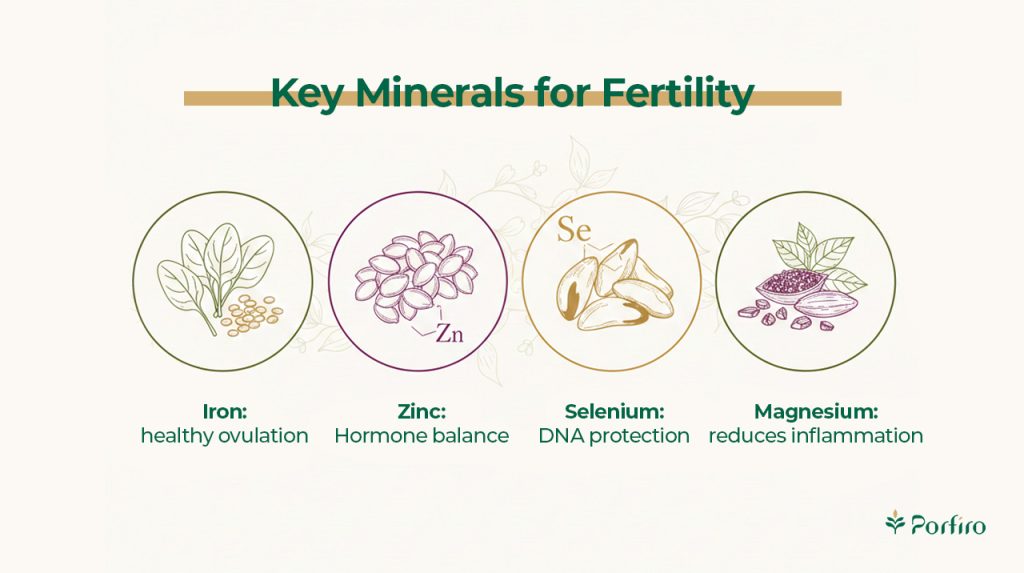
Certain minerals serve as cofactors in antioxidant defense systems and play a role in supporting human fertility. Cofactors can be considered helper molecules that assist in biochemical transformations. Adequate zinc intake is known to help maintain sperm integrity. Zinc supplementation in infertile men has been found to enhance sperm function.
For instance, a clinical study involving 60 asthenospermic (a disease in which sperm motility is reduced) men who took 440 mg/day of zinc sulfate for 3 months showed an increase in sperm volume, motility, and total sperm count.
Selenium is also vital for spermatogenesis. The combined use of selenium (200 μg) and vitamin E (400 IU) for 100 days in 690 infertile men resulted in improved sperm motility, morphology, or both in 52.6% of cases, along with a 10.8% increase in spontaneous pregnancies compared to those who were untreated.
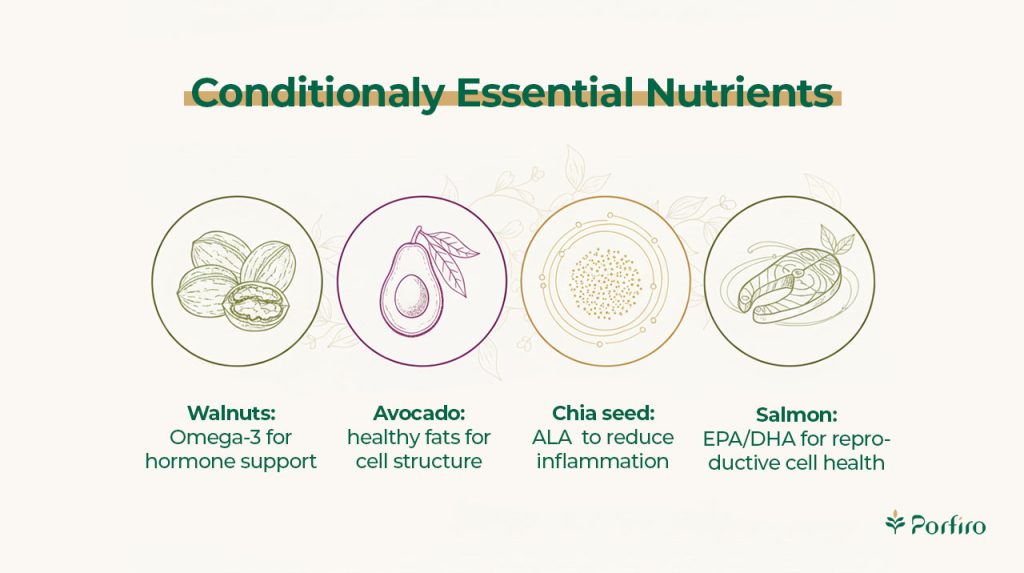
Conditionally essential nutrients (CENs) are substances produced by the body in adequate amounts to fulfill physiological needs. However, during certain disorders or stressful physiological situations, their levels may fall short, necessitating intake through diet or supplements. Evidence indicates that some CENs have shown beneficial effects in fertility. Creatine, a widely recognized CEN, has gained attention as a potential male fertility enhancer due to its involvement in sperm energy metabolism, as demonstrated in various interventional studies. Red meat and seafood are sources of creatine.
In women, higher levels of melatonin, a hormone with antioxidant effects, found in follicular fluid have been positively linked to the number of follicles, embryo quality, and improved pregnancy rates in those undergoing IVF. This is because lower melatonin levels in follicular fluid can lead to anovulation and poor oocyte quality in women with PCOS. Thus, melatonin treatment may enhance oocyte quality during follicular maturation.
Additionally, a study showed that melatonin supplementation in women with reduced ovarian reserve significantly increased the number of oocytes, fertilization rates, and embryo quality, resulting in higher pregnancy rates. Furthermore, melatonin reduced markers of oxidative stress. Melatonin is found in milk, nuts, especially pistachios, fatty fish, and rice.
Several studies suggest that ubiquinone (coenzyme Q10) supplementation might enhance oocyte and embryo quality in women with reduced ovarian reserve. Coenzyme Q10 is found in organ meats such as heart, liver, and kidneys, fatty fish, and nuts.
Likewise, it has been shown that L-carnitine supplementation, an antioxidant nutrient, can promote ovulation, boost pregnancy rates, and improve endometrial thickness in women with PCOS, as well as increase ATP production in oocytes by aiding their maturation and early embryonic development. ATP is a high-energy molecule that can be found in all cells and is the main energy source for cells. Meat, poultry, fish, and dairy products are richest sources of L-carnitine.
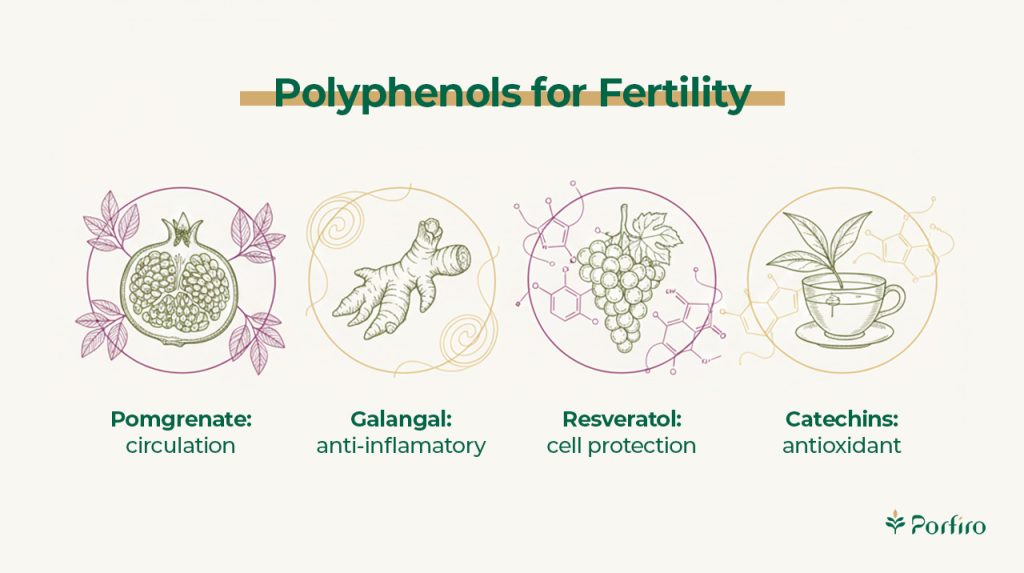
Polyphenols are the most prevalent secondary metabolites (a substance formed in or necessary for metabolism) from plants found in human diets, as they are plentiful in fruits, vegetables, tea, and grains. Flavonoids are the most recognized category within polyphenols and can be categorized into various subclasses like flavanols, anthocyanidins, anthocyanins, isoflavones, flavones, flavonols, flavanones, and flavanonols, depending on their structure.
They are known for a wide range of biological effects, including anticonvulsant, anti-infective, anti-obesity, and protection against toxic pollutants, as well as being interesting candidates for anti-cancer treatments. Among these effects, the anti-inflammatory properties and strong antioxidant capabilities of flavonoids are the most significant, which are also utilized in clinical applications.
Their antioxidant abilities have also been studied in relation to both female and male fertility, as they have been found to safeguard gametes and gonads from oxidative stress. Oxidative stress, as previously mentioned, is acknowledged as a significant factor in reproductive dysfunction for both genders.
In this regard, a higher intake of antioxidants may help mitigate oxidative damage and enhance reproductive health. Recent research indicates that plant secondary metabolites, especially polyphenols and specifically flavonoids, are crucial in influencing human fertility.
Specifically, consuming flavonoid-rich pomegranate juice and an extract from greater galanga (Alpinia galanga) has demonstrated promising in vivo results on rodent sperm quality, leading to increased spermatogenic cell density and improved sperm motility. In human studies, participants consumed tablets containing pomegranate extract and freeze-dried rhizome of greater galanga.
This intake was found to enhance seminal quality; after three months of treatment, the total number of motile sperm rose by 62% (from 23.4 to 37.8 million). Pomegranate extract may also assist in regulating female reproduction by balancing hormonal levels and reducing ovarian inflammation.
Resveratrol a chemical compound found in grapes and a precursor to flavonoids, along with other grape seed flavonoids like proanthocyanidins, has demonstrated the ability to enhance folliculogenesis and oocyte maturation. In women with PCOS, resveratrol has shown positive effects on endocrine-metabolic balance. A randomized clinical trial indicated that a 3-month treatment with 1500 mg/day of resveratrol resulted in a significant decrease in total testosterone (−23.1 %) and dehydroepiandrosterone (helps produce testosterone) (−22.2 %).
At the same time, fasting insulin levels dropped by 31.8 %, and the insulin sensitivity index rose by 66.3 %. Furthermore, the authors propose that since insulin is known to stimulate androgen production in both ovaries and adrenal tissues, the observed reduction in insulin due to resveratrol may have contributed to the lowered androgen levels. In another clinical study, taking 1000 mg/day of resveratrol for 3 months improved menstrual function. The treated group exhibited a notably higher percentage of regular menstrual cycles (76.47 % vs 51.61 %) compared to the placebo group.
Additional studies indicate that consuming green tea, which is high in catechins, boosts sperm concentration and viability in rats.
Quercetin, a flavonol present in grapes, onions, and tea, causes improvements in sperm motility and integrity.
Moreover, quercetin has demonstrated positive effects in women with PCOS. A clinical trial indicated that 500 mg/day of quercetin during the pre-ovulatory phase led to significantly reduced plasma levels of inflammatory markers. In this trial, consistent quercetin use was also linked to better oocyte quality and higher pregnancy rates in PCOS patients.
Overall, flavonoids exhibit various biological mechanisms that are important for fertility protection, and from a supplementary viewpoint, these compounds can also be extracted from fruit manufacturing waste to create sustainable nutraceuticals.
B-vitamins, especially folate (B9), B6, and B12, are vital for reproductive health, aiding in the development of eggs and embryos. These vitamins help manage homocysteine levels, which affect egg quality and embryo development. Studies indicate that taking these vitamins together can improve fertility, with increased folate linked to higher pregnancy rates. Women trying to conceive are advised to take 400-800 μg of folic acid daily before and during early pregnancy to lower the risk of fetal defects.
Vitamin D is essential for bone health and reproduction, aiding in mineral absorption and mostly obtained from sunlight. Vitamin D deficiencies can lead to health issues, including infertility. Adults are recommended to have a daily intake of 400-800 IU of vitamin D.
Vitamins C and E serve as antioxidants that protect cells. High intake of antioxidants may benefit reproductive health by reducing oxidative stress affecting fertility. Certain minerals like zinc and selenium are important for male fertility, with studies showing improvements in sperm function and quality associated with their supplementation.
CENs like creatine and melatonin have also shown potential benefits for fertility. Polyphenols and flavonoids, found in foods like pomegranate juice and green tea, can enhance reproductive health and hormone regulation. Overall, vitamins, minerals, CENs, and polyphenols can have beneficial effects on fertility.
10224
Reference