


Swimming Nutrition: How to Fuel Your Body for Better Results
General Information
- 1About swimming
- Recreational Swimming
- Competitive Swimming
- 2Health benefits of swimming
- 3Who Should Not Swim?
- 4The importance of Swimming Nutrition
- 5Suitable foods for swimming
- 6What is the best food to eat before swimming?
- 7How much should we eat before swimming?
- One Hour Before Competition
- Two Hours Before Swimming
- Three to Four Hours Prior to Swimming
- Right Snacks for Pre-Swim Early Morning Sessions
- How to Keep Yourself Hydrated While Swimming
- 8Dining post-swimming
- Consumption Immediately Following Swimming
- Having Several Hours of Eating After Swimming
- Selecting Proper Foods Following Swimming
- Best Foods to Eat After Swimming
- 9Foods to Avoid Before or After Swimming
- 10Snack Tips for Swimmers
- 11Porfiro's Gift: A Recipe for an Attractive Snack for Swimmers
Proper nutrition is essential for optimizing both performance and health in athletes. Adequate energy consumption is a must for improved performance, injury reduction, and avoidance of low energy availability – each sport and its associated physiological demands will require different nutritional plans.
A dietary pattern that is abundant in dietary fiber improves the diversity of the gut microbiome – diversity linked with endurance and athletic performance. It takes more than diets, the proper composition and timing of macronutrients, and the adequate level of hydration to improve performance.
Supplements can be beneficial to help achieve nutritional and performance goals, reduce the risk of illness and injury. Providing education to athletes and coaches on the ideal plans for athlete nutrition is integral to mitigating the detrimental concern of poor sports diet consumption and relative energy deficiency.
In this article, Porfiro discusses essential swimming nutrition strategies for swimmers, but before diving into the details, it’s important to have a brief overview of swimming and its benefits.
About swimming
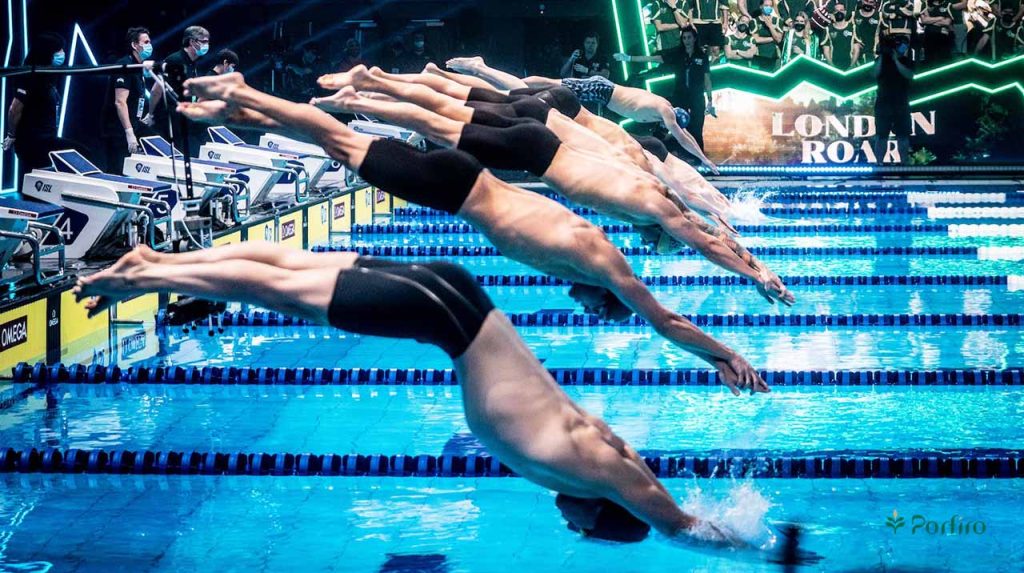
Swimming offers numerous health benefits to both body and mind. Swimming is especially good for certain categories of people such as older people, pregnant women, and patients with arthritis, diabetes, disability, or obesity, and is suitable for all, irrespective of age. Regular swimming improves lung vital capacity, which allows the lungs to take in the maximum amount of oxygen. This activity also has a positive effect on mental health, such as increasing life satisfaction, improving perceived health, and decreasing stress, anxiety, tension, and depression.
Also, swimming can benefit those with Duchenne muscular dystrophy since it reduces oxidative stress and improves memory. Swimming activities might also have beneficial impacts on swimming skill, self-esteem, happiness, safety, learning beyond the classroom, and social interaction. Some styles and dimensions of swimming are as follows:
Recreational Swimming
Swimming is among the most suitable recreational activities for anyone regardless of age. Recreational swimming can be low intensity, and thus an appropriate method of relaxing and being in good mood. The most common types of swimming in recreational swimming are:
- Breaststroke
- Backstroke
- Freestyle
Competitive Swimming
Others. They prefer to take it into the competitive scene. It provides them with the health benefits of intense exercise plus the fun and excitement of competition. Strokes employed in competitive swimming include:
- Breaststroke
- Freestyle
- Backstroke
- Butterfly
Swimming competition distances are as short as 50 meters in a pool to very long distances in open water.
Health benefits of swimming
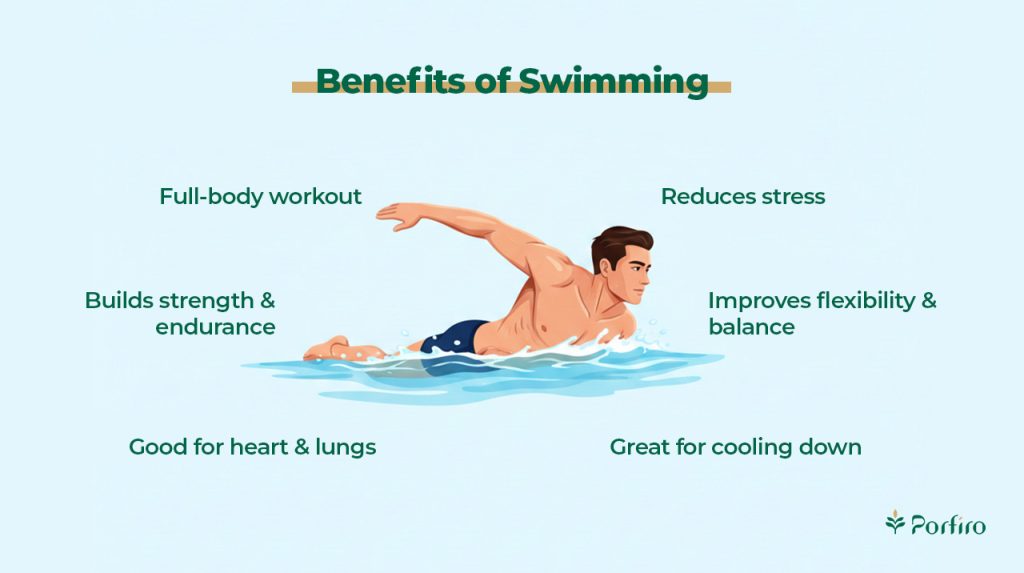
Swimming is a great workout because it makes you move your entire body through the resistance of water. When you swim, it is a highly beneficial, multi-purpose activity. Swimming:
- Increases your heart rate while relieving some stress from your body;
- Increases your muscular endurance, muscular strength and cardiovascular durability or fitness;
- Helps you keep a healthy weight, heart and lungs;
- Increases your muscular strength and muscle tone;
- Is a full-body exercise because you’ll be utilizing nearly all your muscles when you swim;
- Is an enjoyable form of exercise and is a simple way to relieve stress;
- Develops coordination, flexibility, balance and posture;
- Can be therapeutic for some injuries and mental health;
- Is one of the better ways to cool off on a really hot day.
Who Should Not Swim?
- Individuals with contagious diseases: Patients suffering from conjunctivitis, trachoma, emphysema, or contagious intestinal diseases should not swim until they are cured since swimming will worsen their conditions. The same applies to individuals suffering from contagious skin diseases, who should not swim in order to avoid infecting others and themselves.
- People with ear problems or hearing impairment: Swimming is not appropriate for people with particular ear abnormalities or for deaf individuals because the organs in the middle ear, which help in balancing the body, could be damaged, preventing the body from balancing itself. A high percentage of drowning incidents happen due to loss of balance.
- Individuals with poor general health: Individuals who have severe heart disease, high blood pressure, or psychiatric problems are advised against swimming as they will pass out in the water. Without rescue, this can lead to accidents.
- People who have recently exercised strenuously or consumed excess amounts of water: Entering the water after strenuous exercise or excess water consumption is not advisable as excess water makes stomach acid less potent, thereby decreasing the body’s resistance to germs. Rest is advisable prior to swimming.
- Women during menstruation, pregnancy up to two months post-birth, and in one month following miscarriage or ligation of tubes: Swimming is not done at these times.
The importance of Swimming Nutrition
The right foods you consume right before and right after swimming will determine your performance in the pool and will help your body recover quicker. Whether you are competing, swimming for exercise, or swimming for fun, being aware of what are the best options to eat – and when to eat it – will be crucial. Your best food options will be determined by your particular goals. For example, goal is you aiming for sustained peak performance so you can expend energy slowly, or do you want a low-fat, easy-to-digest meal that makes you “feel good” when you swim?
To be prepared to perform at your best, you will need to consider what nutritional foods to eat before and after swimming, to make sure you have the best workout possible. That is why it is important to know what foods are high in energy so you can swim longer – and what are the foods to avoid. Porfiro illustrates the key importance of when you are being smart about your nutrition before and after a swimming session.
Suitable foods for swimming
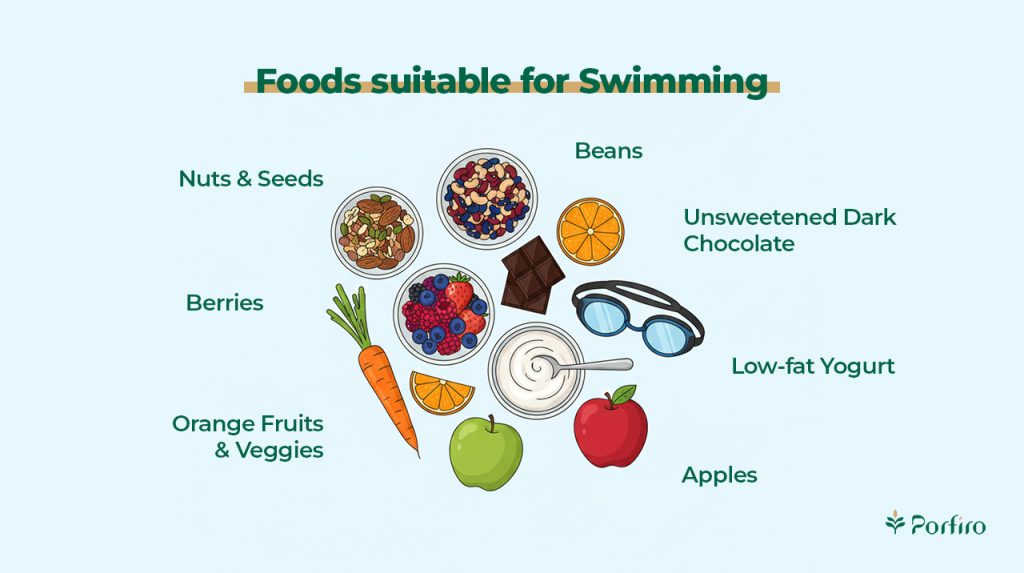
There is no shortage of nutritional food that can be eaten by swimmers, but the timing has to be right if the best out of each category of nutrient has to be obtained. Complete protein food is what the swimmers need, but it is difficult to digest such a food during swimming. Hence, as much as high-protein food is welcome, high protein while swimming turns out to be counter-productive. Academy of Nutrition and Dietetics warns that eating foods that are hard to digest or in humongous quantities will upset a swimmer’s performance on the competition day or even a practice session.
To help you choose when to incorporate these foods into your nutrition, use the following general guidelines. Personal best for you again must be found by trial and error. Here is a list of some of the healthier foods that are best for fantastic returns to your body as an athlete, and best for anyone:
- Nuts and Seeds: Packed with healthy fats, fiber, protein, magnesium, and vitamin E. Sprinkle on cereals or yogurt or have them raw. Walnuts are particularly loaded with a variety of vitamins and fatty acids that provide good mood and energy levels.
- Beans: Full of fiber, protein, iron, zinc, and magnesium, beans are a tasty addition to almost any meal. Roast them as a crunchy snack or use them in burritos, salads, or pasta.
- Berries: Blueberries, raspberries, mulberries, and strawberries are all antioxidant heavy hitters. Blend them into smoothies for a flavor explosion or enjoy fresh as a sweet treat.
- Unsweetened Dark Chocolate: Rich dark chocolate has excellent antioxidant capabilities without added sugar.
- Low-Fat Yogurt: Full of calcium, vitamin D, potassium, and protein, low-fat yogurt provides sustained energy and helps with muscle recovery. Greek yogurt contains even higher protein
- Milk or Soy Milk: Milk is a source of protein, calcium, potassium, and vitamin D. It is fortified if sensitivity exists or plant foods are utilized. Both are good recovery beverages post-exercise.
- Dark Leafy Greens: Kale, spinach, and collard greens are excellent sources of iron and calcium. In order to get the richest iron out of these greens, have them with foods that have vitamin C or with meat.
- Orange-Colored Fruits and Vegetables: These fruits and vegetables are rich in vitamins C, E, A, and potassium, which are needed for a healthy immune system.
- Potatoes and Sweet Potatoes: Potatoes are not so bad and should be included in a balanced healthy diet. White potatoes contain a lot of antioxidants, and sweet potatoes are full of lots of beta-carotene that is great for endurance.
- Apples: Consume an apple every day has been linked with higher levels of free radical defense—unstable molecules that bind to other molecules to stabilize themselves but that have the potential to induce aging and chronic diseases like cancer and autoimmune disease. Antioxidants cancel out the activity of free radicals.
What is the best food to eat before swimming?
When considering pre-swim training or competition fueling, two factors should be considered: the length of the activity and the time available prior to the activity. In this regard, look for foods with complex carbohydrates. A moderate-sized meal featuring these slow-burning carbohydrates will provide you with sustained fueling so you can swim for extended periods.
For example, if you’re a typical swimmer planning to swim an hour after finishing work and have one hour between leaving the office and starting to swim, any of the following make good pre-workout snacks:
- A few crackers
- A piece of fruit
- Fruit juice
For an hour workout, you don’t need a full meal—a light carb snack is sufficient. But if you’re swimming two hours or more, acclimate your body ahead of time. Eat a hearty meal four or five hours before working out and refuel your energy stores about 90 minutes before with a protein and carb-based snack. The added protein is what enables your body to swim for longer periods. Snacks can include:
- Cheese and crackers
- A piece of fruit with yogurt
Generally, from the following list, any one of these foods will be suitable pre-swim food to provide steady energy:
- Whole-wheat pasta
- Whole-grain bread (bread containing whole flour)
- Brown rice
- Sweet potatoes
- Chickpeas and beans
- Unsalted nuts
- Oat porridge
You can also try yogurt or smoothies, which are good solutions for energizing your body without clogging your digestive system. Bananas are always a suitable piece of fruit.
How much should we eat before swimming?
The consensus among expert source is that it is acceptable to eat food, ideally, at least 1 hour, prior to swimming. Slow-release carbohydrates take time to digest. If you swim too soon after eating, you may feel bloated and not reap the rewards of additional fuel you have used.
When you eat, blood flow is diverted away from the muscles and into the digestive system to enable the breakdown and systemic processing of food; in other word, blood flow is redirected away from the muscles in order to aid digestion. From pre-swim food to swim, blood will need to be redirected from both of those processes. In consideration of blood flow, below are acceptable snacks at different times in relation to swim:
Consume at least 10–15 grams of carb-containing snack foods 15–30 minutes before swimming, such as:
- Banana: Consume a half-banana during competition or prior to exercise to boost potassium and carbohydrates.
- Fruit snacks: Simple-to-digest, convenient, and shelf-stable fruit snacks you can take with you to the pool in your swim bag.
- Piarom Dates: One to two dates per serving boosts energy reservoirs and prepares you for your next big meet or practice. Dates are a natural source of sugars such as sucrose, fructose, and glucose, which account for two-thirds of the fruit’s weight. Fresh date contains approximately 157 calories per 100 grams of fruit. For dried dates, the calories are over 300 calories per 100 grams. Apart from sugar, dates contain protein, crude fiber, fat, and antioxidants meaning dates, therefore, are classified as a functional food with benefits to health. By combining dates along with other nutrient-dense natural foods, athletes are effectively boosting their energy performance and health. Dates, when combined with probiotics, are energy dense food that can support gut bacteria.
- Raisins: A half of a small 40-gram box provides swimmers with immediate energy.
- Pretzels: To feel a gain in sodium and energy between training and race, consume around 15 to 20 crunchy pretzels.
- Honey: For rapid intake of easy carbohydrates in the form of natural sugars, take a small quantity of honey.
- Dry cereals: A handful of your favorite cereal is suitable for swimmers.
- Dry apple: Refuel your energy tank with 4 to 5 pieces of dry apple between events!
- Sports gels: High carbohydrate food products that offer quick release of energy without chewing time wasted.
- Sports gums: Various brands of sports gums have carbohydrates and electrolytes to utilize during exercise.
- Dried mango: These chewy, carbohydrate-filled dried fruits will certainly boost your energy levels!
- If necessary and tolerated, drink a few sips of water prior to swimming. Consuming simple sugars such as glucose, fructose (present in fruits), and sucrose (table sugar) restores energy levels quickly.
One Hour Before Competition
Some competitive swimmers take in more carbohydrates 30–60 minutes prior to a race. It is recommended to take in a snack around one hour prior to swimming that contains 45 to 60 grams of carbohydrates. If your stomach can tolerate additional protein, you can include cheese or hard-boiled eggs with these snacks. Here are some examples of snacks that provide 45 to 60 grams of carbohydrates:
- Figs + apple slices: This natural sweetness is a pleasing snack combining the soft sweetness of figs and the crunch of apple slices that is satisfying and balanced.
- Granola + grapes: The chewy, crunchy nature of this granola combines some fresh juicy sweetness of grapes that provide you with carbs as well as hydration.
- Instant Oatmeal packets: If you can hydrate with hot water, instant oatmeal with all the flavors and options available is a quick, easy snack found in most grocery stores that provides a significant amount of carbs. There are instant oatmeal packets that allow you add whatever flavors you want to add with fruit, nuts, and honey, too.
- Pastry with jam + peanut butter: A classic combination that works incredibly well. The pastry has carbs, and the peanut butter provides protein, along with healthy fats.
- English muffin with jelly + cup of fruit: In the same category as the pastry and jam, your English muffin with jelly will provide you carbohydrates, and the cup of fruit provides some extra vitamins and minerals.
- Homemade energy mix: Combine one cup of dry cereal, half cup of dried fruit, and one cup of pretzels for a snack that can be customized with crunchy cereals, salty pretzels, and sweet dried fruit.
- Whole-grain biscuit breakfast + blueberries: Whole-grain biscuits offer carbs needed, and a sprinkle of antioxidant blueberries brings flavor and nutrition.
- Waffle + strawberries: Enjoy the delicious pairing of a thin waffle and fresh strawberries; waffles provide carbs, and strawberries offer natural sugar and vitamin C.
- Tortilla roll-up: Spread almond butter (or your favorite nut butter) on a tortilla, add sliced banana and drizzle with honey for a full mix of carbohydrate, healthy fat, and natural sugar.
Each of these snacks gives you an even amount of carbohydrates, proteins, healthy fat, and natural sugar to fuel your activity and keep you going throughout the day.
Two Hours Before Swimming
Up to two hours before competition you can have balanced snacks that double as meals. Some competitors choose to eat larger meals a couple of hours before the race rather than snack in the minutes before the race to prevent tripping or vomit during the race. If you have a bit more time, consider consuming more complex carbs, such as whole grains. They burn slowly and keep your blood sugar stable. Some great place to eat 2 hours before include:
- Greek yogurt: This snack has a great mix of protein and deliciousness. Mix some Greek yogurt with granola for crunch, honey for sweetness and fresh berries for flavor and antioxidants.
- Oatmeal: A delicious and nutritious snack, made by mixing oats, dried berries, nuts, sliced fruits, preferred milk and a little honey. It’s made ahead so you can prep it the night before and keep it in the refrigerator for a fast breakfast or snack the next morning.
- Peanut butter and jelly sandwich: Ideally, use whole wheat bread for a combination of carbs, protein, and healthy fats.
- Pasta salad: Cook and cool your favorite type of pasta, then toss it with olive oil, tomatoes, cucumbers and bell peppers, chickpeas for protein and low-fat feta cheese.
- Breakfast pancakes: Enjoy a hearty breakfast by making pancakes topped with syrup for carbohydrates; add eggs to provide lean protein and amino acids for muscle recovery.
Three to Four Hours Prior to Swimming
If you have the luxury of time to space out activities, here are some good options that are rich in complex carbohydrates:
- Pasta: Shredded turkey pasta, vegetables marinara sauce, and whole wheat pasta. Whole wheat pasta is a good swim pre-meal because it provides a balance of carbohydrates for energy in the long-term, turkey protein for repairing and maintaining muscles, and vitamins and minerals from vegetables.
- Wrap: A whole wheat or spinach tortilla wrapped with lean protein source (chicken or turkey) and veggies and avocado topped with hummus and pita chips is a great pre-race snack containing carbohydrates, protein, and avo healthy fat.
- Omelet: Vegetables of your choice, eggs, plus two slices of whole-grain bread and a slice of fruit, make up a healthy snack. Eggs have top-quality protein, while vegetables and whole-grain bread deliver extra carbohydrates and fiber.
- Stuffed potato: Baked potato or sweet potato filled with cheese, protein, sour cream, and your choice of vegetables is a satisfying snack a couple of hours before your next swim. For protein, choose as preferred, i.e., chicken, beef, or beans.
- Rice: Brown rice or white rice with your choice of vegetables and protein (tofu, chicken, etc.) is an easy and readily available pre-competition snack.
These options provide complex carbohydrates along with proteins and fats to sustain energy and aid in muscle recovery in swimming.
Right Snacks for Pre-Swim Early Morning Sessions
Having the right food before swimming also depends largely on the time of your visit to the pool. If you will be swimming during the day or in the evening, having proper meals is not at all difficult. But what if your only opportunity to go swimming is early morning before school or work?
Most swimmers just head straight to the pool when they wake up, without getting an hour or two to have breakfast and digest it properly. If possible, then it is better that you eat first before swimming. Training on an empty stomach usually yields quicker exhaustion and insufficient energy to gain the full benefit of your training session.
Quick energy-boosting snacks for swimmers who must get up and go directly to the pool include a large banana or Piarom dates. These are rich in natural sugars and easily digestible, so they shouldn’t leave a heavy feeling in your stomach. Other recommendations are:
- Large banana
- Porfiro Piarom Dates
- Raisins
- Energy bars or cereal bars
- Energy gels
- Jelly candies
- A 500 ml bottle of sports drink
If you find yourself getting queasy or nervous swimming soon after meals, experiment with changing your timing so that you swim the night before. If that is the case, eat a high-carbohydrate meal—the carbs will be stored overnight in your muscles as glycogen, powering your swim the next day.
How to Keep Yourself Hydrated While Swimming
Because you are in the water, you might not be aware that you are sweating just as much as with terrestrial sports. Swimming, however, is no different from other sports. It’s therefore important to keep your body well hydrated to maintain your energy levels and performance. Dehydration while swimming can cause you discomfort in the water and also for the rest of your day. One symptom is “swimmer’s headache.”
To fight against this, bring a water bottle with you and keep it by the poolside. Take small amounts at periodic intervals to hydrate while in between sets or laps. It is also important to drink enough water prior to and after your swim. Hydration, though, is not the only thing you must remember. When you sweat during exercise, you lose vital electrolytes such as sodium, potassium, magnesium, and calcium. It is critical to replace these electrolytes following your workout so that you will have stable energy levels throughout your exercise.
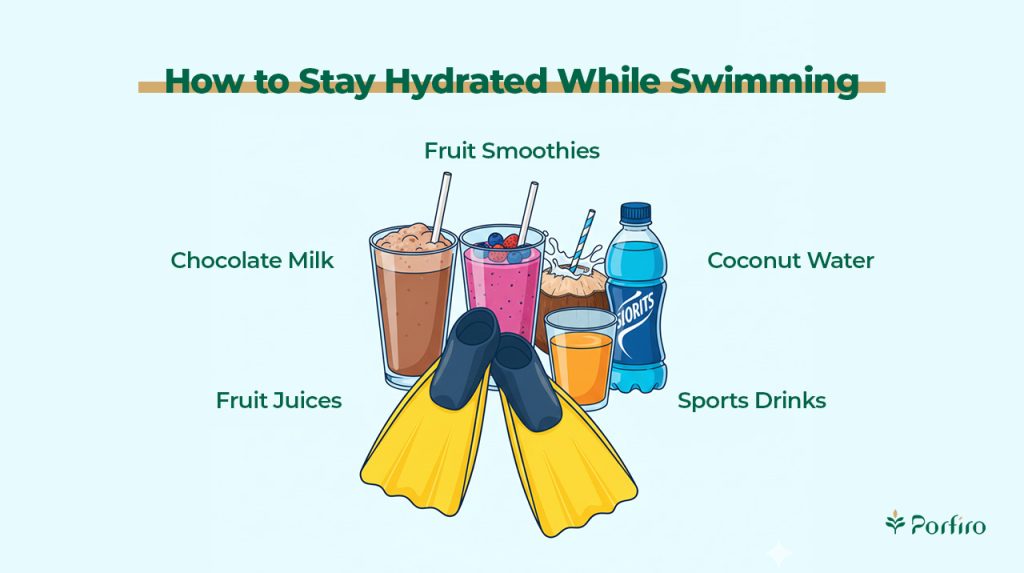
There are all sorts of sports energy bars, gels, and electrolyte drinks available to provide your body with an energy boost during exercise. As a general rule, if you’re going to swim for about an hour, you don’t have to worry about extra fuel besides water. For extended sessions, Porfiro recommends that you consume a sports drink that provides additional carbohydrates as you swim. Take alternating water and sports drinks, consuming one each time. The following are a few drinks to consider as snacks:
- Chocolate milk: Chocolate and strawberry milk are excellent snack foods following a race if you can wait a few hours to your next swim. Both of these milks provide both the carbohydrates and proteins which are utilized by the muscles to replenish themselves.
- Fruit smoothies: Blended from some combination of fruit and fruit juices as an extra burst of carbohydrates or coconut water for the potassium value, smoothies make cool and refreshing snacks.
- Coconut water: A natural, electrolyte-rich beverage that also has potassium. Coconut water may not be sufficient in itself to provide energy in the form of carbohydrates so pair it with another carbohydrate snack.
- Fruit juice: An easy source of carbohydrate that gives an instant natural energy boost. For a healthy alternative, choose 100% juice with no added sugars. Thinning juice with water is also tummy-friendly.
- Sports drinks: These are designed to rehydrate and replenish electrolytes for extended periods of exercise. They contain carbohydrates and electrolytes that are used to sustain energy and avoid dehydration throughout your swim workout.
Adequate hydration will sustain energy, enhance performance, and avoid dehydration complications while swimming.
Dining post-swimming
Timing: Whether you require a secondary snack after swimming will depend on when your next meal time is.
Consumption Immediately Following Swimming
If you swim straight home to have dinner, make sure your dinner is filled with carbohydrates, protein, fats, and vegetables. A common fallacy for swimmers is filling your plate with too much vegetable intake, with little space for protein and carbs. You need to adhere to the “performance plate” approach of recovery after intense training sessions, as below:
- Half of the plate: carbs (such as potatoes, rice, or bread)
- One-quarter of the plate: protein
- One-quarter of the plate: healthy fats
Having Several Hours of Eating After Swimming
If you swim during the afternoon and your subsequent meal is several hours from then, Porfiro suggests a snack within one hour after swimming. The snack must include both protein and carb such as:
- Chocolate milk
- Cereal and milk or yogurt
- Banana with peanut butter
Selecting Proper Foods Following Swimming
It is just as crucial to understand what to consume as it is to understand when to consume. Propping up your body and aiding rapid recuperation are important. Foods that are perfect for instant recuperation can be consumed 20-30 minutes post-swimming. Protein helps repair the muscles, whereas carbohydrates replenish glycogen stored in the muscle. If at all possible, you can have a balanced meal following swimming, do so at least an hour or more subsequent to your swim, not directly.
Best Foods to Eat After Swimming
Busy swimmers can find fast recovery foods extremely helpful. Recovery bars or beverages provide the protein necessary for starting the repair of muscles and replenishing energy. For your main meal after swimming, include lean protein foods like:
- Lean chicken
- Turkey
- Baked sweet potatoes
- Brown rice and oily fish
While protein is very important, do not neglect other food groups. Fresh fruits and vegetables are essential for vitamins, minerals, and antioxidants. If you are focused on weight loss, eat foods low in glycemic index (GI).
Porfiro’s Piarom dates are a great low-GI food snack. After you have done intense exercise, you will feel hungry, but eating low-GI foods keeps you full for longer and resist the urge to snack. These include vegetables like raw carrots and legumes such as red beans, chickpeas, and lentils. If weight loss is your goal, certain nuts can also provide energy while assisting with fat loss.
Foods to Avoid Before or After Swimming
It may seem obvious, but avoid fatty foods. These foods are harder for the body to digest and can lead to indigestion and discomfort while swimming. Also, avoid foods that are too spicy or high in caffeine.
Snack Tips for Swimmers
- Most swimmers are not consuming adequate amounts to eat, and aiming for improvement rather than perfection is a positive—having a light snack always over having no snack at all.
- According to sports nutritionists, it is fine to have something to consume even if it isn’t perfectly a healthy snack because something is better than starving. Just as a car needs an energy tank to be able to perform high-intensity activity like swimming! Provide your body with ample amount of fuel required.
- If you struggle eating food during swim events, consume larger meals the night prior and prior to the event. Make use of more liquid foods that require less chewing and digestion as well.
- Simple carbohydrates are the perfect snacks right before a race! Avoid carbonated drinks, spicy dinners, big dinners, and high-fiber foods right before swimming because they can potentially cause you stomach ache.
- Remember to bring a water bottle—even if you do use all the right snacks, water just can’t be replaced by food when dehydration is to be prevented.
- Avoid playing with new snacks prior to or during training sessions or swim meets in an attempt to ward off trouble.
Porfiro’s Gift: A Recipe for an Attractive Snack for Swimmers

To prepare this dessert—a delectable combination of nutrition and flavor—strawberries and dates are the stars of the show.
- Strawberries: This superstar provides your vitamin C! The fruit is an antioxidant in the body and also reduces inflammation.
- Porfiro Piarom Dates: We prefer to call them nature’s candy. Dates are packed with fiber, which is vital for a healthy gut. They also contain minerals like magnesium and potassium.
Ingredients and Equipment You’ll Need:
- A food processor or blender
- 1 cup dates, pitted
- 4 tablespoons nuts (any, but we recommend Porfiro pistachios and Porfiro almonds for their nutritious value)
- 4 tablespoons oats
- Half a teaspoon of cinnamon
- 1 teaspoon vanilla essence
- Three-quarters of a cup strawberries, mashed
Instructions:
Combine all the ingredients in the food processor and blend until you achieve a dense dough-like texture.
Prepare a small square baking dish by lining it with parchment paper and spreading the dough on it evenly.
Optionally, top with chocolate chips or sliced strawberries!
Cut into small squares.
You can place the mixture in the freezer to create an ice-cream-like dessert!
And your dessert is ready!
Enjoy!
10231