


Travel Nutrition Challenges: How to Stay Healthy on Your Trips
General Information- 1Preparation and travel arrangements
- 2Strengthening the immune system for long trips or in the heart of nature
- 3Healthy Eating on the Road
- 4Nutritious meals for camping and picnic trips
- Breakfast
- Meals
- 5Remaining Hydrated During Travel
- 6Exercise Traveling
- 7Reducing Stress During Travel
- 8Strategies for Preventing Travel-Related Illnesses
As we travel, for the most part, we recall happy things. Travel, in fact, is one of those phenomena that can give us a fresh and unique opportunity. For as through the ages and in all the avenues of culture, we Iranians have been concerned with travel, and we all heard that famous line from the great literarian Saadi:
“One must travel extensively
To mature from rawness to wisdom”
Traveling also has its other aspects. There are people who need to travel frequently as part of their jobs, and for them, the enjoyable and learning aspects of traveling go along with other problems. It is important to them to create right habits for frequent travel. For the case, for instance, of those who travel frequently, jet lag, dramatic changes in diet, or prolonged sitting can prevent one from sustaining their normal way of life and routines.
However, there are solutions to sustaining the care for one’s health despite traveling for leisure or work. In this article, Porfiro seeks to provide more information on how to be healthy while traveling, such as how to eat, exercise, cut down on stress, reduce weight, and so on.
Before we go on, let us remember that travel comes in a variety of shapes and forms. Sometimes commutes between cities to a city just next door for work or even shopping and entertainment qualify as travel. At other times, travel is on a much larger scale, i.e., from one continent to another for whatever purpose. Travel can also be a daily outing into the nature around your home city, or a trip from south of the nation to north, or from province to another province.
It is most essential to consider that any kind of movement affects our body and mind differently. If we know how better to take care of ourselves, any kind of travel may be a unique and enjoyable experience. Don’t wait—keep reading with Porfiro to be an informed traveler and never have to worry about your health on the go.
Preparation and travel arrangements
So, the first point is, prior to commencing serious, long-distance travel—and preferably establishing a permanent habit—one will want to follow some sound advice regarding sleep, nutrition, and supplements, to strengthen their travel immune system. Depending on the type of travel, distances travelled, and duration of travel, there are preventative steps that you could incorporate that will assist you with health protections for your travels. Some general advice suggested are as follows:
- Have a general health evaluation 4-8 weeks before you leave.
- Plan to obtain vaccinations.
- Review travel advisories and recommendations for the country of destination.
- Verify/travel medical insurance to assist you with access to any medical treatment if required.
- Take a first aid kit, which could include Band-Aids, disinfectants, thermometer, and any other basic first aid items.
- Take medications or medical items that you may need, with a sufficient amount to cover the amount of travel.
- Use a number of days prior to leaving to slowly adjust to the new time zone (again this is recommended for long distance travel).
Strengthening the immune system for long trips or in the heart of nature
A healthy immune system is needed to stay away from germs and viruses while traveling. Getting enough sleep, a normal diet packed with vitamins to enhance your immunity, and other practices outlined in this article are needed for staying healthy abroad or on recreational excursions into the wild. Some of the recommendations to enhance your immunity and remain healthy when traveling is outlined below:
- Get Enough Sleep: Resting is required to keep you with a robust immune system. Having enough sleep will enable your body to recover immune cells that combat germs and disease so that you have enough energy and health to enjoy your travels at its best. Opt for a normal sleeping routine with 7 to 9 hours of sleep every night for peak recovery. If you want, take something such as an eye mask or pillow with you so that you can still sleep well even in unfamiliar locations, like on a plane.
- Have a Balanced and Healthy Diet: Adhering to a balanced diet regularly is crucial for a healthy immune system and allows your body to function properly. Make sure you consume nutrients from each food group—vegetables, fruits, proteins, and whole grains—to give your body its increased energy needs in sickness and to fight chronic inflammation that can interfere with disease control. Being healthy on the go requires self-discipline when it comes to food—try cooking some of your food yourself or consume fresh, locally cooked meals and turn to unhealthy junk food, if necessary, at all.
- Don’t Forget Supplements: Travel in general knocks your immune system out, so adding in your routine could be a sound plan. Before departing, have the best choices of supplements that will work for you and not conflict with food discussed with your physician. A few of the helpful vitamins are zinc, vitamins C and D, probiotics, and multivitamins—all of which have been proven to boost immune levels. Prioritize health as well as nutrition during travel. Prioritize rest in your itinerary and do not allow fatigue to accumulate within your body.
- Take Health Essentials Along on Travel: It is crucial to carry a first aid kit and hand sanitizer during your trip for ensuring hygiene and health. These products assist in taking care of minor wounds and warding off the spread of germs so that your trip is not only safe but enjoyable as well. Your kit must be stocked with necessary items like band-aids, gauze pads, scissors, hand sanitizer, disinfectant wipes, and antibiotic ointment.
Read More:
The effect of nutrition on the immune system
Healthy Eating on the Road

Adhering to a balanced diet may at times prove difficult to individuals with no special dietary needs when traveling. Attempting some of the following measures might be useful:
- Take healthy foods like nuts or dried fruits along.
- Investigate local cuisine to know what is most nutritious.
- Search for local restaurants or grocery stores nearby and find out what they have.
- Choose hotels with a kitchen facility so you prepare your own meals, or meal packages in which you can choose what you eat.
- Supplement with probiotics and magnesium tablets (explaining how important magnesium is to the body and how almonds help provide it). These helpful supplements protect your gut and fight bacteria and viruses that can spoil your vacation.
Another concern is food safety. There are some foods that are typically safe to eat on the go and these are:
- Hot foods
- Dried or packaged foods
Other foods carry more risk and these include:
- Raw foods: Raw fruits and vegetables ready to eat like salads or salsas may be contaminated with germs that cannot be eliminated. Eating raw meats and fish like sushi and ceviche is also dangerous.
- Street food: Street vendors in a given location may not employ the same standards of food safety as restaurants in that location. Food straight from the stove may be acceptable, but if you cannot see how, it was prepared or if it is cold, do not consume it.
- Wild game meat: Wild animal hunting and consumption can facilitate the transmission of zoonotic diseases (diseases transmitted by the transfer of germs from animals to humans).
Nutritious meals for camping and picnic trips
- Nut Bars, Nuts & Seeds: Easy to pack, tasty and very filling. Any seed, sunflower or pumpkin seeds are great, and easy to transport by plane.
- Muesli or Protein Bars: A great option for a quick, energy boost when you are doing lots of walking, hiking, camping or picnicking.
- Fresh Fruit: An easy and inexpensive way to get some beneficial vitamins and minerals.
- Roasted chickpeas: A crunchy snack that is loaded with protein. An easy option for those quick snacks on-the-run.
Breakfast
Having a good healthy breakfast that is high in protein and/or fiber allows you to perform all of your functions effectively during the day. When you eat healthy breakfasts, and healthy breakfasts alone, you can be assertive that you will make the best decisions for the rest of the day in terms of healthy choices. Breakfasts support many nutritional impulses and can lead to better results in terms of a more balanced diet. If you do not have anything healthy for breakfast, we would say pack your baskets and backpacks with your breakfast foods. Some suggestions we hope will help inspire you with bad breakfast ideas:
- Yogurt, fruits, and granola
- Whole grain cereals and long-life soy milk (if there are no cooking facilities/refrigeration)
- Hard boiled eggs or smashed avocado on wholegrain toast
- Overnight oats
Meals
To create balanced meals, eat foods that contain a lean protein source, a fiber containing carbohydrate source and, lots of vegetables. Combining all three food groups allows for a great balance and you will probably find yourself less hungry. To remove unhealthy fat, choose grilled, baked, steamed instead of fried food. And don’t hesitate to eat vegetables in their salad form, as a side, or mashed into a dish. For example, a great and healthy meal would be a grilled chicken salad with some multi-colored mixed vegetables and a side of quinoa.
Remaining Hydrated During Travel
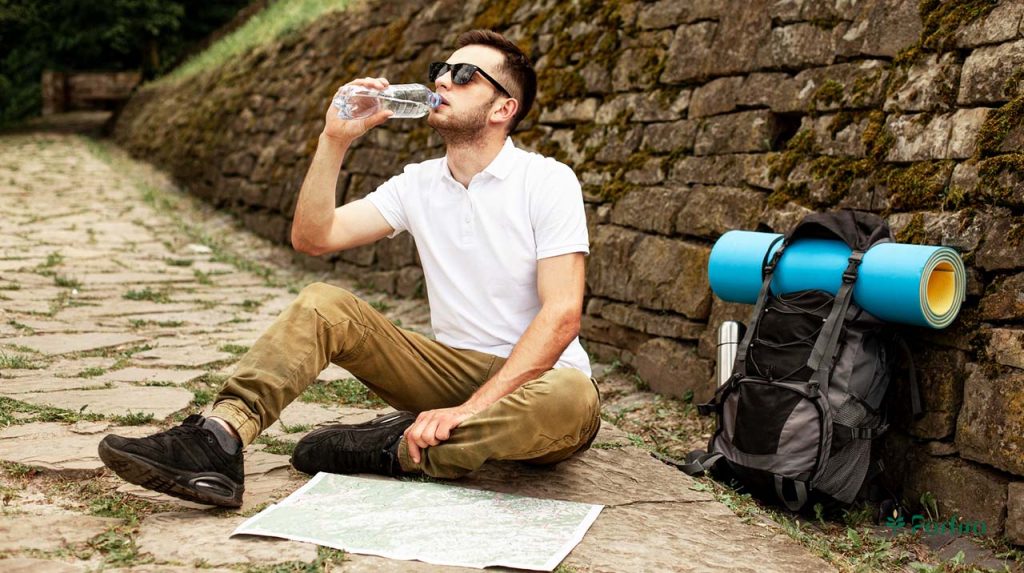
It is far too easy to forget to drink enough water while traveling. Traveling in hot climates also increases thirst levels. Therefore, adequate water consumption is necessary to prevent dehydration. While traveling, you can make sure that you remain hydrated by:
- Purchasing bottled water or refilling your bottle before setting out on your journey
- Drinking occasionally and in small quantities throughout the trip, even though you might not feel like it
- Eating water-rich foods such as fruits
- Avoiding alcohol and caffeine
- Water Safety
In some regions, tap water isn’t always safe for travelers. Although it may look clean, it can contain microbes that cause waterborne diseases. Factory-sealed packaged water is safer and oftentimes an easier way of having access to safe drinking water. In some regions of the world, travelers need to use bottled water solely for consumption and should not use tap water. Other beverages that can be presumed to be safe are:
- Canned drinks
- Hot beverages
- Pasteurized milk
You should also not use the following where tap water safety is questionable:
- Drinks served with ice
- Fountain or dispenser drinks, who may have been made using tap water
- Fresh fruit juices, as the fruits may have been washed with tap water
- Disinfecting Tap Water
If you suspect tap water contamination or are not sure if it is safe, you can disinfect it by using the following procedures:
- Boil water for 1 minute (or 3 minutes at high altitude)
- Employ the use of chemical disinfectants like iodine tablets
- Filter water employing a portable water filter
- Employ portable UV light units to sterilize water
Read More:
What Is Hydration: Why Should We Drink Enough Water?
Exercise Traveling
Regular or extended travel can make it harder to maintain a regular exercise regimen. So is jet lag, which can interfere with your routine of attending the gym or taking fitness classes once you are there. Some ideas that can help are:
- Walk or stretch while waiting for your trip or on your trip
- Learn some equipment-free exercises that you can do anywhere, such as in your hotel room
- Participate in local activities involving movement, such as walking, running, or cycling
- Utilize 24-hour hotel gyms where possible
Remaining in a static position for prolonged durations may also increase the risk of blood clots in the legs. To prevent clotting while traveling, keep the following tips in mind:
- Select an aisle seat on an aircraft to be able to stretch your legs conveniently
- Get up and move around every few hours whenever possible
- Regular breaks when driving lengthy distances by car
- Do leg stretching and exercises while sitting
- Use compression socks
Reducing Stress During Travel
Travel sometimes is stressful. It may be caused by disruptions of regular life patterns, culture shock, language difficulties, and unforeseen circumstances. Stress in travel can be mitigated by the following measures:
- Handling Expectations: Planning is necessary, but nothing can ever ensure a completely trouble-free holiday. It is also very important to listen to your physical and mental limitations on how much you’d like to do during your holiday. Calculate your travel schedule to ensure space and time to wrestle with problems or simply take it easy and relax.
- Learning the Culture: Culture shock occurs when one becomes choked or overwhelmed with total immersion in a foreign culture other than his own. That sense will give way to confusion or alienation. Mitigating culture shock, learn the culture before going there. Picking up a little of the local language can also be of immense help.
- Practice Relaxation: There would probably be something about traveling that is exhausting, confusing, or beyond your control. Learning the techniques of relaxing your mind and body in those situations can prevent you from getting frustrated and anxious. You could practice some breathing exercise or other relaxation technique (such as yoga) to help you out.
Strategies for Preventing Travel-Related Illnesses
It has been established that research shows 43% to 79% of visitors to low- and middle-income countries develop travel-related illness. The majority of the illnesses, while not lethal, are incapacitated in nature. Medical treatment is, however, needed in some illnesses. Some of the illnesses the traveler will most likely develop are:
- Bites from insects, animal bites or scratches from animals
- Sunburn
- Heat exhaustion or heat stroke
- Viral or bacterial infection such as traveler’s diarrhea, influenza, or dengue fever
- Parasitic infection such as malaria or schistosomiasis
All infections are contracted during travel, shortly after returning home, but some will manifest after weeks or months, depending on the incubation period. The preventive measures against these infections are as follows:
- Follow water and food hygiene practices
- Hand washing using soap after visiting the bathroom or before handling food
- Avoid direct sun contact at its strongest time
- Wear sunscreen and reapply when sweating
- Wear a good insect repellent
- Keep vaccinations up to date, including the flu vaccination
If you experience strange or severe symptoms while traveling or upon return, visit a healthcare provider immediately.
Finally, while traveling—as at any time, and maybe even more so—paying attention to eating healthy is the key ingredient in remaining energized and healthy. Consuming nutrient-rich foods, such as fruit, vegetables, and lean meats, and meal planning and dietary control can prevent digestive issues and fatigue. Drinking adequate safe water from a reliable source and consuming fresh, clean foods at decent restaurants also reduces the risk of getting sick.
Another key habit is listening to your body and resting when needed. Following these guidelines will allow you to experience a healthy and active vacation, enhancing the quality of the trip as well as your capacity to travel, discover, and experience the different cultures, resources, places, and regions of the globe.
10208