



The applications of artificial intelligence (AI) in nutrition are rapidly expanding and are expected to grow even further in the coming decades. AI requires vast amounts of data for decision-making and predictive analytics. Its functionality evolves through learning, reasoning, adaptation, and problem-solving. AI is employed in expert systems to develop evidence-based nutritional insights from larger datasets and establish best practices. This capability enables rapid solutions to complex dietary challenges and personalizes nutrition according to individual lifestyles.
The integration of AI technologies, such as machine learning, deep learning, and natural language processing, has emerged as a powerful force in addressing nutritional needs. These tools also aid in early disease detection, treatment plan optimization, and overall patient experience enhancement. Through applications, AI can provide precise body assessments followed by tailored dietary recommendations.
Thus, if you are interested in whether future health management will still require consulting specialists or if you can independently access personalized nutrition guidance via your smartphone, stay tuned wit Porfiro for further insights in this article.

Food constitutes one of life’s essential needs. But it extends much further than merely surviving; suitable food is vital to human health and fitness. Our well-being depends entirely on what and how much we eat. Healthy dietary habits have well-established effects on a whole range of fields such as sociology, psychology, nutritional science, and medicine. With changing lifestyles, big habits, and ineffective self-control, food choices are also adversely shaped.
Obese, improper living styles, and inappropriate eating habits – consisting of highly energy and fat-rich food consumed in excessive amounts – are responsible for some health problems, and it can be seen that more than 1.9 billion adults (ages 18 and older) were overweight, and more than 650 million were obese, according to the statistics from the World Health Organization (WHO). There are numerous chronic diseases associated with excess weight and obesity, including hypertension (high blood pressure and its nutritional management), type 2 diabetes, various cardiovascular diseases, and strokes. There is a rising concern over this issue at a worldwide public health level.
The lifestyles are the most important cause that leads to obesity. Poor eating habits are those with increased consumption of high-energy, high-fat foods (are fats always the enemy of health?). Some major contributors include consuming cheap and enormous portions of energy-rich foods—many of which are low in nutrients—together with a sedentary lifestyle and reduced physical activity, leading to an increased calorie intake.
Not actually a single one healthy diet in the modern society has been produced. According to the most current WHO statistics, close to 41 million people die every year due to noncommunicable diseases. The nutritional research aims to discover the relation between health and diet on a societal scale and internal, too. Nutrition-related sub-domains of health and growing reliance on artificial intelligence for diagnostic, predictive, and interpretative needs are shown by research.
Diet patterns, levels of physical activity, and prevention from diet-related diseases are the major areas of nutritional research. It is promising for many nutritional issues, particularly causation and therapy in association with cardiovascular diseases, diabetes, cancer, and obesity. It can also help to unravel much more complexity in understanding from diet to health, and even in its consequence of not having a balanced diet.
Nutritional research is very essential, as it tends to influence health among humans. There are nutritionists who will be able to provide dietary education and advice or meal planning, while dietitians are able to manage medical conditions such as allergies, eating disorders, diabetes, or kidney diseases that come in their way to the accomplishment of nutritional needs by people. However, these services are all being disrupted greatly by new technologies such as patient records, chatbots, and AI (artificial intelligence) in attempts to tackle health problems.
AI-powered applications were created long ago to easily guide people in making healthy food choices. For example, there are apps that use AI algorithms to assess dietary habits to recommend meals according to preferences-a lot of people may have availed of such applications. Other functions utilized would be the tracking of users’ developments, wherein their suggestions would be tailored best to the way people live.
There are so many applications of AI that are currently being used in healthcare in developed countries. According to a report, about $ 150 billion in healthcare costs would be saved in the USA by the year 2026 because of AI inclusion in health services. AI also enhances efficiency in health care delivery in areas that are usually referred to as underserved community health settings, where patients seek services that are oftentimes affected in various systematic ways.
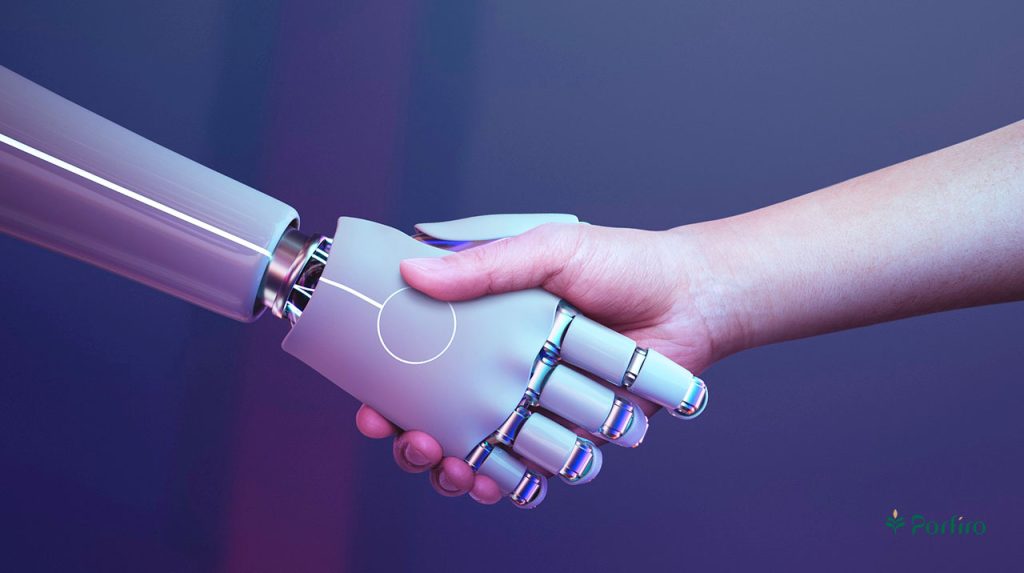
The principle of AI—also deep learning, machine learning, and AI (DC) terminology—relates mainly to the deliberate simulation of rational human-like activity and creativity by machines, particularly computer systems. Yet, it is very unclear what AI is as the software could be anything from expert systems to natural language processing (NLP) to voice recognition to machine vision. This notion that ‘AI’ is an outdated context is being eradicated and replaced throughout the industry with the term machine learning.
AI has often been used to imply computer protocols engaged in complex job environments typically linked to humanoid reasoning, judgment, creativity, and much more. The issue is not everyone seems to agree on one simple definition for AI; AI devices can conduct just about any task in various different ways and so can tally through NASA‘s 2019 definition of AI is:
The meaning of artificial intelligence is given in the Encyclopedia Britannica as follows:
Artificial Intelligence (AI) is the theory and development of computer programs and computer-controlled robots to perform rationally intelligent behavior-the types of things we associate with intelligent beings. The term is closely applied to those efforts that develop systems endowed with such intellectual processes as reasoning, imbuing meaning, generalizing, or learning from experience.
From the time of its invention in the 1940s, digital computers have been fed programming to carry out very complicated tasks such as proving mathematical theorems or gaming chess with great competence. Computers have since then been continuously upgraded with faster and bigger processing and memory capabilities; a program, however, has yet to be developed and tested for its complete adaptability in the truly sense of the word to human kinds of work in other domains, which involve a lot with what should be common everyday knowledge.
In contrast, certain applications could now perform specific tasks at levels equivalent to those of human experts. In that limited sense, AI is now being called upon in various domains, including medical diagnosis, computer search engines, speech or handwriting recognition, and chatbot systems.
The article “Computing Machinery and Intelligence,” written by Alan Turing in the early 1950s, presented the creation of intelligent machines and methods of testing the intelligence of such machines. Such test, popularly known as the “Turing Test,” still serves as a standard benchmark for measuring the intelligence of artificial systems. However, the formal introduction of the term “artificial intelligence” in a particular conference setting was in 1956, during the Dartmouth College conference focusing on topics such as human emulation by machines, thus inaugurating the field of artificial intelligence.
This has given rise in the following years to diverse definitions of AI, and because of the intrinsic complexity of formulating definitive definitions, several attempts have been made to define AI but have not been easily met with approval. Indeed, a few attempts have drawn fire from critics, and not much consensus exists on the formulation of an articulation. John McCarthy’s research, in 1955 under the title “What is Artificial Intelligence?” defined it as “the science and engineering of making intelligent machines, especially intelligent computer programs.” This definition matched with the much appropriated need to understand human intelligence using computers.
It is necessary to define AI in terms of it having multi-disciplinary character since the same conception will not be applicable in all instances or for contributing to a variety of scientific and engineering disciplines. The “artificial intelligence” term modifies oneself regarding personal interests, regardless of domain, behind which it is applied. It is therefore almost impossible to come up with a commonplace definition of AI because of its many applications and implementations.

The answer to this query of how AI might analyze nutritional data and identify patterns of dietary consumption is thus:
Food and nutrient intake are measurements of utmost importance in nutritional research and clinical practice. These traditionally consisted of 24-hour recalls, food diaries, and food frequency questionnaires. In actual practice, however, respondent self-reporting typically introduces bias whereby respondents sometimes unintentionally forget, underreport, or exaggerate certain food items and quantities. Then there is also social desirability bias, whereby respondents will willingly deform their reports for conformity to a perceived social acceptance of diets that are supposedly healthy.
It is in this vein that AI technologies now constitute the powerful means of increasing the accuracy and feasibility of dietary intake assessment. With AI, greater precision in nutritional data analysis and pinpointing dietary consumption patterns are a plus. This technology generates an opportunity for large data processing with complex algorithms to reveal patterns that are hidden from views of the traditional method. The AI works very well on its own in entering and analyzing data, which eventually minimizes human errors and raise the precision in the identification of dietary consumption patterns.
AI can suggest more dietary recommendations for individuals based on their patterns of consumption. Data are updated on a continuous basis, assisting individuals to maintain their diets for multiple health objectives. Exceedingly so, the impact of AI in nutrition data analysis and identification of dietary patterns is transformational and will provide a huge push towards community health and nutritional hygiene.
Artificial intelligence (AI), that is computer sciences, strives at making algorithms that can mimic cognitive human functions. AI has successively shown innovative potential in a number of sectors. However, in respect to health-related research, AI has made notable developments with regards to medical imaging, predictive modeling for disease spread, and personalized medicine, owing to its capacity to process huge amounts of data at very high speed and recognition of patterns.
AI has unique potentials in nutrition assessment:
Thus, AI could process data, recognize patterns, and continuously monitor consumption to turn out an intelligent system that analyzes nutrition data and detects dietary patterns. Such technology will track dietary behaviors more accurately and comprehensively and give support in personalized diet management, which will improve the health and nutritional hygiene of the community. Such adoption of AI in this area would clearly transform established protocols of dietary assessment to new applications for dietary monitoring and management and thus increase internal efficiencies of such tools.
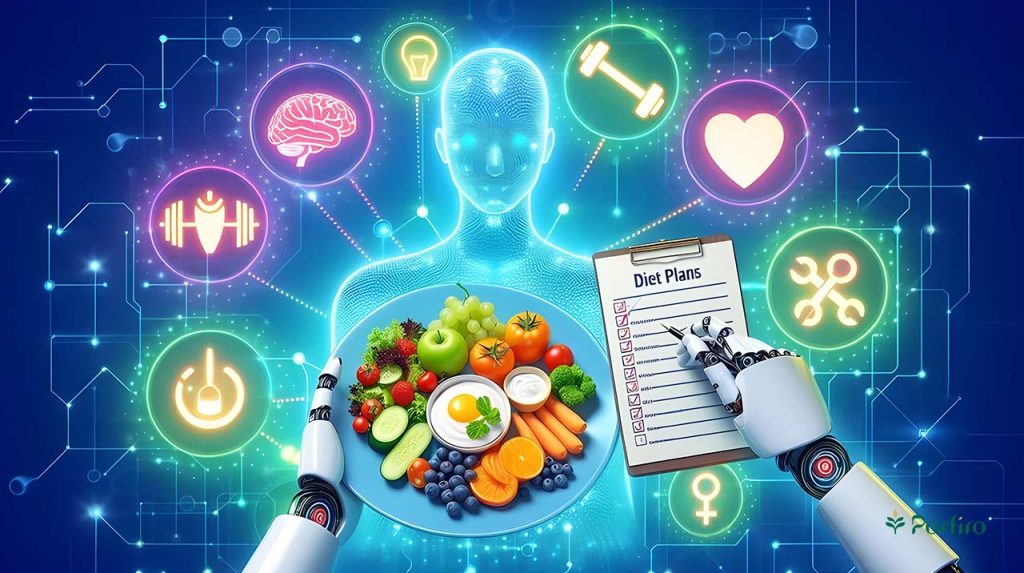
Almost in every instance, artificial intelligence can justly be said to tailor nutritional programs in view of individual data, and one looks very well qualified in saying that it can do this. Such personalization of diet with AI is what follows:

Diseases that relate to nutrition, such as diabetes (All About Diabetes: The Easiest Way to Manage This Condition), obesity (Weight Management), and heart disease (Heart Health and Suitable Foods for It) are quite detrimental to nations and states or public health. An enormous challenge in this area is early and accurate diagnosis of these diseases. These days, the conventional methods of diagnosis rely on manual ways, which are not precise or efficient.
Artificial intelligence (AI), as discussed above, is an important technology that could enhance the early detection and management of the diseases of nutrition. AI, using medical and nutritional facts, can reveal underlying patterns that may be missed by traditional techniques. AI, applying the health data of the individual, can bring up early indications of nutrition-related diseases, says diabetes, heart disease, and obesity.
Another important issue troubling hospitals is disease-related malnutrition (DRM), which comprises around 30–50% of hospitalized patients. Late or inadequate diagnosis of the conditions compounds the risk of complications and escalates healthcare costs. AI can be useful in the precise and early diagnosis of these diseases, as well. Machine learning and deep learning models can analyze medical and nutritional data sets automatically and predict disease risks.
Artificial intelligence also gives personalized diet recommendations specifically for patients, and these diets are created for each one of them given their different requirements and health status with a view of ameliorating the management of chronic diseases. In addition to that, artificial intelligence looks at genetic data and dietary patterns to know whether a person has food allergies, thus speeding the process of suggesting suitable diets to people who have these allergies.
AI also plays an important role in making food safer. This technology can help public health by tracing a food’s origin, detecting contaminants, and preventing food fraud. In preventing foodborne illnesses, and thereby improving public health, big data and machine learning play a role in artificial intelligence.
Thus, one would generally say AI can analyze and recognize patterns in data and plays an important role in early diagnosis and management of nutrition-related diseases. This technology ensures diagnostic accuracy, efficiency, and customized assistance in dietary management, thus improving public health. Increasing artificial intelligence’s application in this field will ensure that traditional ways of diagnosing and treating nutrition-related illnesses undergo fundamental transformations. Innovative and efficient tools for dietary monitoring and management will thus be created.

Food diary applications are gaining popularity as an effective means of diet management and tracking diet in contemporary life. Founded upon cutting-edge technologies, the apps simplify the process of tracking diet more accurately for their users and eventually live a healthy life.

Food tracking apps not only help users track their diet more accurately, but also provide personalized support for weight management, chronic disease control, and overall health. These apps use the collected data to identify food consumption patterns and recommend appropriate diets based on individual needs.
Presently, one of the primary challenges that food tracking applications face is the unavailability of accurate and complete food data. This would surely help as artificial intelligence and machine learning become vogue because these applications would be able to automatically process data and improve tracking accuracy. The possible future scenario would be that food tracking applications would be an increasingly important tool in promoting and advocating public health and would hence be seen as one of the most valuable and crucial tools for diet management.

AI systems can analyze the nutritional composition of foods as well as dietary patterns in order to suggest suitable foods. These systems provide personalized meal plans by analyzing one’s likes and nutritional needs. Below, we outline several methods that these systems employ.

Collaborative filtering systems use the user’s interactions and preferences to recommend suitable foods. This method groups people based on corresponding diet patterns and recommends foods on the basis of the similarities. For example, the food recommendation system within this mobile app, which is based on matrix factorization, learns preferences from ratings and tags to provide customized dietary recommendations.
A second method for personalized dietary recommendations involves employing k-means clustering to define subgroups of foods. Then user-based collaborative filtering is used to recommend foods according to individual preferences and nutritional balance.

AI systems can also plan daily meals based on our nutritional needs and preferences. This approach uses a sorting algorithm to initially filter meal choices according to our characteristics, then creates a meal plan that prioritizes foods not recently consumed while aligning with our preferences and nutritional requirements.
A two-stage food recommendation system exists, first employing time-aware collaborative filtering to suggest food items based on our prior consumption, then predicting food item rankings using nutritional data. This system utilizes a clustering method to group similar individuals and food products, enhancing recommendation accuracy.
Ultimately, it is evident that AI, leveraging its capabilities and tools, can act as a health advisor. Through comprehensive analysis of available data, it effectively guides us in selecting appropriate foods tailored to our health conditions.
Artificial intelligence is considered an impending force capable of taking on humanity and subjugating it even further. The era is past when anything that helps break a record or in a productive way is acceptable. It is high time to recall that having wisdom to order the forces of science and technology is as important as being technologically advanced in the natural world. Accordingly, some of the overriding ethical concerns that have been articulated for artificial intelligence by the Association for the Advancement of Artificial Intelligence are given below:
A new edition of the EFAD’s ethical charter outlines some of the ethical concerns that AI could possibly dehumanize care, weighing possible benefits against it. The document emphasizes that some patient-centered approaches such as motivational interviewing for dietary behavior change or cost-effective interventions are not engageable using tech, if even feasible. It could be that overestimating some of the technological solutions could also create more problems.
On the other hand, it is important to consider the privacy of personal data. Sensitive and personal patient data is collected and analyzed. This data must be kept secure and confidential. Controlling who has access to an individual’s data is crucial. Furthermore, this data should not be used to discriminate against individuals in decisions regarding insurance costs or employment status. The use of genetic data presents additional challenges, as the drivers of predictive algorithms in such contexts remain unclear.
The security of personal data must also be defined, and the protection of human rights must be addressed alongside the implementation of AI. For instance, the sharing status of patient health records for big data regulation and similar matters must be carefully structured and legislated.
Another aspect to consider is unauthorized access and misuse of electronic medical records. Unauthorized access to healthcare data can lead to privacy breaches. The evolving nature of health information technology may render AI systems themselves “vulnerable.”
There is also concern that AI systems in nutrition and dietetics could partially replace nutrition professionals. However, this should be viewed more as a shift in the interaction between dietitians and clients rather than a replacement of healthcare professionals.
In fact, several AI protocols may be delivered and/or utilized by nutrition professionals. To minimize such risks, clear statements about what the product can do, as well as identifying target users and unspecified users, are strongly recommended. Concurrently, several key considerations exist for nutrition professionals using AI, including the following:
Additionally, special emphasis must be placed on ensuring all provided information is shared with a physician and/or nutritionist to protect users, particularly those with health issues. This is especially critical for individuals with mental illnesses, eating disorders, or high vulnerability. For example, unsupervised use of a weight-loss app by a teenager could trigger the onset of an eating disorder.
Regarding dietary assessment using food images, differences in nutrient composition between photos and real foods may arise due to cultural and dietary guideline variations. In other words, implementing results from AI algorithms is a fundamental challenge. However, when executed correctly, patient outcomes improve, healthcare costs decrease, and positive health results can be achieved.
Lastly, but most importantly, regulatory frameworks require continuous updates to keep pace with scientific advancements. The AI phenomenon, inherently concerning due to its nature, is also constantly evolving and changing. Yet, ethical and political regulations often lag behind this rapid development. This means, “If policy is not crafted to guide technology, technology will dictate policy.” Simultaneously, to harness practical applications of the technology, various issues must be addressed, such as balancing copyright and public health, as well as privacy and public technology deployment.
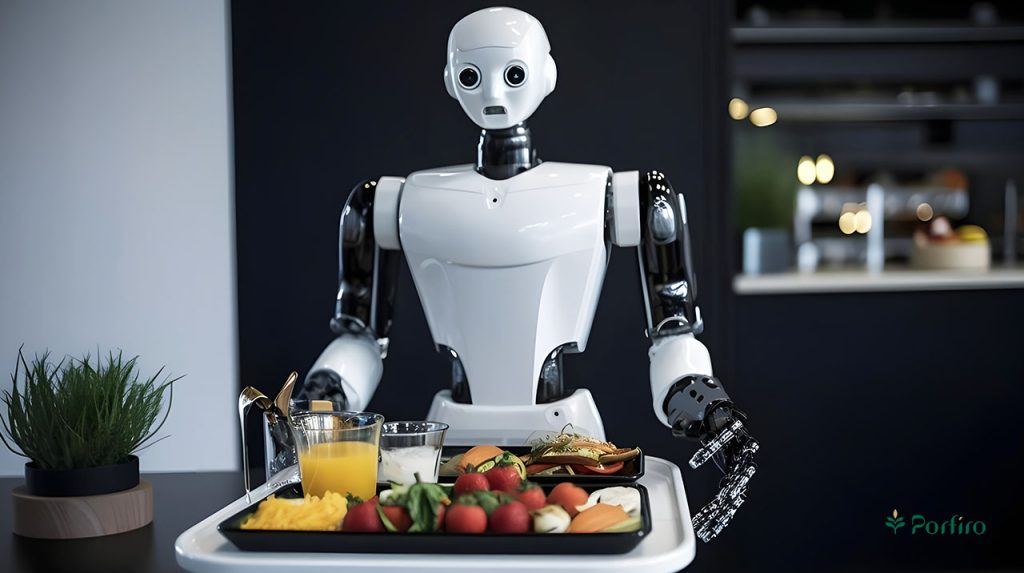
Inspired by its next-level strengths artificial intelligence (AI) has become a prominent tool in nutrition analysis. From analyzing a broad range of data and recognizing patterns, it may keep track of the dietary habits of a user with great accuracy and suggest the best food for him. artificial intelligence (AI) uses algorithms, clustering, and collaborative filtering to generate customized meal plans designed to the user’s nutritional needs and preferences.
artificial intelligence (AI) has also been found to be extremely useful in the earlier detection of nutrition-related diseases like obesity and diabetes. By leveraging both medical and nutritional data, it identifies obscure patterns and predicts disease risks. Such artificial intelligence applications help users in following their food diaries accurately, thereby inducing a healthier way of life.
10145












دیدگاهی در مورد “Artificial intelligence (AI) and its application in nutrition”
What are the benefits of personalized dieting using AI, and how can AI tailor food recommendations based on personal data such as genetics, eating habits, and health conditions?
In short, personalized diets using AI offer significant benefits by creating meal plans tailored to an individual’s genetics, eating habits, and health conditions. AI analyzes personal data to identify nutrient deficiencies, aligns dietary recommendations with health goals (such as weight loss or chronic disease management), and adjusts in real time based on ongoing health data. It also takes into account preferences and allergies to suggest appropriate foods and recipes, improving adherence and effectiveness. This leads to better metabolic health, symptom management, and overall well-being compared to generic diets.