


Nutritional considerations in gout
General InformationInitially documented by Hippocrates in ancient Greece, gout is recognized as one of the most thoroughly researched and clinically manageable rheumatic conditions. Historically referred to as the “disease of kings and king of diseases,” recent studies indicate that the prevalence and incidence of gout can vary significantly based on the population examined and the methodologies used, with prevalence rates ranging from less than 1% to 6.8% and incidence rates between 0.58 and 2.89 per 1,000 person-years. This disease is observed to be more common in men than in women, with its occurrence increasing with age and being more prevalent in certain ethnic groups.
This disease is a prevalent and intricate type of arthritis that can impact individuals regardless of their background. It is marked by abrupt, intense episodes of pain, swelling, redness, and tenderness in one or more joints, most frequently affecting the big toe.
A gout attack can strike unexpectedly, often rousing individuals from sleep with the feeling that their big toe is ablaze. The joint involved becomes hot, swollen, and so sensitive that even the light pressure of a bedsheet can feel unbearable.
While gout symptoms may fluctuate, there are effective strategies to manage these symptoms and reduce the likelihood of flare-ups.
Causes of gout
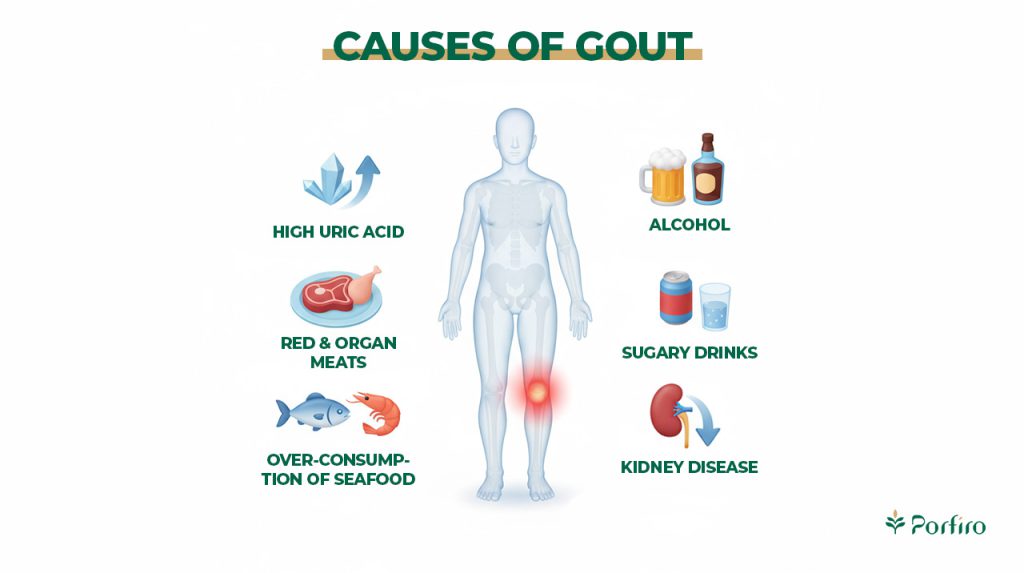
Gout manifests when urate crystals accumulate within a joint, leading to inflammation and severe pain characteristic of a gout attack. Purines, which are natural compounds present in every cell of the body as well as in various foods, play a crucial role in DNA synthesis and energy production.
During the breakdown of purines, uric acid is produced as a metabolic byproduct. Typically, uric acid dissolves in the bloodstream, is filtered by the kidneys, and is excreted through urine. However, if the body generates excessive uric acid or if the kidneys fail to eliminate it effectively, uric acid levels can rise in the bloodstream and accumulate, resulting in the formation of sharp, needle-like urate crystals in a joint or adjacent tissue, which leads to pain, inflammation, and swelling.
To mitigate the levels of uric acid in your body, it is advisable to adhere to a low-purine diet. Lowering uric acid concentrations can aid in preventing the formation of new crystals, thereby reducing the frequency of this disease attacks.
Risk factors of gout
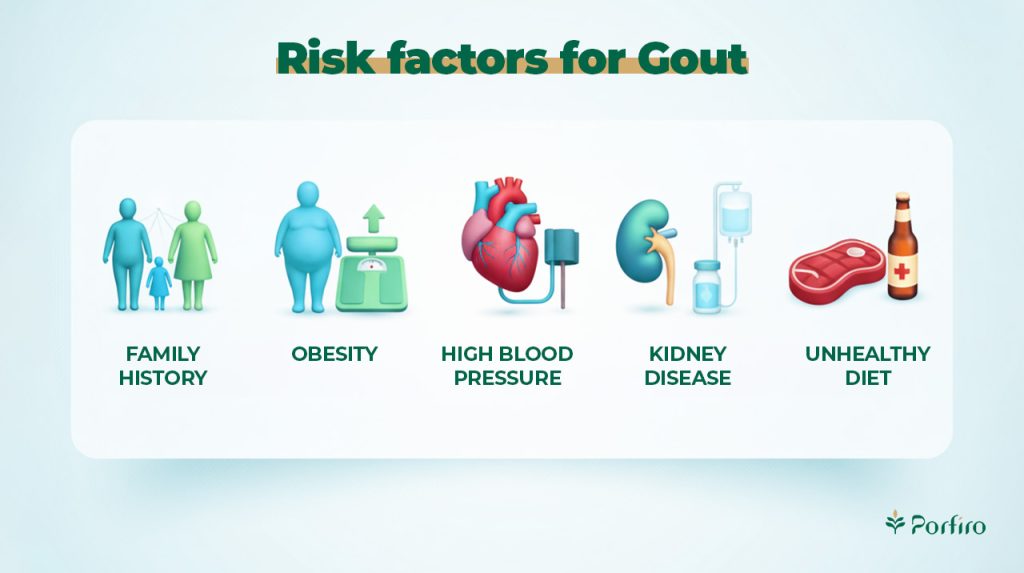
Several elements contribute to elevated uric acid levels in the body. These factors include:
- Family history: Individuals with a familial background of gout are at a heightened risk of developing the condition.
- Age and sex: this disease is more prevalent in men, largely since women typically maintain lower uric acid levels. However, post-menopause, women’s uric acid levels tend to rise and become comparable to those of men. Additionally, men are more prone to experience gout at an earlier age, typically between 30 and 50, while women usually exhibit symptoms following menopause.
- Weigh: Being overweight leads to increased production of uric acid in the body, making it more challenging for the kidneys to excrete it effectively.
- Medical conditions: Various diseases and health issues, such as untreated hypertension and chronic conditions like diabetes, obesity, metabolic syndrome, as well as heart and kidney diseases, elevate the risk of developing this disease.
- Certain medications: Medications such as low-dose aspirin and various antihypertensive drugs (including thiazide diuretics, angiotensin-converting enzyme (ACE) inhibitors, and beta blockers) can also raise uric acid levels. Furthermore, anti-rejection medications prescribed to organ transplant recipients may contribute to increased uric acid levels.
- Recent surgery or trauma: Undergoing recent surgical procedures or experiencing trauma can occasionally provoke a gout attack. In some individuals, vaccinations may also instigate a gout flare.
- Diet: Dietary choices significantly influence the management of this disease and the prevention of flare-ups. A proper diet can also aid in protecting the kidneys, which are responsible for filtering uric acid from the bloodstream.
Consuming a diet high in red meat and shellfish, along with beverages sweetened with fructose, can elevate uric acid levels, thereby increasing the risk of this disease. Additionally, alcohol intake, particularly beer, further heightens the likelihood of developing gout.
Complications of gout
Individuals suffering from this disease may encounter more severe health issues, including:
- Recurrent gout: While some individuals may never again show signs or symptoms of this disease, others might experience multiple gout episodes annually. Medications can assist in preventing gout attacks for those with recurrent gout. If not addressed, this disease has the potential to lead to joint erosion and damage.
- Advanced gout: If left untreated, this disease can result in the formation of urate crystal deposits beneath the skin, known as tophi (pronounced TOE-fie). These tophi can appear in various locations, including the fingers, hands, feet, elbows, or along the Achilles tendons at the back of the ankles. Although tophi are typically not painful, they may become swollen and sensitive during gout flare-ups.
- Kidney stones: Individuals with gout may experience the accumulation of urate crystals in their urinary tracts, leading to kidney stones. Medications can aid in lowering the likelihood of developing kidney stones.
Gout management
Effectively managing this disease involves a combination of medications, lifestyle modifications, and dietary adjustments. Porfiro in this article outlines optimal dietary choices for individuals with gout and highlights foods to avoid. It is important to note that a diet suitable for gout should not replace medication.
Gout-specific diet
Low purine diet for gout
A low-purine diet aims to minimize the intake of foods and beverages high in purines to lower uric acid levels. It also promotes the consumption of certain foods that may help decrease uric acid in the body.
Individuals with elevated uric acid levels in their blood (hyperuricemia) can gain from limiting high-purine foods. This approach may assist in preventing the onset of gout in those with hyperuricemia who have not yet developed the condition. Additionally, it may help avert the progression of existing gout and mitigate other complications associated with hyperuricemia, such as kidney stones.
Benefits of a low-purine diet
By lowering uric acid levels, a low-purine diet may enable individuals predisposed to hyperuricemia to manage their condition through dietary means, thereby preventing complications like gout and kidney stones. Those already diagnosed with gout or kidney stones may find that they can avert new uric acid-related issues.
Foods to focus on for gout
Following a diet that is friendly to gout involves the removal of certain foods. Nevertheless, you can still enjoy the following items that are typically safe for individuals with gout:
- Fruits: Generally, all fruits are acceptable for those with gout. Cherries, in particular, may assist in preventing attacks by lowering uric acid levels and alleviating inflammation. It is advisable to consume at least 2 servings of fruits daily. Each serving is approximately the size of a tennis ball. For fruits measured by the cup, a serving is roughly one cup.
- Vegetables: All vegetables are permissible, including potatoes, peas, mushrooms, eggplants, and dark green leafy vegetables. Research indicates that vegetables high in purines do not increase the risk of this disease. Examples of such vegetables include green peas, asparagus, and spinach. Aim for a minimum of 2.5 servings of vegetables each day. A serving of raw vegetables is one cup, while a serving of cooked or juiced vegetables is half a cup.
- Legumes: All legumes are acceptable, including lentils, chickpeas, beans, soybeans, and tofu. Tofu is prepared by coagulating soy milk. A serving of legumes is approximately 90-100 grams when cooked. Consuming one or two servings daily is safe and can serve as a substitute for meat. Certain vegetables, legumes, and beans do contain purines. However, studies indicate that high-purine plant foods do not provoke gout attacks. A diet rich in vegetables, legumes, and beans is beneficial for your health and may assist in lowering uric acid levels.
- Nuts: All nuts and seeds are acceptable. While nuts are among the safest protein sources for gout, portion size is important due to their calorie density. A safe daily intake is about one serving of nuts per day or up to 5 servings per week, which equates to a small handful.
- Whole grains: This category includes whole wheat bread/pasta, brown rice, quinoa, and barley. Oats contain a moderate level of purines. They typically do not pose issues when consumed in normal quantities, but large servings daily may elevate uric acid levels for some individuals. Depending on your energy requirements, about 3-6 servings per day are considered safe. One slice of whole wheat bread or half a cup of brown rice equalls one serving.
- Dairy products: Studies indicate that low-fat dairy and soy products may help prevent gout attacks by lowering uric acid levels. A gout-friendly diet recommends three servings daily. One serving is equivalent to one cup (240 mL) of low-fat milk or yogurt, or 42 g of hard cheese, or 56 g of soft cheese, preferably low-fat.
- Eggs: Eggs are low in purines, making them an excellent protein source for individuals with gout. Generally, one egg per day is considered safe for those affected by this disease.
- Beverages: Consumption of coffee, tea, and green tea is allowed in gout. Individuals with gout may safely consume 1-3 cups of coffee and 3-5 cups of green and black tea daily.
- Herbs and spices: The anti-inflammatory properties found in herbs and spices may provide benefits for individuals with gout; however, further research is necessary. It is permissible to use one to two tablespoons of fresh or dried herbs per meal, and up to one teaspoon of spices per meal is allowed.
- Plant-based oils: This category includes canola, olive, avocado, walnut, and flaxseed oils. It is advisable to consume two to four tablespoons of these healthy oils each day.
- Water: Individuals who drink five to eight glasses of water daily are less likely to suffer from gout symptoms. This is logical, as the kidneys require water to eliminate uric acid through urine. Additionally, water is beneficial for kidney health, and impaired kidney function can be a contributing factor to gout.
Foods that can be consumed in moderation
Your nutritional requirements may vary depending on your gout symptoms and other health issues. A healthcare professional or nutritionist can provide personalized advice. Generally, lean animal proteins can be consumed in moderation, with a maximum of two servings per day. Poultry is typically considered a safe choice. Additionally, some individuals may be able to incorporate fish into their diet if their gout is effectively managed.
Foods to avoid in gout
Foods that contain moderate to high levels of purines include:
- Organ meats: This category encompasses liver, tripe, sweetbreads, brains, and kidneys.
- Red meats, such as beef, lamb, pork, and bacon.
- Gravy and meat-based sauces.
- Turkey: This type of meat is rich in purines. It is advisable to limit turkey consumption, particularly during a gout flare-up.
- Game meats: Delicacies like goose, veal, and venison are among the reasons gout was historically referred to as the “rich man’s disease” in the Middle Ages.
- Certain seafood varieties, including herring, scallops, mussels, cod, tuna, trout, and haddock.
- Alcohol: Although not all alcoholic beverages are high in purines, alcohol inhibits the kidneys’ ability to excrete uric acid, causing it to be reabsorbed into the body, where it can accumulate.
- Fructose and sugar-sweetened drinks can also elevate the risk of gout and gout attacks, despite not being rich in purines. Instead, they can increase uric acid levels by accelerating various cellular processes.
- High fructose corn syrup: This is a concentrated form of fructose. Upon examining labels, you may discover high fructose corn syrup in numerous packaged food items that you might not expect.
- Highly processed foods: Foods that are heavily processed and high in sodium and trans fats can exacerbate stress and inflammation in the kidneys. While these foods may not directly lead to uric acid accumulation, they can aggravate other health issues that contribute to kidney problems or gout.
Lifestyle modifications to reduce your risk of gout
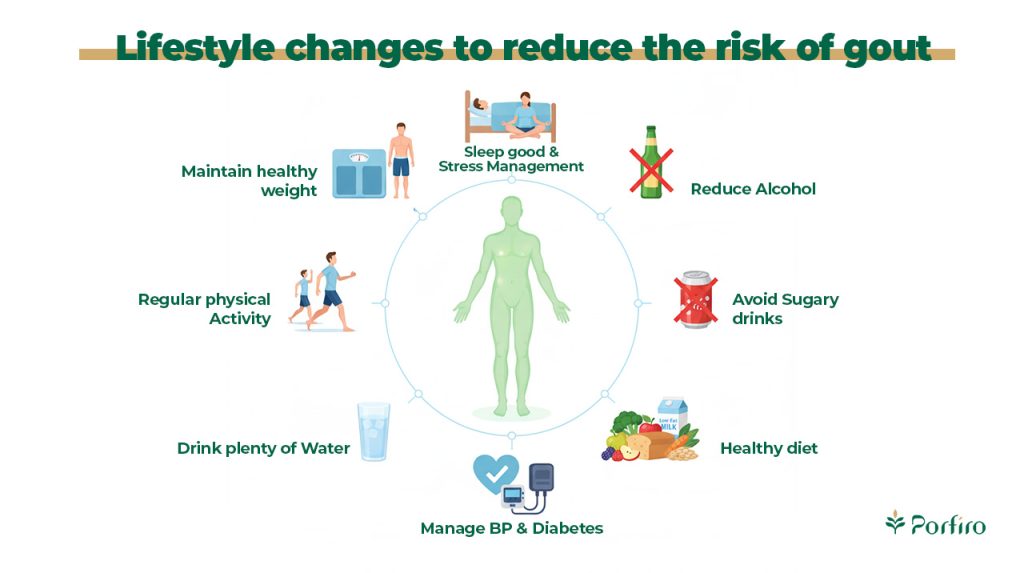
To effectively manage gout, healthcare professionals such as doctors or dietitians may recommend transitioning to a healthier dietary pattern. Adopting a new diet may prove to be more beneficial than merely incorporating a few gout-friendly foods into your current eating habits, particularly if your regular diet includes items high in saturated fats and refined carbohydrates.
Diets recognized for promoting heart health, such as the DASH and Mediterranean diets, may be particularly advantageous. In addition to dietary adjustments, there are several lifestyle modifications you can implement to decrease your risk of this disease and gout flare-ups, including:
- Weight management: Carrying excess weight may increase the likelihood of developing this disease. Weight loss may help mitigate this risk. Studies indicate that reducing caloric intake and losing weight can lower uric acid levels and decrease the frequency of gout attacks, even without adhering to a purine-restricted diet. Furthermore, weight loss alleviates stress on the joints.
- Hydration: It is essential to consume adequate amounts of water (5-8 glasses daily) to ensure optimal bodily function.
Lifestyle modifications such as engaging in regular physical activity, limiting alcohol consumption, and considering vitamin C supplementation can further help reduce your risk of gout and this disease attacks.
Conclusion
Gout is a common and manageable type of arthritis that predominantly affects men, especially as they age, and is marked by sudden, intense joint pain, most frequently in the big toe. Gout arises from the buildup of urate crystals in the joints due to elevated uric acid levels, which may result from excessive production or inadequate elimination by the kidneys.
Significant risk factors for developing gout include family history, age and gender, obesity, certain health conditions (such as hypertension and diabetes), specific medications, recent surgical procedures or injuries, and dietary habits.
If left untreated, gout can lead to recurrent episodes, advanced gout characterized by the formation of tophi (deposits of urate crystals), and kidney stones. Effective management of gout encompasses medication, lifestyle modifications, and dietary changes.
10204
References
- https://www.ncbi.nlm.nih.gov/books/NBK546606/
- https://pubmed.ncbi.nlm.nih.gov/32541923/#:~:text=Recent%20reports%20of%20the%20prevalence,and%20in%20some%20ethnic%20groups
- https://www.mayoclinic.org/diseases-conditions/gout/symptoms-causes/syc-20372897
- https://my.clevelandclinic.org/health/treatments/22548-gout-low-purine-diet
- https://www.healthline.com/nutrition/best-diet-for-gout#takeaway
- https://www.kidney.org/news-stories/what-to-eat-and-avoid-if-you-have-gout
- https://www.mayoclinic.org/healthy-lifestyle/nutrition-and-healthy-eating/in-depth/gout-diet/art-20048524